

Denby Fawcett: Why A Teetotaler President Has Us Talking About Booze
Most Democrats say they’d give up alcohol forever in exchange for Trump being impeached tomorrow.
It strikes me as strange that so much talk about booze seems to swirl around President Donald Trump when Trump says he has never touched a drop of alcohol in his life.
I gave up alcohol the day Trump was inaugurated to protest in a type of a medieval Catholic act of self-flagellation. My vow was generated by the need to do something dramatic. Other friends went in the opposite direction, increasing their alcohol intake to blot out the reality.
Granted there is no nexus between Trump and vowing to abstain from liquor, but the notion keeps coming up.
According to a survey released Thursday, 73 percent of Democrats say they would give up booze for life if Trump were impeached tomorrow. As for Republicans, 17 percent said they would do the same.
Detox.net did the survey. It is an organization to help alcohol and drug abusers find detoxification treatment. The group’s motto is, “You only get one body: get clean and sober with detox.”
Detox’s survey asked 1,013 drinkers to participate, and said the survey had a 5 percent margin of error.
Interestingly, 31 percent of the Republican respondents said they would become teetotalers if the media would stop writing negative things about Trump.
That’s unlikely. If the Republicans want flattering reports, tell the president to behave better.
“If you don’t start you are never going to have a problem.” — President Donald Trump
And even though Trump’s approval rating is at a record low (a Washington Post- ABC News survey found 58 percent of respondents disapproved of the way Trump was conducting himself in office) and allegations that he colluded with Russia seem to be hurting him, removal from office is unlikely with the president’s political party in control of both houses of Congress.
But back to booze. Trump said in interview with Harvey Levin on Fox News in November that he decided he would never drink after his older brother Fred died at age 42 from illnesses related to alcoholism.
“I have never had a drink because of my brother,” Trump said. “If you don’t start you are never going to have a problem. If you do start you might have a problem. And it is a tough problem to stop.”
In an earlier interview with Newsweek, he said his brother warned him not to drink.
“He would tell me, “Don’t ever drink. Don’t ever drink.’”
Trump says he has strict rules for his children: “ No drugs, no alcohol, no cigarettes.”

Teetotaling is unusual for a U.S. president. Almost every president in modern time has enjoyed drinking alcohol. Many have been moderate drinkers; a few others, dedicated boozers.
Former Secretary of State Henry Kissinger put President Richard M. Nixon in the category of a problem drinker. According to Kissinger, even a small amount of alcohol would set Nixon off in late-night threats of military retaliation.
When North Korea shot down a U.S. spy plane in April 1969, an enraged Nixon allegedly ordered a tactical nuclear strike and told the Joint Chiefs to immediately recommend targets. According to the CIA’s top Vietnam specialist at the time, George Carver, Kissinger spoke to military commanders on the phone and they agreed not to do anything until Nixon sobered up in the morning.
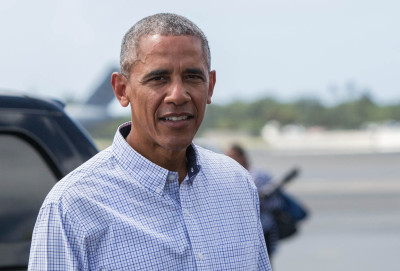
Barack Obama liked drinking wine and beer in a social way. And he even had sustainable ways of producing booze. While he was president, Obama had special ale made with honey from bees raised on the White House grounds.
George W. Bush abstained from alcohol as president after years of heavy drinking, including a drunken driving arrest in 1976, long before he got to the White House.
John F. Kennedy was a moderate drinker, favoring daiquiris and bloody marys, and on his sailboat an occasional beer.
Jimmy Carter banned the serving of alcohol at the White House. When Carter was forced to join a ceremonial toast at parties with other world leaders — for example the Russians who were gulping down tall glasses of straight vodka — he would instead ask for a glass of white wine to sip during the toast.
At the other extreme is Lyndon B. Johnson, who reportedly loved to drink Cutty Sark while driving visitors around his Texas ranch in his white Lincoln Continental.

Joseph A. Califano Jr, special assistant to Johnson, described accompanying the president on one of his mobile drinking jaunts:
The drinking- and-driving excursions were apparently how Johnson relaxed while making himself more human and likable to visiting news reporters and politicians.
As s self-flogging abstainer during the Trump reign, which I hope will be limited to four years, I am hardly the right person to tell Trump his life might improve if he considered sipping an occasional glass of wine in the evening.
I can’t help thinking if Trump imbibed occasionally he might not be as defensive and impulsive. He might make friends outside of his family circle. World leaders might feel less wary around him.
President Franklin D. Roosevelt had a relaxed friendship with Winston Churchill during the World War II years, when they bonded over brandy and cigars. That was when Churchill was FDR’s houseguest at the White House for three weeks after the Pearl Harbor attack.
Some historians believe it was the closeness the two men developed during their late night drinking sessions that “cemented a partnership that won the world war.”
But Churchill and Roosevelt were sophisticated, scholarly people, men of great depth.
It is probably wishful thinking to imagine anything good might come from Trump getting in touch with alcohol — just as wishful as thinking there is a chance Trump might soon get impeached.

