Where Flows The Water Of Kane?
Restoring and protecting the freshwater Kanewai Spring on Oahu.
Community, non-profit and government partners recently announced the purchase and preservation of Kanewai Spring, one of the last functioning freshwater springs in Honolulu, located along Kalanianaole Highway in the ahupuaa of Kuliouou.
Our ohana, the Reeves/Correa and Thompson/Lucas families, have deep and long connections to Maunalua (East Honolulu). We are part of the community nonprofit Maunalua Fishpond Heritage Center which now owns and stewards the spring.
When Maunalua Fishpond Heritage Center first contacted the spring’s landowner in 2010, the property was in dire straits — two-story high weeds had created the perfect hiding place for a criminal element to take over the property.
The spring was black, smelly and filled with rubbish, sediment and weeds.
With the landowner’s permission, the center enlisted the help of hundreds of volunteers — keiki to kupuna – to clear the trash, remove the weeds, restore the spring and share stories and history of the spring’s storied past.
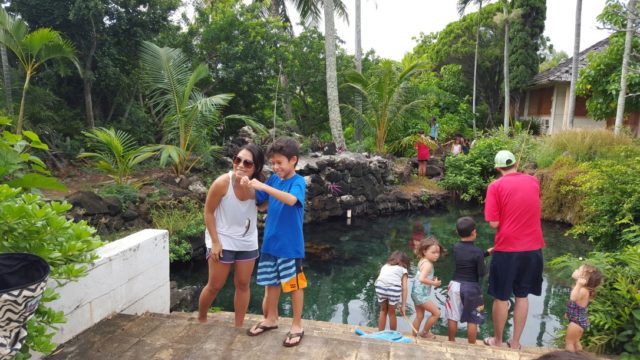
Crystal clear freshwater now flows from the spring, feeding Kanewai Fishpond, Paiko Wildlife Refuge and Maunalua Bay. Native species such as pipiwai and hapawai (freshwater limpets), opae oeha‘a and opae huna (shrimp), and limu eleele (native seaweed) have returned.
Mahalo nui loa to the City and County of Honolulu Clean Water and Natural Lands program, the state of Hawaii’s Legacy Land Conservation Program, our elected officials, The Trust for Public Land, our pro bono lawyers, individual donors and foundations, volunteers and nonprofit partners. This conservation effort could not have been achieved without the work of many hands.
Our kupuna (elders) such as Jo Jo Correa, who recently passed knowing that Kanewai Spring had been saved, have been vigilant and steadfast. They strongly advocated for the conservation of Paiko Wildlife Refuge, Ka Iwi Coast, Kalauhaihai Spring and other beloved places that keep Hawaii our cherished home.
They have passed this kuleana onto us, and we will pass our aloha aina (love and commitment to the land) to our keiki and the many children who will visit the spring and learn about its history and the important role it plays in the life cycle of fish, limu (seaweed) and native marine life.
When asked in the traditional oli (chant), “Aia i hea ka wai a Kane?” (Where flows the water of Kane?), all will know the response, and that the spring indeed flows and gives life. Mahalo ke akua.
Aia I hea ka wai a Kāne?
Where flows the water of Kāne?
Aia i lalo, i ka honua,
Deep in the ground, in the gushing spring,
I ka wai kau a Kane me Kanaloa
In the ducts of Kane and Kanaloa,
He waipuna, he wai e inu, i ka wai hu
A well spring of water, to quaff,
He wai e mana, he wai e ola!
A water of magic power, the water of life!
E ola na, ea!
Life! O give us this life!
 GET IN-DEPTH
REPORTING ON HAWAII’S BIGGEST ISSUES
GET IN-DEPTH
REPORTING ON HAWAII’S BIGGEST ISSUES
Community Voices aims to encourage broad discussion on many topics of community interest. It’s kind of a cross between Letters to the Editor and op-eds. This is your space to talk about important issues or interesting people who are making a difference in our world. Column lengths should be no more than 800 words and we need a current photo of the author and a bio. We welcome video commentary and other multimedia formats. Send to news@civilbeat.org. The opinions and information expressed in Community Voices are solely those of the authors and not Civil Beat.