Colonial-Era Coconut Farms Pose Risks To The Survival Of Pacific Atolls
The copra industry keeps remote economies afloat while also threatening to undermine the land it depends on.
Editor’s Note: Here in the middle of the Pacific Ocean, signs that climate change has arrived are all around us. We see it in our disappearing beaches, the flooding of our homes, the ever-looming menace of wildfire. For us, climate change is more than a threat on the horizon and far bigger than an inconvenience. And we share this truth with our island neighbors across the Pacific, the region known as Oceania that stretches from Hawaiʻi to New Zealand. In an occasional series, we are telling the stories of people living on the front lines of climate change.
On the remote atoll of Rangiroa, there are three things you can grow up and do: become a coconut farmer, operate a tourism business, or leave. Despite an exodus of young Polynesians, tenuous finances, and encroaching seas, Matatini Tamaehu decided to stay.
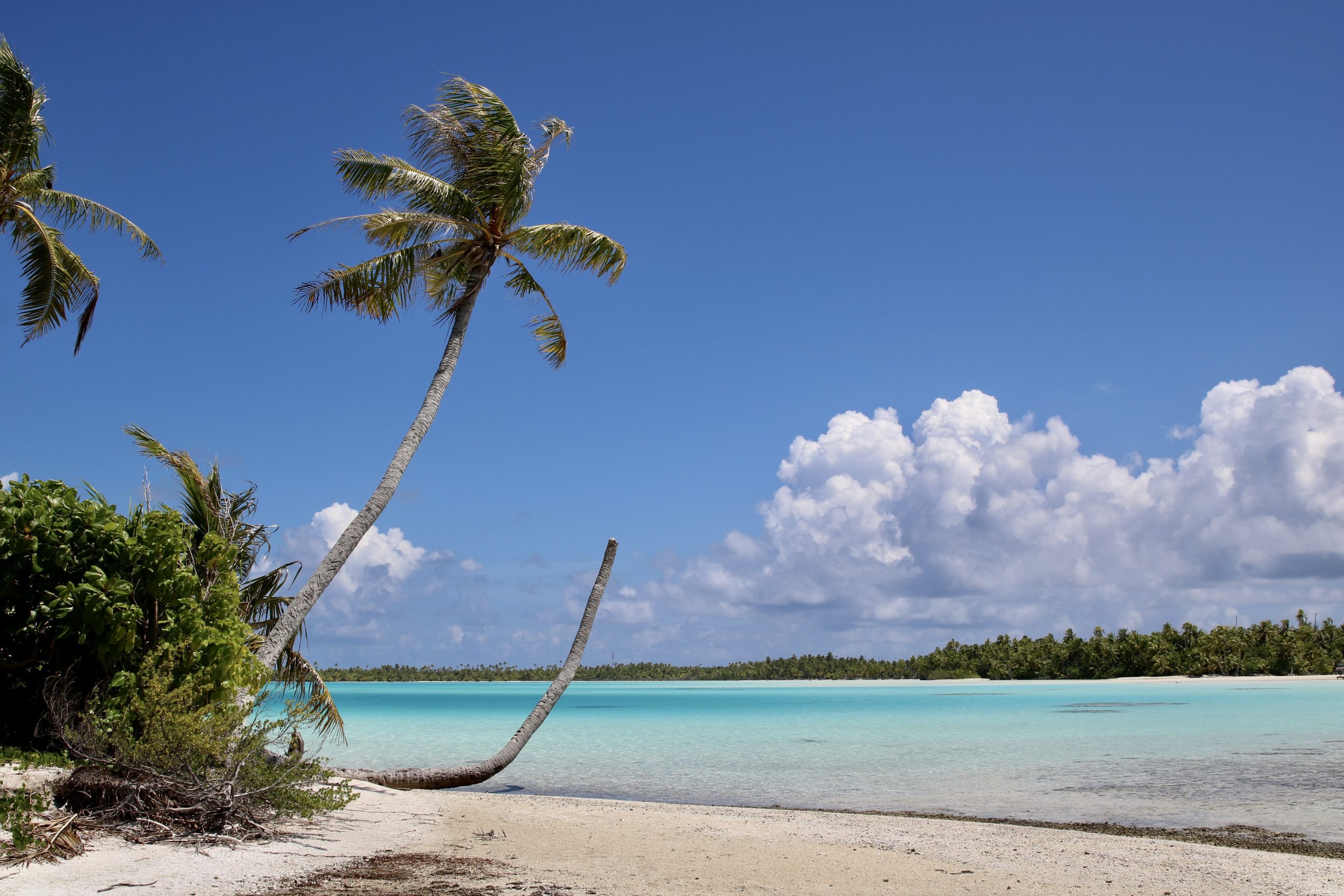
When looking down from the propeller planes needed to access the outer atolls of French Polynesia, ring-shaped islands appear in quick succession. Tossing a handful of rubber bands onto a blue tablecloth would look markedly similar to the view from above. Coconut palms that produce the once-coveted copra crop dot the surface of these archipelagos, revealing an eerily ordered carpet of trees.
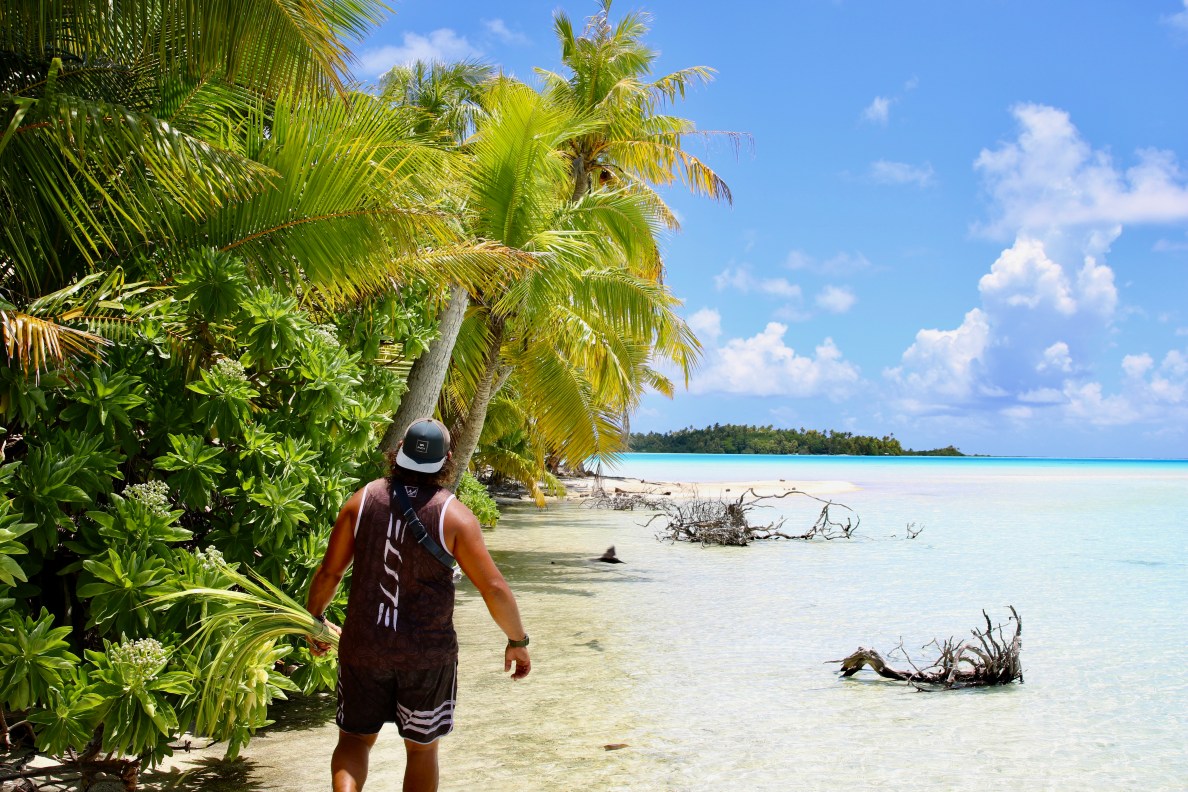
Tamaehu leads a group of tourists through the knee-deep, turquoise water of one of these atolls, the sun blazing overhead. A breeze rustles the coconut palm fronds he clutches in his fist. Tamaehu finds a shaded log to sit on and begins to weave the palm fronds into hats for each of his guests. Ants crawl over his toes and coconut palms splay overhead, splicing the sunlight into stripes that flit over his nimble fingers as he works.
Though he was born into a coconut palm-farming family, today Tamaehu and his family operate a tourism business, hosting guests in buildings that sit on their centuries-old plantation. The coconut palms that have been harvested by generations of Tamaehu’s family are flagging in the face of climate change. And coconut palm agriculture, or copra farming, is stifling the natural resilience of their atoll home. It’s part of what is driving Tamaehu, and others like him, away from the familial tradition of farming copra and into the tourism industry.

For French Polynesia, which could see the disappearance of entire archipelagos beneath the sea by 2100, this antiquated industry’s role in shoreline erosion is becoming hard to ignore. Coconut palm monocultures have anchored the naturally mobile islands in place, prohibiting the geological movement that allows atolls to be resilient to sea level rise. Scientists worry that this, coupled with the deforestation of native vegetation by coconut palms, is leaving the islands vulnerable to erosion.
What’s more, atolls blanketed in coconut palms virtually repel seabirds who, through their poop, play a crucial role in island ecology and sediment replenishment. The trees also shed carbon, degrade the soil, and sap the limited fresh water available on these low-lying atolls.
But for Pacific Islanders like Tamaehu and his family, the coconut palm is regarded as the “tree of life” that brought economic prosperity. And most discussions of the ecological harm of coconut palms remain trapped in academic and scientific circles — farmers themselves are privy to little of this discourse.
“It’s an artefact of colonial pressure in the Pacific,” said Alex Wegmann, an ecologist at The Nature Conservancy, about copra farming, propagated here in the mid-19th century by European powers and religious missionaries.
Many Pacific Island nations continue to subsidize the industry in an effort to buoy remote atoll economies and discourage urban migration. But, in doing so, they may be funding the continued degradation of their own islands.
How Copra Made A Home On Pacific Atolls
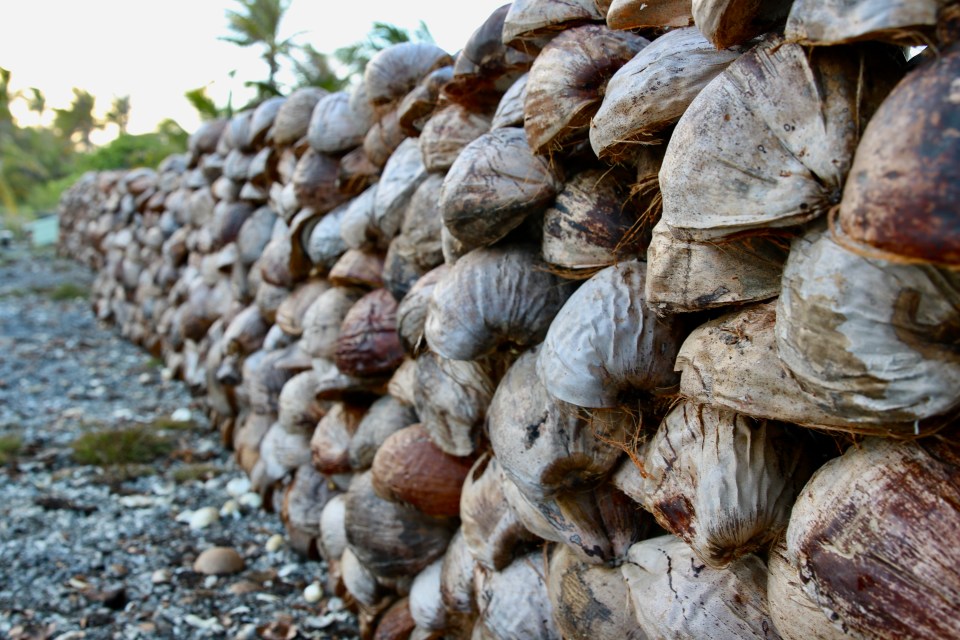
Copra farms came to scale in the 19th century, when a decline in whaling and whale oil coincided with a rise in coconut oil derived from copra. It became a viable replacement for the industrial demand for oil used in soap, candles and lubricants.
Pacific land deemed fit for copra production was often appropriated through treaties or coercion by colonial powers and foreign missionaries. “The British and French colonial empires were just putting coconut plantations everywhere on atolls and basically wiping out all the native forest,” said Simon Ducatez, a Tahiti-based researcher at the Institute for Sustainable Development.
Copra became a primary cash crop for atoll communities, linking them to global markets. But atolls are remote and fragmented, and today, Southeast Asia dominates copra production, leaving many Pacific farms abandoned.
At its peak, French Polynesia was producing over 12,000 tons of copra annually. By 1984, exports had dropped to 7,400 tons each year. Today, that number is closer to 2,000.

Why Removing The ‘Tree Of Life’ Isn’t So Simple
For many atoll residents, the coconut palm provides food, water, and income. But many Pacific Islanders’ connection to the tree runs even deeper. The practice of pufenua consists of burying a newborn’s placenta and planting a coconut palm above it, creating a lifelong bond between the child and the tree that will nourish them. “The coconut palm has accompanied Polynesians throughout their insular lives, long before missionaries transformed it into a monoculture,” said Alexi Payssan, a French Polynesia-based ethnographer.
Copra farming families like Tamaehu’s pass land down through generations. It isn’t parceled into equal parts but rather shared in its entirety in a process called indivision. This joint-ownership includes anyone who has ever owned the land, so the inheritance is shared with a family’s entire ancestry, both alive and dead. Change, therefore, is tricky.
Coconut palms probably existed on these islands before colonial interests propagated them, most likely carried to French Polynesia’s shores on ocean currents, but some scientists aren’t convinced of their origin. For Polynesians, Tamaehu said, everyone knows the story of how the coconut palm came to be:
One day, the moon goddess Hina was swimming when she felt something watching her. It was a moray eel named Tuna, lurking in the depths. Tuna fell in love with Hina, but she was frightened and refused him repeatedly. She asked the demigod, Maui, for help.
Together, they lured Tuna out of the water and Maui cut him in two with his axe — in this part of Polynesia, Maui holds an axe, not a fish hook. Before he died, Tuna promised Hina that he’d kiss her one day.
Maui gave Tuna’s body to Hina and warned her not to set it down until she got to her village, but she forgot and went for a swim. When she returned, a coconut tree stood where she’d left Tuna’s body. Hina was so thirsty, she shook the tree, opened a coconut, and drank before remembering Tuna’s dying promise. Is the coconut palm “natural here?” Tamaehu asked. “That’s our story. Everybody knows it.”

Sinking And Shrinking Shores
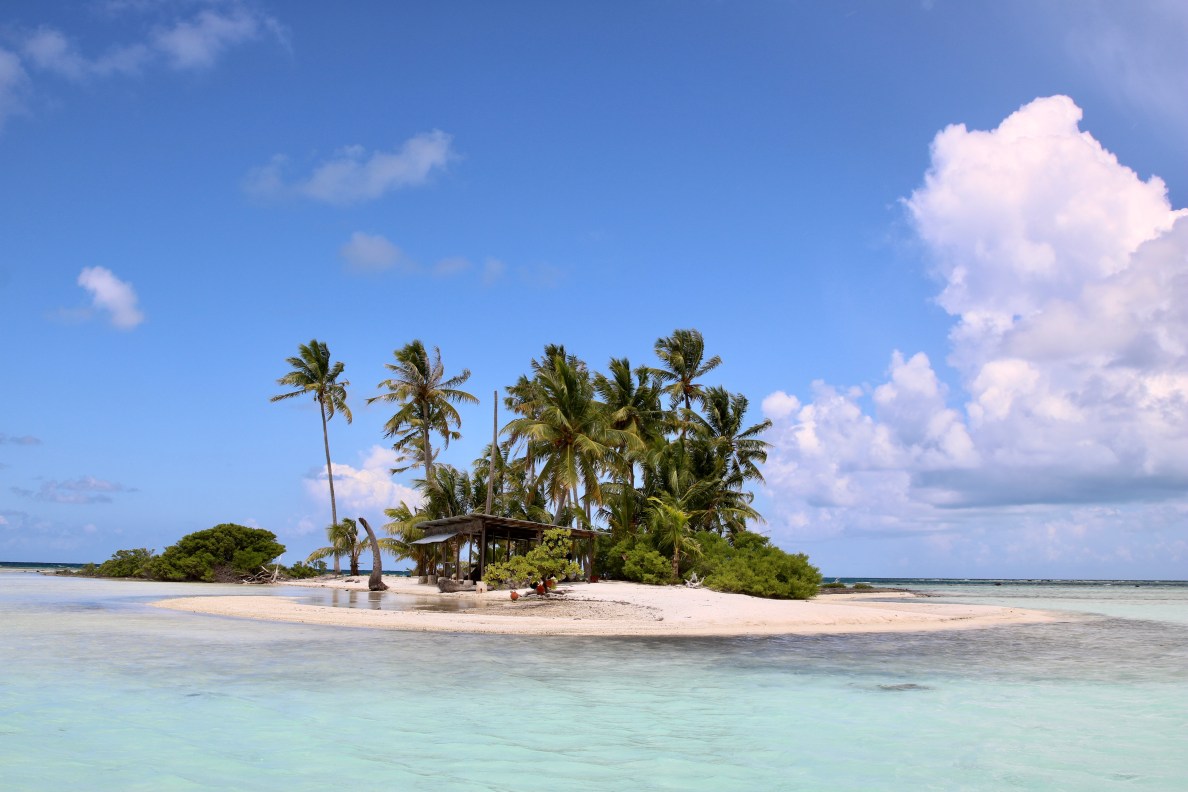
French Polynesia, with its volcanic capital Tahiti and famously jagged Marquesas Islands, is often left out of the sea-level-rise conversation entirely. Because of a few mountainous islands, the country itself won’t be underwater anytime soon. But 84 of the country’s 118 islands are low-lying atolls that sit no more than two meters above sea level.
Global rhetoric follows that Pacific Islands are sinking, soon to be lost to the ocean’s steady upward creep. But, naturally, they are quite resilient — a recent study found that over the past half century, of 509 atolls surveyed, 70% either stayed stable or gained landmass.
“We have little scientific evidence that these atolls are collectively drowning. They just constantly readjust their position,” said Sebastian Steibl, a postdoctoral researcher at the Naturalis Biodiversity Center. The islands move and shift over time on their reef platforms in response to oceanic changes. But, when they’re covered in coconut palm monocultures, they can’t, making them vulnerable to erosion from storms and sea level rise.
Early scientific reports from the 1960s that monitored severe hurricane impact on atolls revealed the first evidence of this phenomenon. They showed that islands with natural forests expanded after storms, but those with copra monocultures greatly receded.
From 1950 to 2009, Rangiroa saw sea level rise rates higher than the global average, a statistic that is expected to increase. At some sites in French Polynesia, shorelines have receded over 20 meters in the last 40 years.
Part of what makes atolls resilient is their native vegetation. It provides structural stability while allowing for the natural movement that monocultures like copra prevent. In the Pacific, what was once native vegetation is now mostly coconut palms, part of a worldwide trend of deforestation. More than 30% of Borneo’s rainforest has been lost, while the Amazon Rainforest has seen around 20% of vegetation loss. A 2024 study showed that coconut palms now account for over 58% of vegetation in the central Pacific.

But copra continues to reign because, for many inhabitants of these remote atolls, it is the only viable way to make money. Teipo Gnatata is a local resident who runs a guesthouse while her husband, at age 64, continues to farm copra. “Life in Rangiroa is getting harder and harder,” she said, “it is too expensive.”
The farming itself is hard work, requiring back-breaking hours in the sun. Many copra farmers have to take boats to their farms on remote parts of atolls, which can be expensive, so they often stay for weeks at a time in fragile structures or small tents. To fend off bugs that carry fatal diseases, a fire of palm fronds is constantly burning, its smoke an insect repellent.
But Gnatata feels lucky to have the coconut trees. “More coconuts mean more money, more income,” she said. These plantations may be degrading atoll hydrology but, for generations, copra farming is all most of these islanders have known.
“I’m not sure if it is harmful, but it is extremely useful to us,” said Gnatata’s husband, Guy, who continues to farm trees passed down to him by his grandparents. “But the rising sea levels, yes, that’s visible. The water is increasingly eroding the shoreline. In 100 years, perhaps, there won’t be any atolls left.”

The Seabird Situation
To an untrained eye, a copra farm might look like paradise. Fronds fan from the tops of thin trunks like exploding fireworks frozen in time. Between trees, the soil is sandy. And just beyond sprawls either the jewel-toned shallows of an inner lagoon or frothy, open ocean waves breaking on the outer reef.
Atolls are the remnants of ancient volcanic chains, formed when volcanoes subsided into the ocean, leaving behind their barrier reef. What remains today are circular islands surrounding a central lagoon. When atolls’ outer reefs are hit with waves or grazed on by fish, the calcium skeleton of coral breaks off into sandy sediment that then replenishes the island.
Seabirds play a crucial role in this process. Seabird poop, otherwise known as guano, is a nutrient-rich sludge that acts as a fertilizer for the soil and coral reefs. “Research has found that corals adjacent to seabird colonies grow faster or have greater tolerance for thermal anomalies,” said Wegmann.
“So, when you have seabirds, you have healthier coral, when you have healthier coral, you have more sediment being produced and accreting back onto the islands,” said Wegmann. When copra farms repel seabirds, they also rob atolls of their poop.

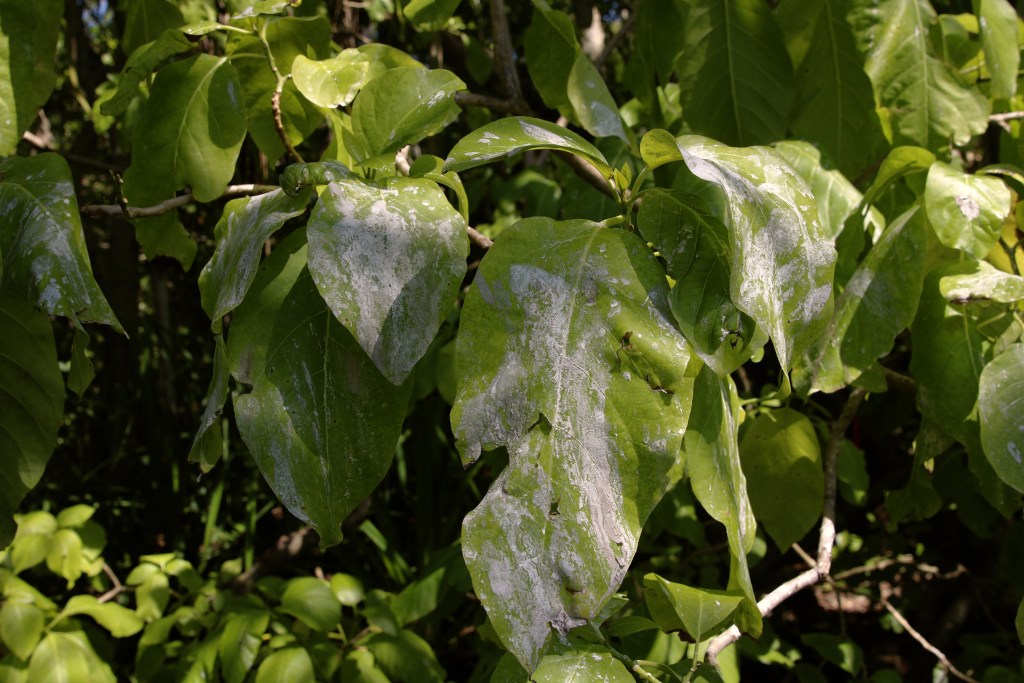
Seabirds love native vegetation. They will not, save for one brave species, nest or roost in coconut palms—the trees are too skinny and wiggly for them. Since 1950, global seabird populations have declined by roughly 70%. On Tetiaroa, a nearby atoll, less than three percent of seabirds nest in coconut palms. Visit a seabird colony nesting in native broadleaf trees and the soundscape bursts with whistles and shrieks and hoots. On a copra atoll, silence dominates.
“What we can say is, if you have seabirds, your atoll has a better chance of surviving projected sea level rise,” said Wegmann, and more coconut palms mean fewer seabirds. Other researchers are more hesitant. “It’s a nice concept,” said Paul Kench, a coastal geoscientist at the National University of Singapore, “I’m just not sure the proof exists yet to actually confirm it.”
“Another big impact is that coconut palms really reduce the soil fertility. When you have a copra plantation you’ve been running for years, your soil fertility is going down and down,” said Jayna DeVore, an ecologist at the University of French Polynesia. This is part of the reason coconut palms may be worsening erosion. Even the abandoned farms prevent the growth of native vegetation and silently degrade the soil in which they’re planted.
Copra Today
As both climate change and time wear on these historic copra plantations, many farms are producing less and less fruit. “The coconut groves in Rangiroa are very, very old,” said Gnatata — some as old as early colonial arrival to French Polynesia’s shores.
At the same time, climate change and worsening storms are increasingly ravaging the plantations, obliterating harvests for those who depend on them. Saltwater intrusion from floods and rising seas stresses the palms, reducing nutrient uptake and stifling growth. And copra farming is becoming increasingly fickle, requiring lots of work for little pay. Today, production costs for copra far exceed the market value. “Before, you could make a living from it,” said Gnatata’s husband, Guy, “Now, not so much.”
Copra grown in French Polynesia is still used for coconut oil production and is taken via boat to Tahiti for processing before it is exported—primarily to one facility in France. French Polynesians themselves buy imported coconut oil products from supermarkets because it’s cheaper, while the fruits of their labors are shipped to Europe.
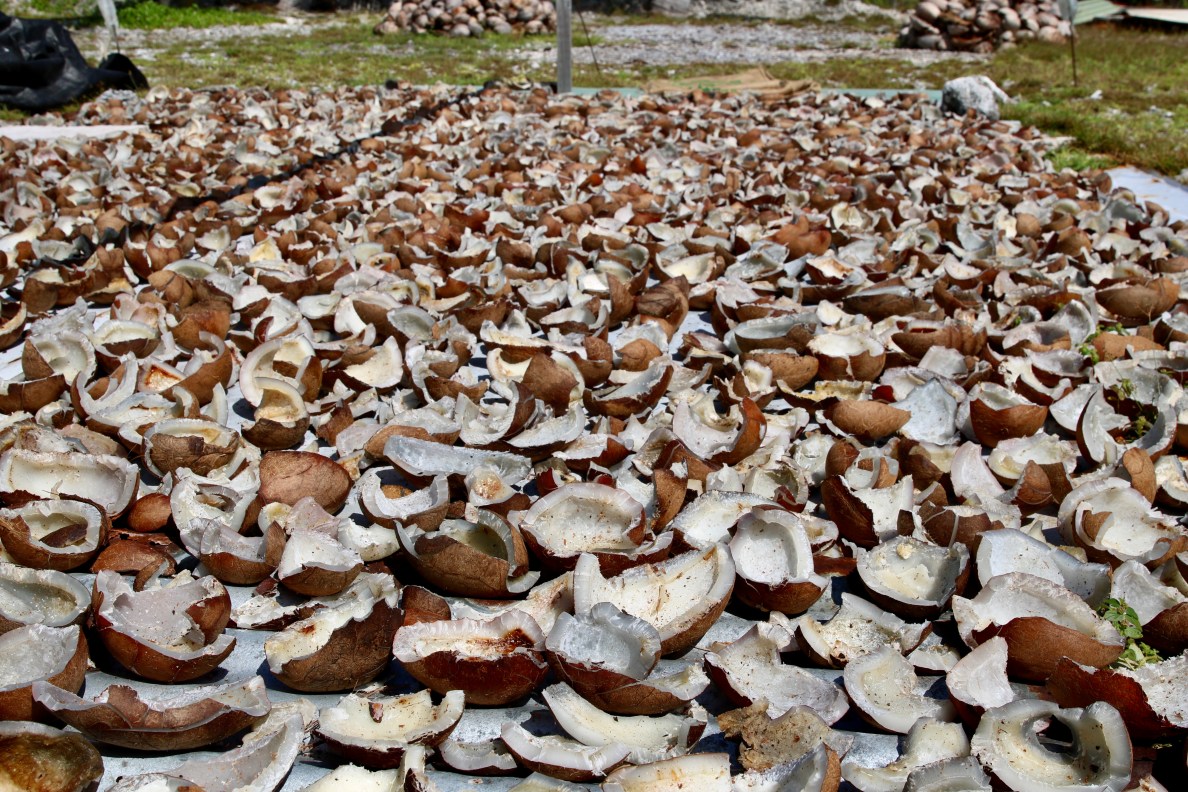
In the Marshall Islands, a 2015 increase in their copra subsidy burdened the government with an $8 million spend in 2023, up from $1.7 million in 2015. The United States Department of Agriculture’s EconMAP, the International Monetary Fund, and the World Bank Group have all proposed replacing the inefficient subsidy.
After decades of the unraveling viability of copra, the government of the Marshall Islands is pioneering a Universal Basic Income program. Launched in November 2025, it’s the first time a Pacific Island nation has attempted an alternative to the copra subsidy.
For Tamaehu, copra is a choice. Most of the time, he works as a guide for tourists. But some don’t have this option, and many young people leave in pursuit of different careers. So why does he do it at all? “It makes good money—really, really good,” he said. When Covid-19 spread and tourism stalled, copra was one of the only ways for islanders to earn an income.
Without the subsidies or replacement programs like the Marshall Islands’, atoll economies would collapse, said Wegmann, and there’s not yet a clear economic alternative to growing coconut. Conservationists posit that restoration and reforestation work could fill the gap, but change doesn’t come about easily for an industry so steeped in history and tradition.
As the world looks at the Pacific as the first-to-go in terms of rising seas, scientists are rushing to understand what’s really happening. “No, your ecosystems aren’t inherently doomed to climate change,” said Wegmann, “They’re very much at risk of sea level rise, but there’s an opportunity to address some local situations that could actually help.”

A Final Stop
At the end of long tour days, Tameahu sometimes brings his guests to one last “secret” stop. As the lesser-known sister to Rangiroa’s famous Blue Lagoon, Tamaehu calls his home the “Green Lagoon.” Here, his mother awaits guests with coffee, tea, and cookies. She has long silver hair and breaks into a toothy smile when she waves from the deck of one of a cluster of buildings surrounding a small inlet.
Tamaehu jumps off the boat and runs inside. Behind their mother, Tamaehu’s sister, Leticia, takes payment for the tour and addresses guests in English, Tahitian, and French. Tamaehu’s father can be seen walking back and forth across the small lagoon—at its deepest he and his long white beard are up to their chin in gem-toned seawater—in an effort to repair a half-sunken boat on the opposite shore.
And, of course, the scene is set on a backdrop of coconut palms. The very copra farm that Tamaehu and his sister will one day inherit. “In the Tuamotu, the first relationship we have is with the ocean,” Tamaehu says. “We are living on the reef.”

This story was supported by the Pulitzer Center. Civil Beat’s coverage of climate change and the environment is supported by The Healy Foundation, the Marisla Fund of the Hawai‘i Community Foundation and the Frost Family Foundation.