

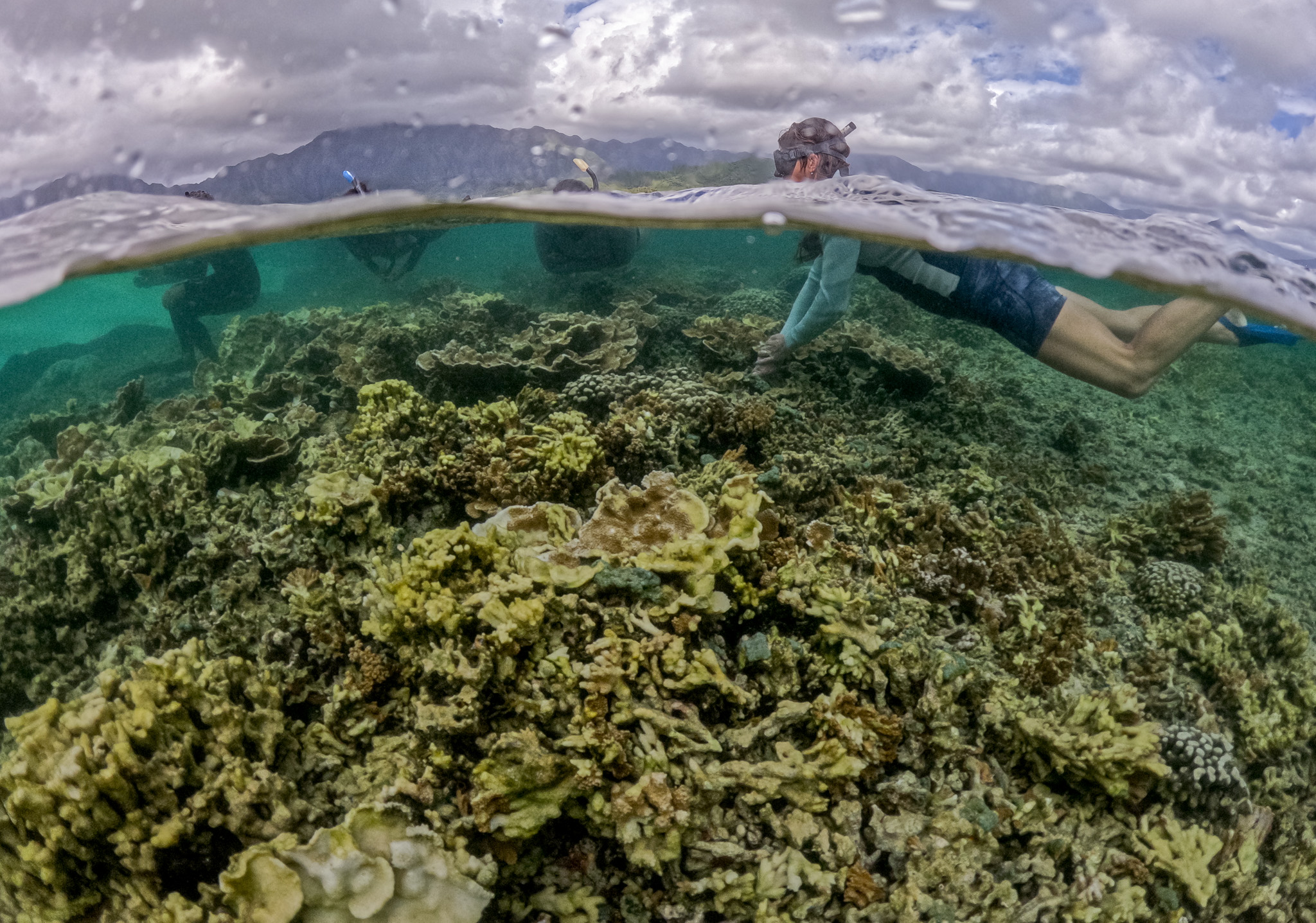
Local fisher Gabby Kawelo was looking for the eyes of he‘e, or octopus, peering up from their usual hiding places in Kāneʻohe Bay when he spotted unusual corals in February 2020.
“He noticed three different species of introduced corals on the reef, and then we activated the response team,” his daughter Hi‘ilei Kawelo said last month. Kawelo is the founder and executive director of Paepae o He‘eia, which cares for the adjacent ancient He‘eia fishpond.
The corals were removed in May 2020, and an alien anemone was also noted.
“We removed everything we could see, everything that was observable to the naked eye,” Jesse Boord of the Division of Aquatic Resources at the state Department of Land and Natural Resources said of the first response.
Follow-up monitoring occurred at regular intervals and corals were again removed, including Montipora foliosa, which has the appearance of a delicate cabbage. It wasn’t until four years later, in October 2024, that aquatic division staffer Kate Gonzalez saw the anemone “all over the place,” Boord said.
The primary infestation increased in size from approximately 390 to 1,110 square meters — a little over a quarter of an acre — between April 2025 and January 2026.
The good news is that containment efforts appear to be working, and that $200,000 allotted by the Legislature for 2026 wasn’t in vain. Previously, efforts to contain such creatures came from existing operational budgets and the efforts of concerned stakeholders, such as Paepae o He‘eia. This is not a one and done kind of effort because continued surveillance will be necessary, Boord said.
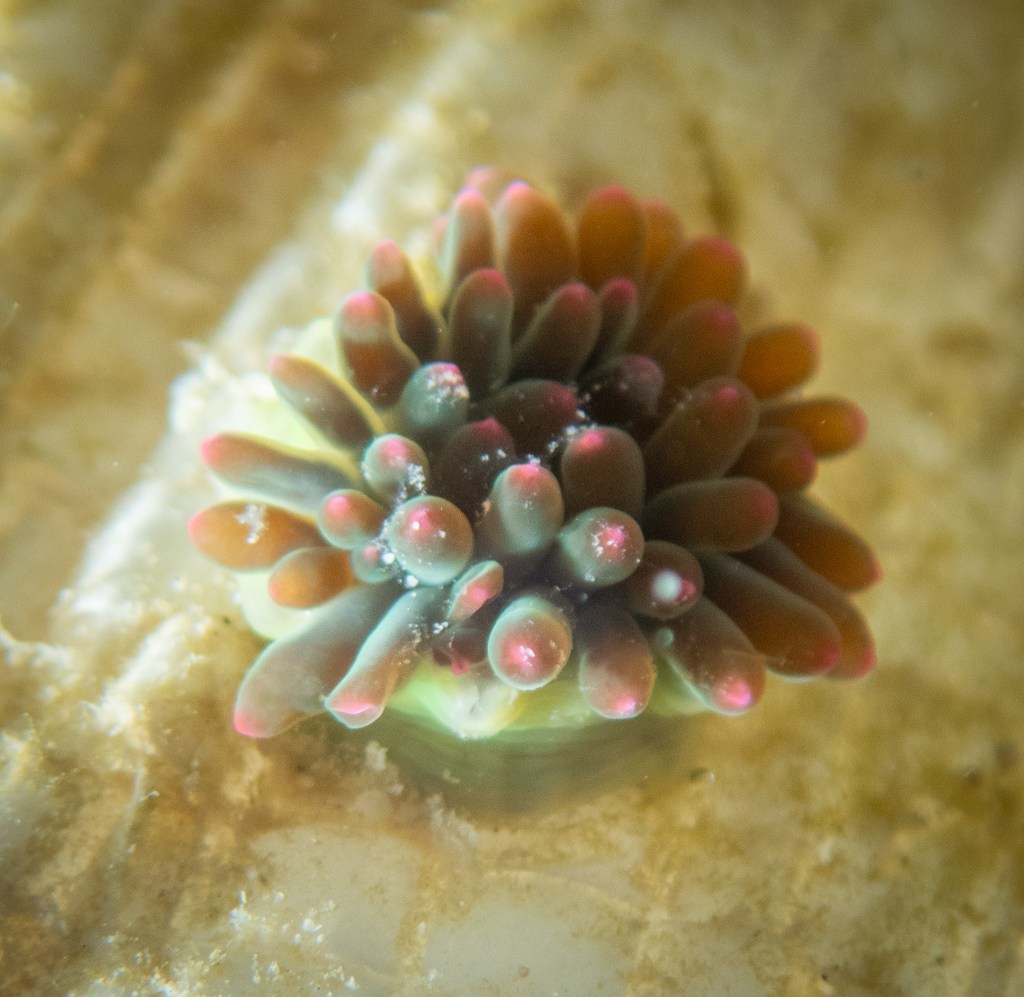
The anemone, Anemonia Majano, is common to the Indian Ocean and now established in the Western Pacific. Not much is known in the scientific literature about Majano, also called Manjano. What is known comes mostly from aquarium hobbyists.
The initial discovery of the Majano expansion in October 2024 hastened the aquatic division to work to find a response. Then “this thing started to bloom” because of a delay in finding an appropriate response, which had not been attempted before, said Boord, now the division’s Aquatic Invasive Species Program biologist.
Sea anemones reproduce by releasing sperm and eggs into the sea, but Manjano can also break into smaller pieces which helps it spread rapidly, and each tiny piece can become an anemone. It is related to jellyfish and corals, but apparently smother its coral cousins.
“It’s just one of the most gnarly aquarium pests, just known for taking over tanks entirely,” Boord said.
“Typically when it ends up in a tank, the move is just to really get rid of everything,” Boord said, “and you kind of have to start over.”
Besides smothering beneficial coral, Majano also releases toxins into tanks, affecting water quality and the health of other animals. Left unchecked, Majano could devastate Hawaiʻi reefs, and there are no known predators to keep it in check.
Majano was also discovered in Pearl Harbor, and now multiple agencies, including the U.S. Navy, are involved in trying to keep the anemone contained with a goal of eradication.
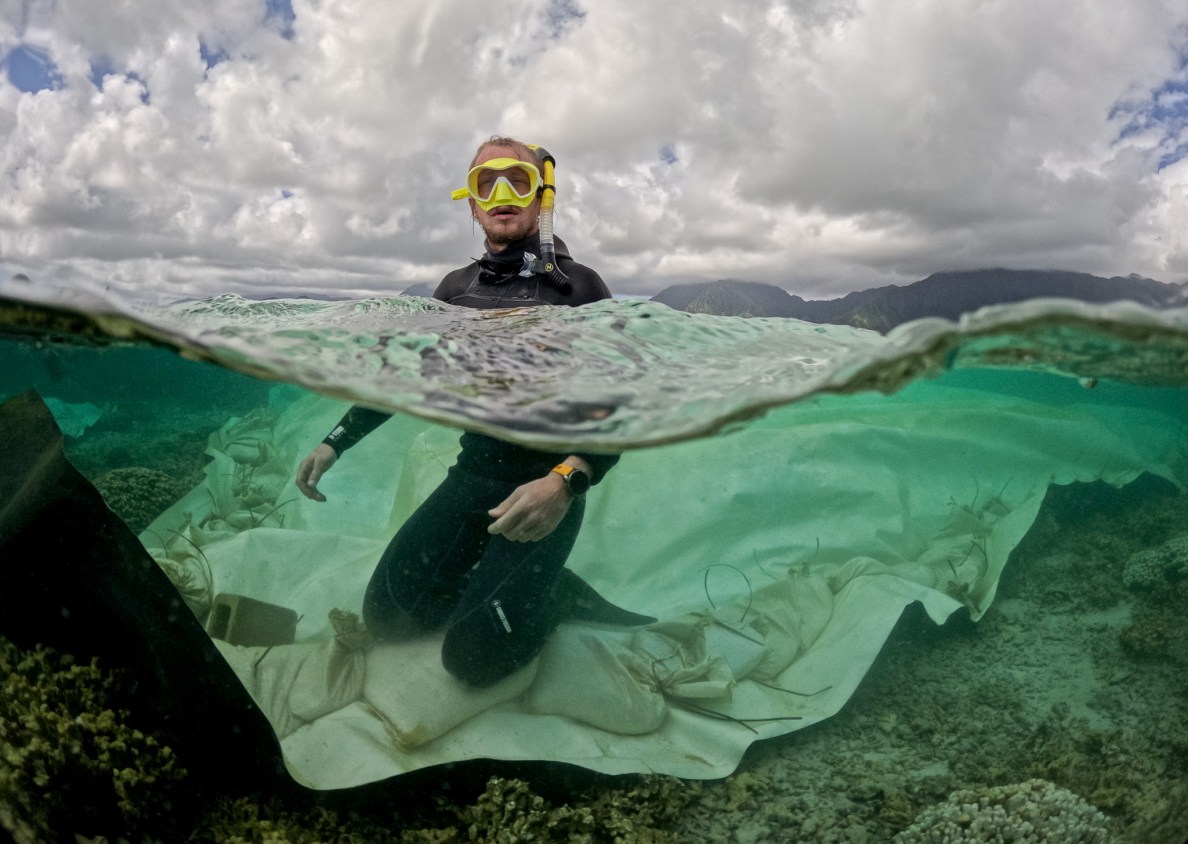
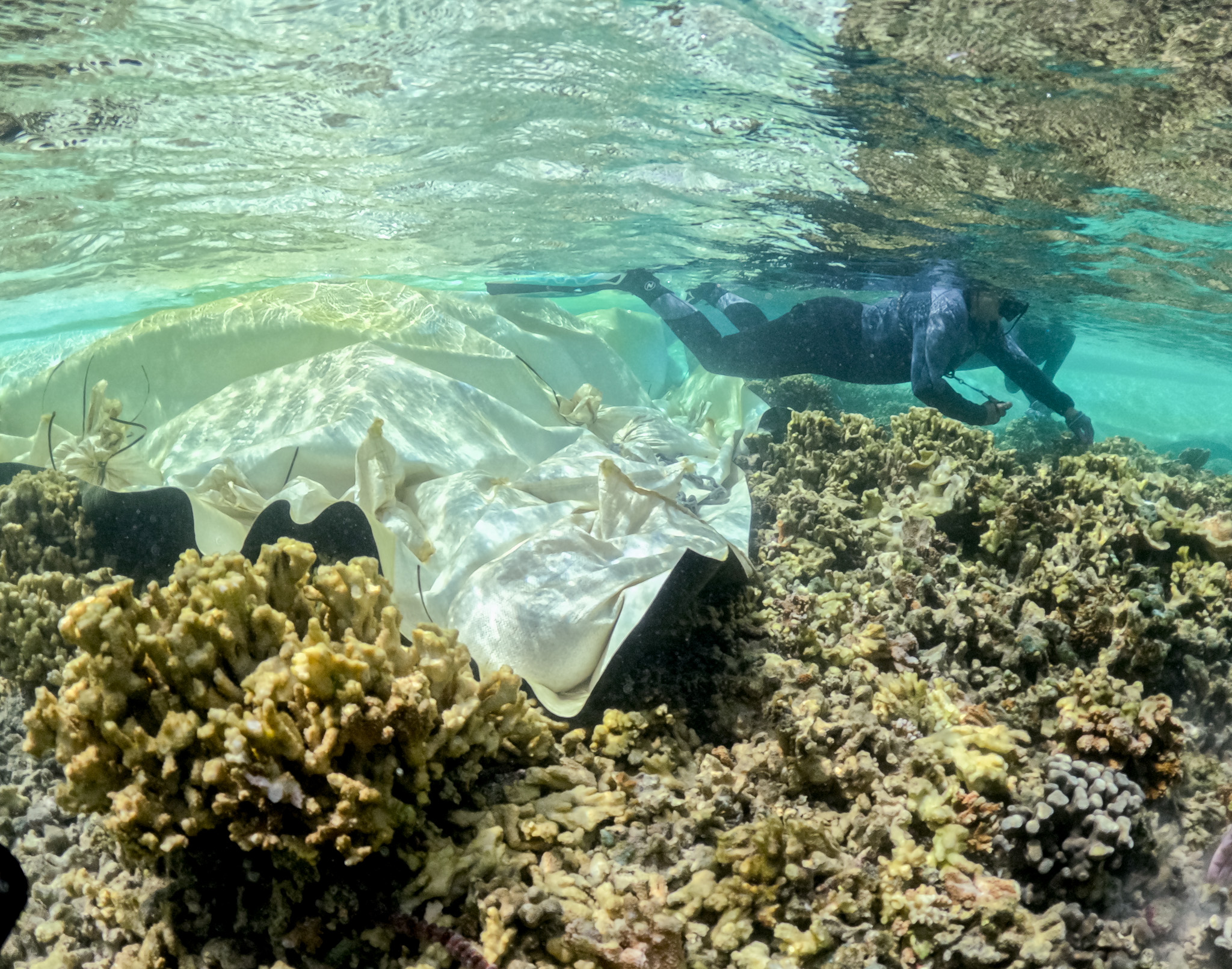
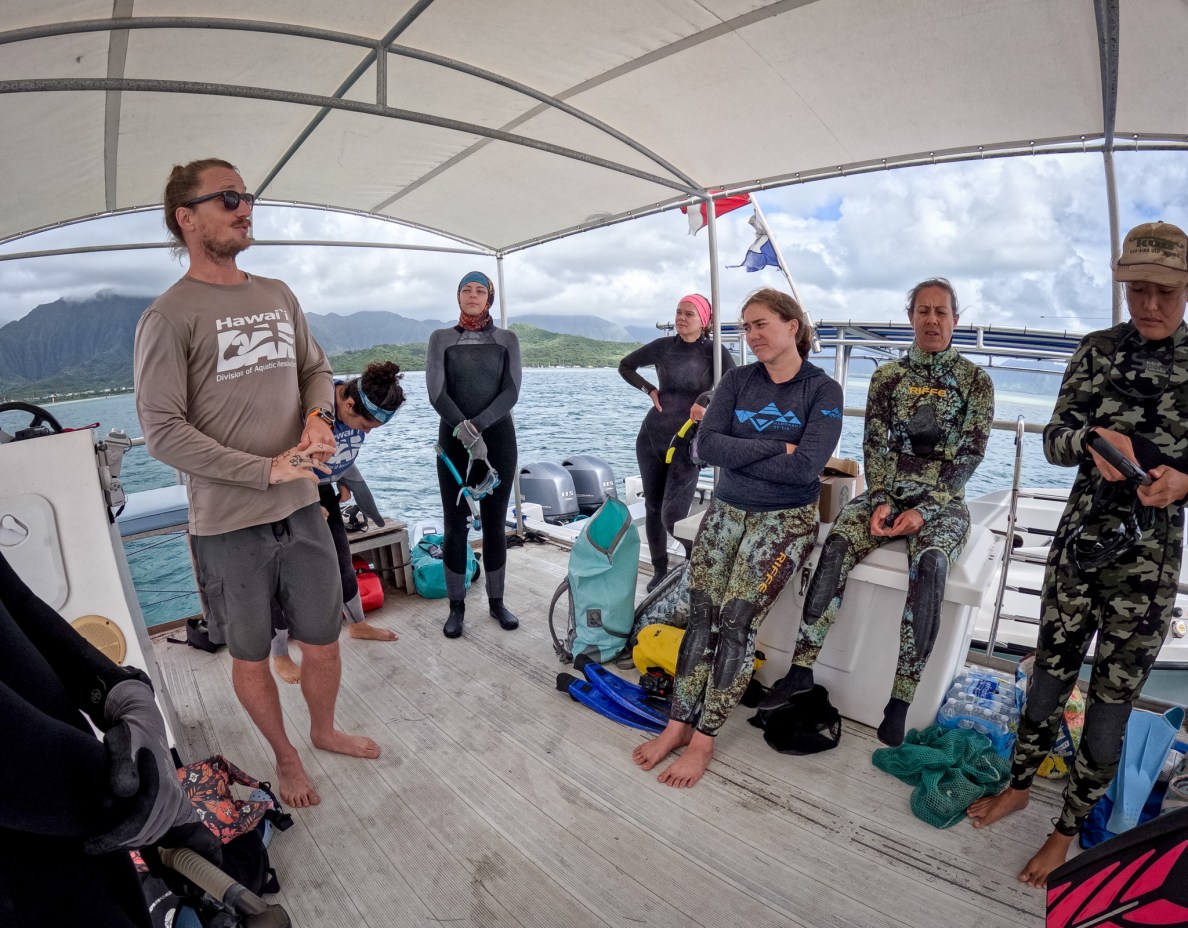
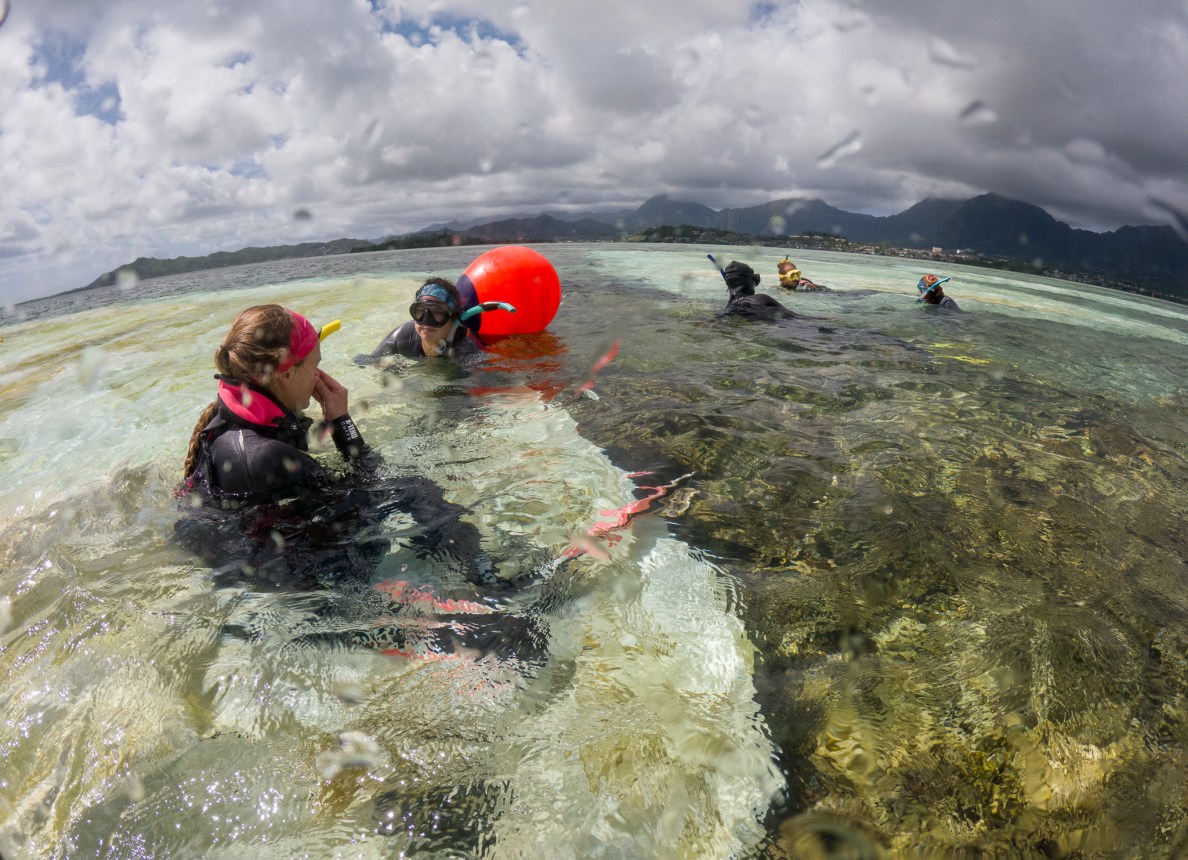
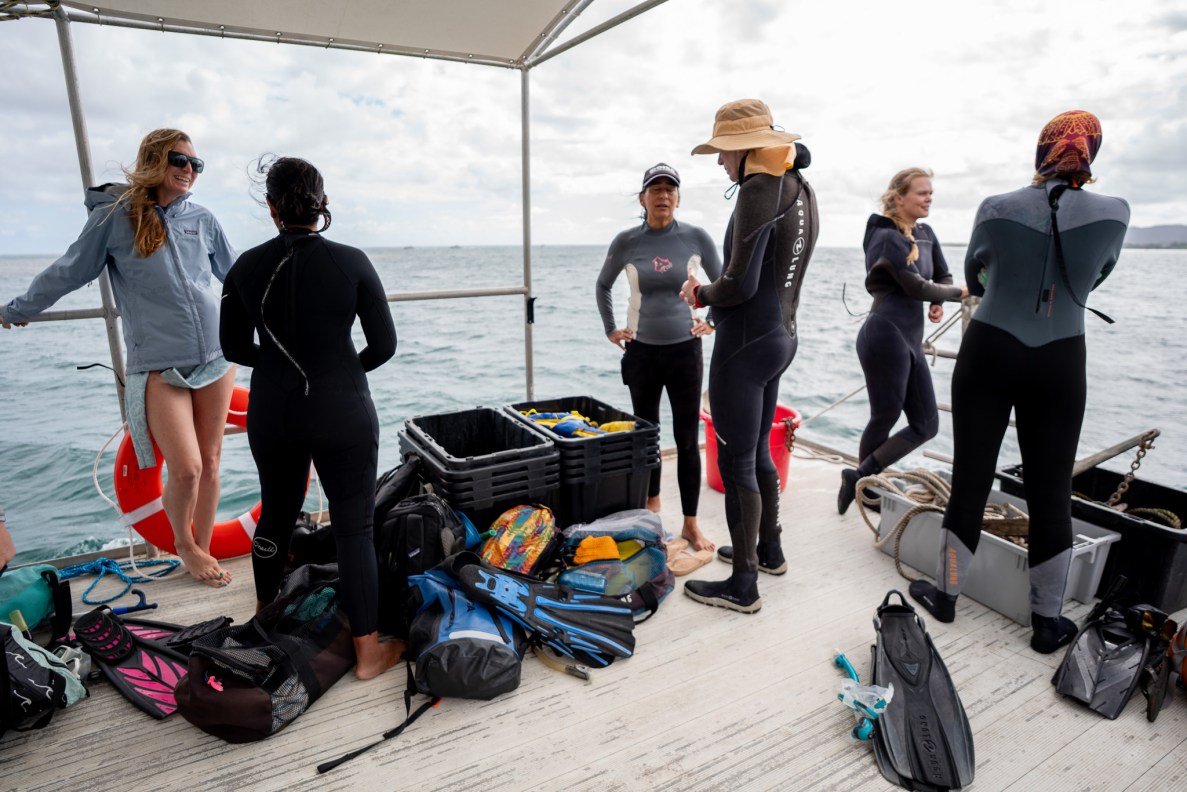
The aquatic division hosted a visit to the Kāneʻohe Bay site to view efforts to fight Majano on May 28. Representatives from numerous agencies — including the U.S. Fish & Wildlife Service, U.S. Geological Survey, He‘eia National Estuarine Research Reserve, the Coordinating Group on Alien Pest Species, hosted at the University of Hawaiʻi Pacific Cooperative Studies Unit, and Paepae o He‘eia — also attended.
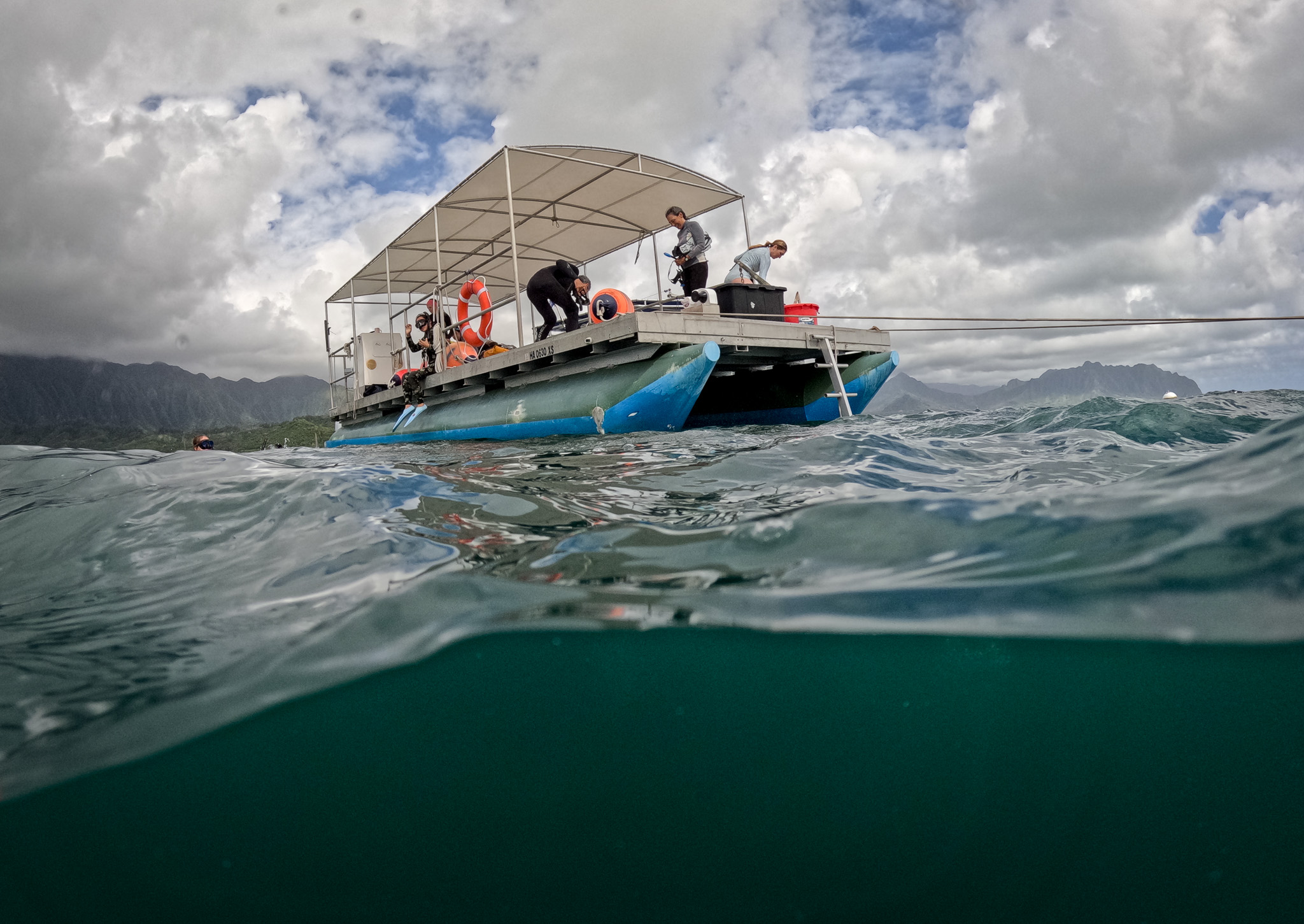
The sky was overcast and the waters calm as participants hopped on a 32-foot platform barge for a minutes-long trip to a mooring near Reef 8. They donned masks and fins to snorkel the last 100 yards to the site, over very shallow water — enough to be concerned for the coral just inches from one’s belly.
Several weighted white tarps mark the area, each an attempt to limit the anemone’s access to food and to block sunlight, as Majano can use the products of photosynthesis from microscopic algae that live in and on them.
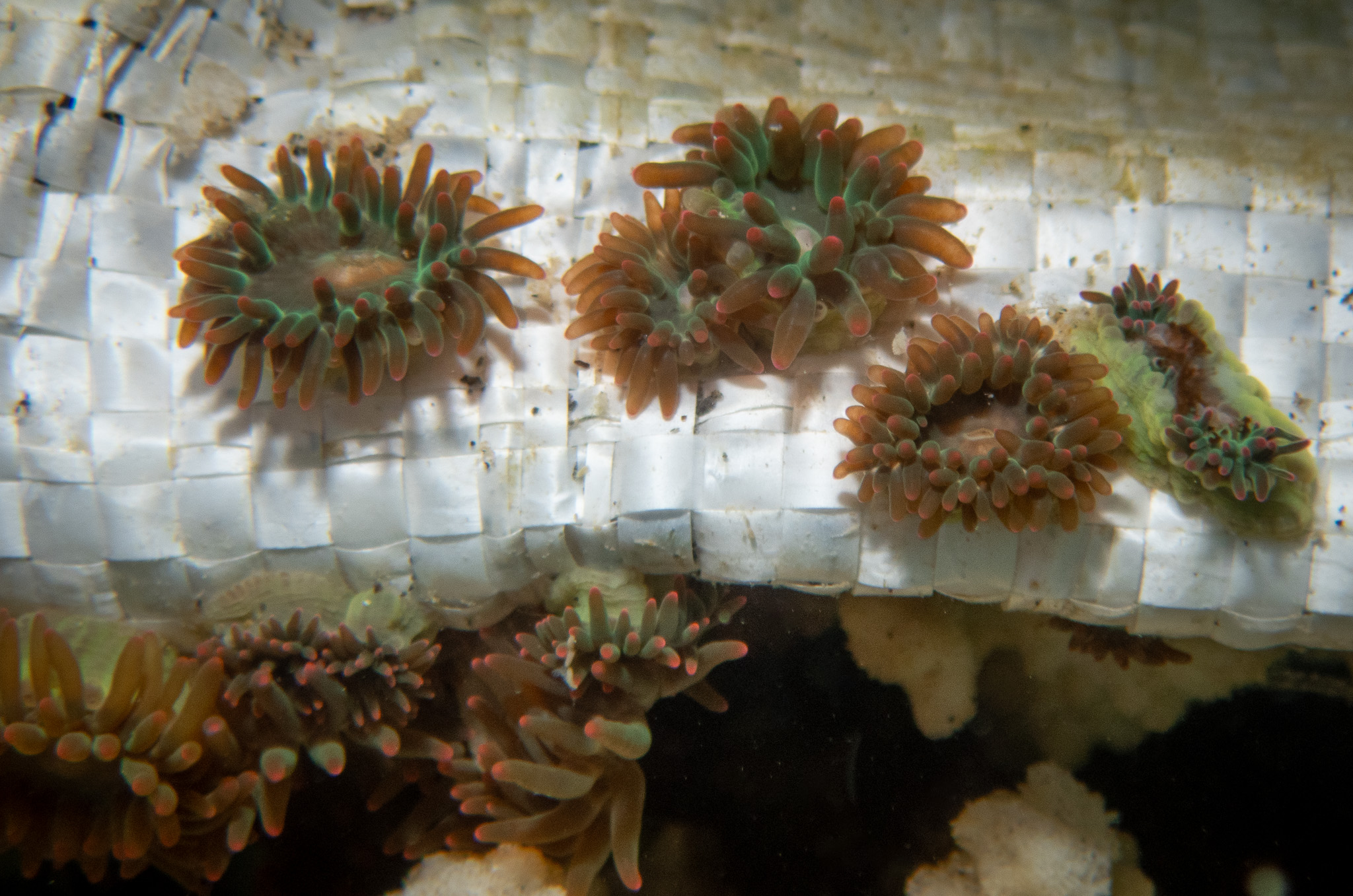
Some tarps were previously treated with trichlor, a chlorine agent typically used in swimming pools, which required numerous approvals for its novel use against this anemone.
“What we’re hoping to do is hit it hard with this tarping technique, use a little (chlorine) paste as an alternate technique for some of these satellite colonies that aren’t the main clump, and really just kind of smother it,” Boord said.
Majano anemones now join an infamous list of invasives that Hawai‘i is struggling with: coconut rhinoceros beetle, coqui frog, little fire ant, mongoose, mosquito, red-eared slider turtle, red mangrove and ta‘ape. There are many more, but these are often the headliners.
Aquarium releases by individuals continue to introduce alien species, as the majano anemone appears to be, Boord said. It was found among carefully arranged aquarium corals, which are highly unlikely to have magically found their way to Kāneʻohe Bay.
“Prevention here is key, that’s something that we strive for,” Boord said. “Prevention is where we’re able to save money, we’re able to save efforts and we’re able to make a big impact before these things are happening.”
Civil Beat’s coverage of climate change and the environment is supported by The Healy Foundation, the Marisla Fund of the Hawai‘i Community Foundation and the Frost Family Foundation.
