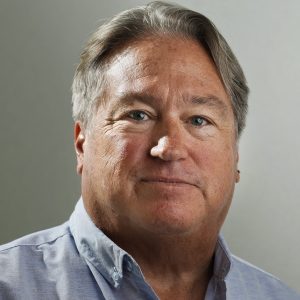
Schatz Federal Campaign Report: A Who’s Who Of Hawaii’s Biggest Names
U.S. Sen. Brian Schatz made a big splash this week when it was reported that he had raised more than $1 million for his 2014 election bid, with about $800,000 of it for the August 2014 primary.
With Hawaii Senate races these days costing about $5 million per winning campaign, Schatz, who was appointed to the job not quite four months ago, is right to feel pretty good about his electoral strength — and not just because of his cash haul.
His quarterly filing is dotted with recognizable local donors that suggest a vote of confidence in the young, untested senator.
While he has yet to attract a primary or general election opponent, Schatz is already showing that he has respectable fundraising chops for his first federal office.
What’s largely missing are big contributions from labor groups and defense contractors, and small contributions that typically come from average voters.
Names In The Know
Schatz’s is a short report, about 270 pages in length, and it’s filled with well-known names in Hawaii’s business, finance, health, legal and philanthropic community.
A good many of these donors gave the maximum amount of $2,600 per election, and some to both the primary and general elections. Even more gave $2,500 for each election, perhaps unaware that the maximum limit had been increased by $100.
People running for high office in Hawaii would do well to have these donors behind them. What follows is a good representation, in alphabetical order and split up to make it easier to digest of Schatz’s biggest donors:
A-C Hawaiian Electric executive Robbie Alm, attorney Paul Alston, insurance executive Keith Amemiya, Hawaii Health Systems Corporation director Bruce Anderson, Jeff Arce of the McNaughton Group, construction executive Bob Armstrong, Oceanic executive Bob Barlow, attorney Bernie Bays, A&B Properties president Chris Benjamin, public relations executive Joan Bennet, philanthropist Debbie Berger, producer Tim Bostock, former attorney general Margery Bronster, Christine Camp of Avalon Group, Outrigger president David Carey, realtor Bill Chee, philanthropist Catherine H.Q. Ching, A&B executive Meredith Ching, construction-engineering executive Herbert Chock, A&B executive Nelson Chun, former Maui Land and Pine executive David Cole, attorney Jeff Crabtree.
D-J Attorney Mark Davis, attorney Beadie Dawson, retailer Chris Eldridge, Tori Richard President Josh Feldman, Oceanit founder Patrick Sullivan, construction executive Russell Figueiroa, Nan Inc executive Fooney Freestone, attorney Rick Fried, realtor Andy Friedlander, Mitsunaga & Associates COO Aaron Fujii, Servco executive Mark Fukunaga, HMSA executive Michael Gold, United Fishing Agency manager Frank Goto, investor Richard Gushman, attorney Jeff Harris, realtor Karl Heyer, Bank of Hawaii officer Kevin Higa, First Hawaiian Bank executive Michael Hirai, attorney Mitch Imanaka, developer Richard Ing, architect Robert Iopa, Roberts Hawaii executive Chad Iwamoto, HMSA executive Tim Johns, energy executive Cully Judd.
K-M Attorney Bill Kaneko, Navatek CFO Martin Kao, attorney Bruss Keppler, Hawaii Gas executive Jeff Kissel, developer Bert A. Kobayashi Sr., Blacksand Capital executive Bert T. Kobayashi Jr., businessman Michael Kometani, Dr. Thomas Kosasa, Mitsunaga & Associates engineer Arnold Koya, A&B CEO Stanley Kuriyama, attorney Jim Leavitt, DBEDT director Richard Lim, Hawaii National Bank executive Warren Luke, Lyon Associates engineer Frank Lyon, developer Duncan McNaughton, Queen Emma Land executive Eric Martinson, insurance executive Colbert Matsumoto, Lanai Resorts Kurt Matsumoto, attorney Bill McCorriston, Dura Constructions president Bob McFarlane, attorney Bill Meheula, Trinity Investments founder Jon Miho, Mitsunaga & Associates president Dennis Mitsunaga.
N-Y Nan Inc executive Ryan Nakaima, JN Group CEO Joe Nicolai, Pasha Group executive George Pasha IV, developer Joe Pickard, health executive Virginia Pressler, lobbyist John Radcliffe, Blue Planet founder Henk Rogers, HEI executive Richard Rosenblum, Castle & Cooke executive Harry Saunders, Deloitte Consulting executive Lisa Sellers, Nan Inc. president Patrick Shin, Kahala Capital investor Bradley Smith, Trinity Principals executive Charles Sweeney, Persis Corporation president Easton Manson, Marathon Group president Marc Tilker, philanthropist Thurston Twigg-Smith and Sharon Twigg-Smith, Queen’s Medical executive Arthur Ushijima, consultant Jeff Watanabe, developer Gulab Watumull, restauranteer Roy Yamaguchi, Hawaiian Telcom CEO Eric Yeaman.
It’s an impressive list, and there’s more names just like it in the FEC filing. No wonder Schatz’s campaign is happy.
Cautionary Notes
Schatz is a senator, one of 100 of the highest elected officials in the nation. Of course influential people from Hawaii give money to their senators.
Many of these same folks also give to other members of the delegation — including U.S. Rep. Colleen Hanabusa, whose recent filing reflects that.
One must also be careful not to read too much into Hanabusa’s fundraising — she pulled in about $230,000 — because she is not (yet) running against Schatz or (yet) against his former boss, Gov. Neil Abercrombie.
Even if Hanabusa were to challenge Schatz, several akamai big donors would wisely give to both campaigns in order to be in the best graces of the eventual winner.
Schatz’s filing does not show many donations from people giving less than a couple under dollars. That could be because it’s too early for average folk to be thinking about giving money to their favored candidate. It could also suggest soft grassroots support.
Labor dollars are also missing. Again, it may be too soon; local labor groups usually wait until the election year, the better to get press with endorsements and to influence others.
Schatz has received money from national labor groups, like the American Federation of Teachers, AFL-CIO Committee on Political Education, which gave $5,000. The International Association of Fire Fighters in Honolulu also contributed to Schatz.
More common, however, are contributions from industry PACs like those representing insurance, transportation and maritime interests. Again, that’s typical for U.S. senators. But, for now, financial support from labor is largely absent, despite Schatz having already received the endorsement of several groups.
There’s another puka in his filing, too: money from defense companies.
U.S. Sen. Daniel K. Inouye, whose seat Schatz now occupies, received generous contributions from companies like BAE Systems, General Dynamics and Raytheon. Of course, Inouye was a decorated military veteran, a strong supporter of a strong national defense (especially in Hawaii) and the chair of Senate Appropriations.
A better indication of Schatz’s electoral strength will have to wait until he gets a primary opponent who begins raising his or her own funds.
If it’s Hanabusa, the big question will be whether she is able to draw big bucks from labor, defense companies, big name donors here at home and groups like pro-choice groups like EMILY’s List. All have enthusiastically backed her before.
What will they do in a Schatz-Hanabusa race?
Equally important: Are longtime supporters of Inouye waiting to see what Hanabusa, the late senator’s chosen successor, does?