Neal Milner: COVID-19 Is Making Me Rethink My Past And My Future
I’m letting my anxieties take control as I consider whether to stay in Hawaii or move to my next lifestyle on the mainland.
July 23, 2020 · 6 min read


About the Author

The COVID-19 pandemic has changed my “geographies of fear” — the ways our mental maps of danger affect where we go and where we don’t.

Like most people, my geographical fear map changed in obvious ways — don’t go here, don’t go there. But I’m talking about something more subtle.
Thinking about these geographies has made me feel more privileged in one way, more vulnerable in another. Both involve things it is too easy to take for granted.
My privilege involves walking. My vulnerability is about shelter.
Walking As An Opportunity — For Some
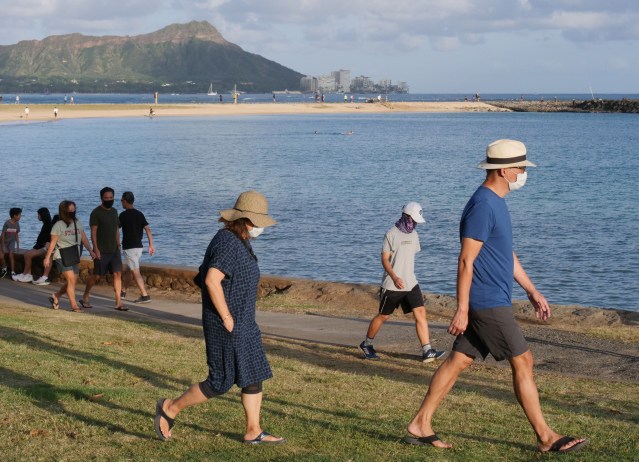
During these times, walking has become a great source of comfort for so many people. Maybe you don’t think about it as a form of personal liberation, but considering the situation we are all in, it sure is.
In a John Wray short story about the coronavirus lockdown in Barcelona, people pay a guy to let them walk his dogs so that they have a legitimate reason for being outside.
At the beginning of the stay-at-home regulations I took walking for granted. If I thought about safety at all, it was only about masks. No worries because the streets are made for people like me, white men. King of the road.

Moving for me is comfort, freedom. Opportunity, not danger or inconvenience.
When I walk, I can choose to be anonymous, a silent observer of what’s going on around me. Or I can be gregarious and decide I want to strike up a conversation even while social distancing.
That’s how I’ve walked many cities over the years. That’s how I walk now.
As the geographer Leslie Kern shows in her recent book “The Feminist City,” women typically don’t experience the city my way at all.
Geographies of danger are much more a part of their thinking process than they are of mine. Their mental maps are different and much more fraught and volatile.
Women more likely experience the city as a set of barriers and dangers, from getting a stroller onto a bus to those places they don’t feel comfortable or safe entering.
Not far in the back of their minds are worries about getting harassed, assaulted, being asked intrusive questions or given unsolicited advice about their children.
Because of COVID-19, something I used to think of as a future source of comfort, I now see as a threat.
It is harder for women to stay anonymous. It’s riskier to strike up conversation.
African Americans, especially men, have the same issues. So do homeless people. Imagine a homeless person jauntily making his/her way through Waikiki, at times stopping to take in the scene, at other times asking some stranger at Starbucks how her day is going.
Either way they are out of place. The antennae go up. People point and whisper. Private security “checks in.”
Honolulu has become more and more urban. Kakaako is the shining example.
Shiny maybe but flawed and limited too. More urban but only a little less conventional and hardly more welcoming.
It is nowhere near a place that can be equally shared by everyone in the ways that critics of typical city planning want.
When we plan for the post-COVID future, think of making Honolulu more of what Kern calls “a feminist city” where “city planners and architects can’t take the white, able-bodied cis man as the default subject.”
This kind of city, she says, would have more “accessible transportation, affordable housing, safe and clean public bathrooms, access to a community garden, a livable minimum wage, and shared spaces for things like meal preparation.”
This sort of re-conceptualized, redesigned city cannot happen without the input of groups that typically have little opportunity to define what an urban setting should look like — those most likely to be harmed by, and to question, the taken-for-granted city.
Shelter: Comforts Become Threats
Because of COVID-19, something I used to think of as a future source of comfort, I now see as a threat.
I’m talking about the kinds of places where my wife Joy and I planned to live when we got old enough to make a change — senior living, long-term care and the gold standard, continuing care retirement communities.
I now imagine — I choose that term carefully for reasons you will see in a minute — these places not as a source of comfort but as a trap rather than a shelter.
Over 40% of U.S. COVID-19 deaths, that’s close to 60,000 people, have died in long-term care facilities. And those terrible pictures.
Some of these facilities were disasters before the coronavirus hit. Let’s focus on the good ones like the CCRCs.
A CCRC guarantees that you will have the kind of housing and level of support you need at each stage of growing old.
These places are hard to find and expensive. Hawaii has less than a handful. Big surprise: in Hawaii you get much less bang for the buck.
That’s why Joy and I have looked at places on the mainland. The one on top of our list is a high rise in a very hip, interesting urban neighborhood. Fancier than we live right now. It’s extremely well run and has had no COVID-19 problems.
So from a rational standpoint, no reason to change our plans. But this is not just about rationality. It’s about what I now imagine. It’s also about my own geography of fears.
Look, I am not arguing in favor of my present position. I’m letting my anxieties take control.
Consider it done.
I should approach it like a fear of spiders or public speaking. Desensitize and then just jump in. Get back on that bike. Use my head.
Maybe I will do that. But it is wrong to pretend that my new map of fears should play no role in how I perceive even the best senior living.
Our emotional and rational selves are intertwined. Those horrid coronavirus photos carry meaning, just as the awful death statistics do.
So here I am, thanks to the pandemic, with a revised geography of fear, following the maybe not such good advice of a character in Michael Chabon’s novel “The Amazing Adventures of Kavalier & Clay“:
“Forget about what you are escaping from. Reserve your anxiety for what you are escaping to.”
Escape to the future as liberation: I have a better understanding of what would make Honolulu a better post-pandemic city.
Escape to the future as fear: I am more unsure of my own place after the coronavirus finally passes us by.
 Sign up for our FREE morning newsletter and face each day more informed.
Read this next:

Local reporting when you need it most
Support timely, accurate, independent journalism.
Honolulu Civil Beat is a nonprofit organization, and your donation helps us produce local reporting that serves all of Hawaii.
ContributeAbout the Author