Neal Milner: Looking For A Model Of Accountability? Try The Honolulu Police Commission
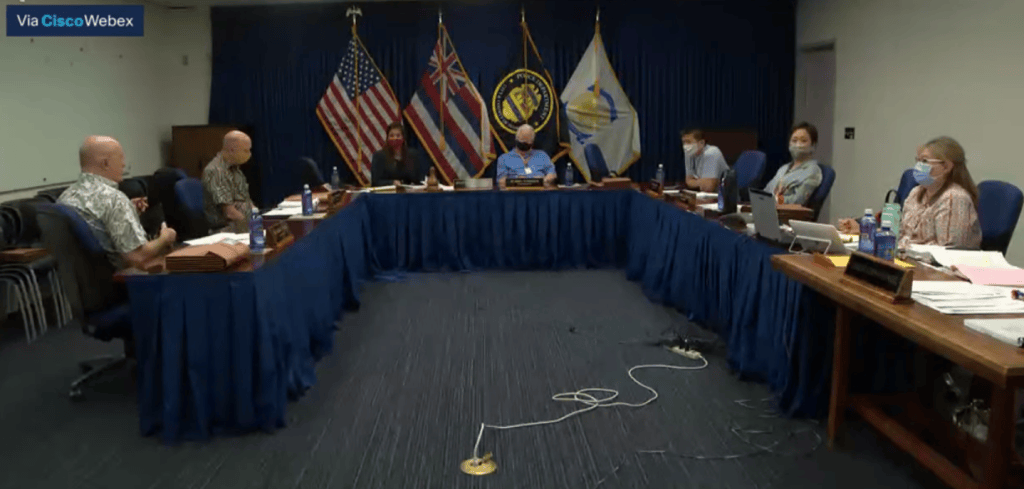
The process the commission used in its recent evaluation of Chief Susan Ballard is something to be admired.
April 29, 2021 · 7 min read

About the Author

Even if you disagree with the Honolulu Police Commission’s recent critical assessment of Chief Susan Ballard, you should support it because the commission has done something so important and so rare in Hawaii.
 It actually held a public official accountable for her actions. Someone got a critical job review that actually had consequences. In this state, how odd is that?
The Police Commission showed how independent oversight of public officials is supposed to work. In Hawaii this kind of serious oversight is as rare as an owner-occupied condo in Kakaako.
Think about it this way: When was the last time you said, “Damn, there’s way too much accountability here?”
You need to respect the process and for reasons that go way beyond Ballard’s assessment, you need to cut the commission a lot of slack.
The Honolulu Police Commission is by law an independent body that is supposed to exercise oversight over the police department. This oversight is limited, mostly advisory, but it definitely includes the power to evaluate Ballard’s job performance.
The commission also has the sole power to hire the police chief.
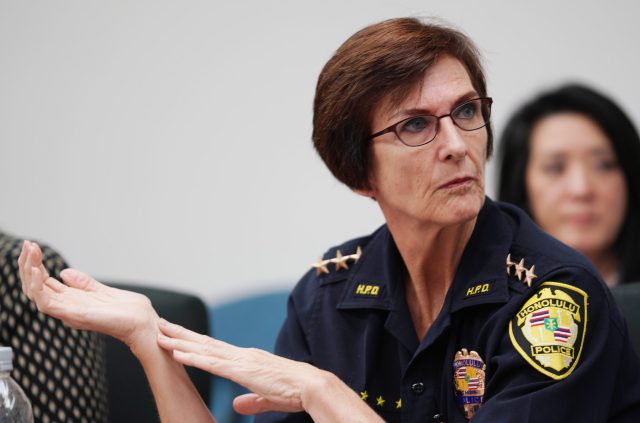
Ballard was not fired. She quit on the basis of the negative assessment the commission gave her. It could have fired her if it wanted to.
So, as for nuts and bolts, the commission certainly acted within its authority. That’s just a small part of all this, though.
To understand the significance and importance of what it did, we need to take a quick look at its history and see how it has evolved from being the class clown to the honors student that other public officials should emulate.
For many years, most of the 45 or so I have been here, it has acted not as an overseer, but more like a Honolulu Police Department Booster Club. If HPD had a fanzine, the commissioners could have edited it.
Let’s put aside the term micromanagement and think of the Police Commission’s work in two less loaded terms — scrutiny and discretion.
Things have changed pretty recently and not without a struggle. It’s not that long ago when the commission gave then-chief Louis Kealoha rave reviews at the same time that the feds were about to come knock knock knocking on his front door — at the house with the new mailbox.
About that time, the mayor appointed two new commission members who took oversight more seriously. There was progress in that direction, though it was checkered. Those two members, including one who had been chair, later resigned.
There was more worry that the commissioners would go back to their suck-up days. But a couple of things happened.
One was subtle. From some of their words and actions, it seemed encouraging that the commission’s norms continued to evolve in the direction of taking its oversight work seriously.
The other was that then-mayor Kirk Caldwell, not exactly a champion of oversight, went ahead and appointed an ex-judge and an ex-state attorney general as commissioners.
Now, stop and remind yourself how awful the process of accountability works here. Begin with the fact that none of the recent Hawaii corruption cases have been generated by state or local officials. They have come from federal prosecutors. As does the investigation of the Honolulu Authority for Rapid Transportation.
When it has to be the feds who bring charges against some workers in Honolulu’s Department of Permit and Planning for doing stuff that was, not to put too fine a legal point on it, common knowledge, that speaks volumes about politicians’ willingness to look closely and then do something.
And one of the most active overseers, the legislatively mandated state auditor, is under siege by the Legislature, for reasons that at best are petty and at worst are a vendetta.
Speaking of attacking the bearers of bad news, then-Mayor Caldwell similarly went after the city’s auditor’s office when it was critical of — wait for it — the mayor.
Not to mention the Legislature itself, with its burning the midnight oil and gut-and-replace legislation.
And the Department of Health, where the Senate’s COVID-19 committee had to exercise a gaming parlor raid to get contact tracing information.
And state government offices that refuse to comply with the state’s public records law because, well, because it’s too hard and costs too much.
Which by the way seems to be Gov. David Ige’s excuse for suspending these laws during the pandemic (motto: “wash your hands, wear a mask, keep social distance and don’t ask questions”).
And right now, the most egregious of all, the HPD’s refusal to release officers’ body cam video.
When police officials in small Southern towns are far more cooperative than the cops in what we like to think of as our racial paradise, that speaks volumes about how accountability works in Hawaii.
When it comes to accountability, they are all whistling the same tune, the name of which can’t be revealed.
And finally, to get back to the Police Commission itself. It is bad news that Mayor Rick Blangiardi wants to have a “very big say” in who the next chief is.
Note to the still-new mayor: Bodies like the Police Commission are supposed to work in a way that insulates themselves from political influence. That’s what sole authority means. Having a “say” does not sound like a bad idea. Having a “big say” raises big red flags.
Some of Ballard’s supporters accuse the commission of trying to micromanage the department. I think the commission made some bad mistakes, which I will get to in a minute. That does not mean it exceeded its authority. It did not.
Ballard seemed genuinely surprised by her bad grades. In a decent working relationship between a board and an organization, there shouldn’t be such surprises.
Keep in mind how often the claim of micromanaging is the first line of defense for an organization that is taking heat in an evaluation. I’ve used this defense myself in my University of Hawaii days.
But also remember the need to be skeptical about that accusation, especially in a state with such an abysmal record of accountability. Anyone think the commission micromanaged the police department under Kealoha?
So, let’s put aside the term micromanagement and think of the Police Commission’s work in two less loaded terms — scrutiny and discretion.
It was certainly within the commissioners’ discretion to do what they did. Their job is to scrutinize. They did so. They had the right to fire her, but they chose not to.
And that’s where the process did not work the way it should have. The commission’s perfectly legal assessment of the chief was also a perfectly unrealistic one. There was no way she could have done what it wanted in the period it gave her.
Ballard seemed genuinely surprised by her bad grades. In a decent working relationship between a board and an organization, there shouldn’t be such surprises.
Ballard quit in a huff. In a better board-chief relationship, there could be a lot of disagreement and conflict but no huffs.
The overall point, though, is that an imperfect part of the process should not distract us from realizing how much of a model the commission’s assessment process is for the rest of the state.
You old timers, remember how often you used to hear the expression “don’t talk stink” and how often it was used to deflect serious criticism?
We don’t hear that much anymore, but that’s only because the language has disappeared, not the behavior.
Good for the Police Commission reminding us that a better motto should be, “Let’s talk seriously.”
 Sign up for our FREE morning newsletter and face each day more informed.
Local reporting when you need it most
Support timely, accurate, independent journalism.
Honolulu Civil Beat is a nonprofit organization, and your donation helps us produce local reporting that serves all of Hawaii.
ContributeAbout the Author