An Assisted Outpatient Treatment Program Would Aid Hawaii’s Homeless
A more effective way of managing the crisis is for clinicians to provide direct intensive care to those who need it.
November 21, 2021 · 5 min read

About the Author
My passion is providing humanistic mental health services that treat individuals fairly, ethically and as a whole human being. Prior to moving to Hawaii in April, I spent the last three years working in an interdisciplinary psychiatric team providing intensive wrap-around services for individuals with a long history of psychiatric hospitalizations and diagnosed with a serious mental illness.

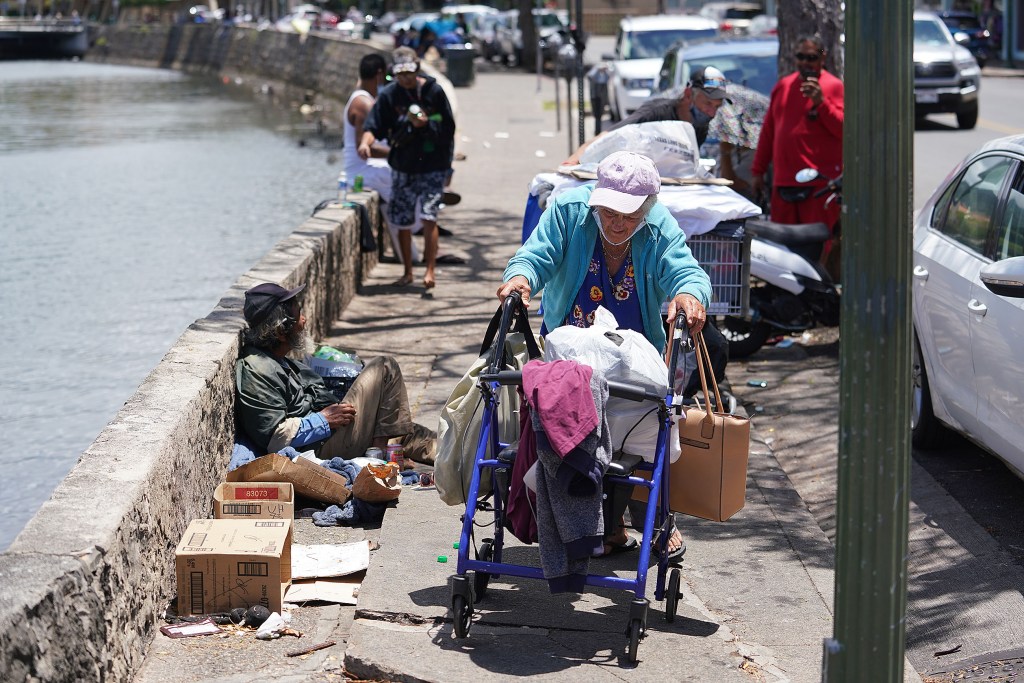
To say there is a mental health and homelessness crisis on Oahu is an understatement. All one has to do is take a walk down almost any main road in Honolulu to see the tents that people call home, or to hear the screams coming from someone in distress.
One attempt to help manage this crisis is with the enactment of ACT, assisted community treatment, which is also known outside of Hawaii as AOT, assisted outpatient treatment.
The ACT program of Hawaii mandates treatment to individuals with a serious mental illness. These folks usually have a long history of hospitalizations and/or incarcerations due to medication or treatment noncompliance, and the purpose of this program is to prevent further institutionalization.
We definitely could debate the legitimacy and ethics of mandated services. However, what I would like to address is the idea of what is considered “treatment.”
Case Management ‘Ineffective’
In Hawaii, mandated treatment for an individual consists of assigning a psychiatrist to prescribe medication and case management services. If an individual refuses medication, they can be taken to the hospital by the police and compelled to take it.
A case manager is there to help enforce treatment and connect them with services such as outpatient therapy and assistance with benefit applications, as well as connecting them with housing providers. For an individual experiencing homelessness with a serious mental illness such as schizophrenia, putting someone on medication may quiet the voices, but it doesn’t do anything about homelessness or address the complex and challenging clinical needs of a serious mental illness.

Providing case management services has also been shown to be largely ineffective in helping address these issues. Sure, you can try to get a homeless individual diagnosed with a psychotic disorder who has been residing in the same park for the last five years to travel and attend an outpatient clinic, but the likelihood of this happening is extremely rare.
Now, if the clinicians traveled to this very park and provided not just medication and case management services but also intensive clinical care, this would be much more effective and one way to help manage this crisis.
If we want to see how this could be done, all we have to look at is the gold standard of mandated treatment programs — the AOT program in New York City.
It not only mandates over 800 individuals with serious mental illnesses to take medication and submit to case management, but in almost all cases involves a full clinical treatment team consisting of a psychiatrist, registered nurse, substance-use specialist, social workers and peer advocates.
This team provides medication, health services, individual and group therapy, substance-use treatment, advocacy and case management. It has a low worker-to-client ratio and lets team members meet their clients six times a month to provide comprehensive clinical treatment wherever the client lives including the street, homeless shelter or apartment.
New York City’s program is comprehensive, evidenced-based and works with individuals until they are ready to transition off mandated services and into a lower level of care such as outpatient services and case management.
Furthermore, the folks in these programs are more likely to receive appropriate mental-health housing or placement within homeless shelters whether they can afford it or not.
For whatever reason, Hawaii does not have a program such as the one described above, even though this is a program that has been utilized worldwide and is extremely effective in reducing hospitalizations and improving life outcomes.
It is a shame that individuals with a serious mental illness in these islands are not being served properly with empirically based interventions and are currently being served by programs that research shows are neither adequate nor effective for this population.
This leads to important questions: What will Hawaii’s mandated program actually achieve? Is it destined to fail and be used as another example as to why the state shouldn’t invest in mental health services for the sick and disenfranchised?
It is a shame that individuals with a serious mental illness in these islands are not being served properly.
If Hawaii truly wants to do something about the amount of sick individuals who are currently living on the street, we need real change. We need programs that are evidence- and research-based; that are humane, smart and effective.
We need to treat these people as humans, as people with real wants, needs and desires, something that those in politics and nonprofits seem to have forgotten. We can’t keep thinking that the solution for this population is criminalizing and punishing homelessness, then moving these folks from Waikiki, to Chinatown or to the next neighborhood that won’t kick up a fuss, until the problem magically disappears.
We also shouldn’t be enacting programs destined to fail that don’t provide the proper level of treatment as it’s a disservice and a waste of time. Hawaii needs wrap-around services that have been researched, evidence-based and have been shown to be successful.
Once that has been done, then a proper conversation about mandating treatment can be had, one that would be less about forcing individuals to take medication against their will and rather one about providing proper, adequate care.
 Sign up for our FREE morning newsletter and face each day more informed.

About the Author