Hawaii Could Still See Impact If SCOTUS Upends Roe V. Wade
The draft U.S. Supreme Court ruling is being scrutinized locally as well as nationally.
May 5, 2022 · 4 min read

About the Author
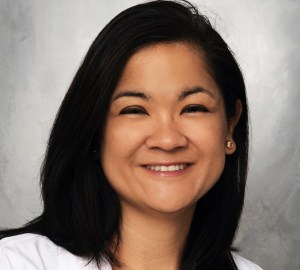
My colleagues and I are obstetrician-gynecologists in Honolulu, and we provide the full spectrum of reproductive health care.

That includes everything from delivering babies, to prescribing contraception, to performing surgery, to providing abortions. We provide abortion care. We provide health care.
Since a leaked draft of the U.S. Supreme Court decision in Dobbs v. Jackson Women’s Health was made public, we have been inundated with questions from folks across Hawaii who want to know what this means and who are scared about the future: “Will abortion become illegal here?” “What can we do?” and “Are you okay?”
We’ll start with the most pressing answer first. Abortion is still legal — in all 50 states — and will remain legal in Hawaii no matter what the final Supreme Court decision is. Prior to the 1973 Roe v. Wade decision, we were one of the first states to legalize abortion.
If ultimately Roe v. Wade is overturned, the legality of abortion will be something each state will decide. In 23 states, abortion will be immediately banned.
Hawaii is not one of those states. Our state legislature has thankfully kept at bay most of the abortion restrictions that many other state legislatures have passed with increasing frequency in recent years.
But this does not mean we will not be affected. We have already cared for people from Texas seeking abortions here, after their state law banning abortions after six weeks took effect in September 2021. Although the flight to Hawaii is long, as coastal states like California, Oregon, and Washington become inundated with patients seeking abortions, more and more will come here.
Our medical group regularly sees patients from Guam who pay approximately $2,000 for the eight-hour flight to Honolulu. They arrange child care, take days off from work, and sleep on the couches of friends and family to obtain basic health care.
Most patients from Guam who need an abortion don’t make it to Hawaii. We were relieved when a recent court decision allowed us to provide early abortion to patients in Guam via telemedicine, but now we fear this access will be short-lived.
Every abortion provider has had to tell a pregnant person that they cannot have an abortion because they are further along in a pregnancy than they thought. The despair, fear, and pain they express is palpable. To understand the scale to which that despair will creep into the lives of people in this country is crushing.
That’s what these restrictions mean for those needing abortion care. Those who can afford it, will travel the country to find it. Those who cannot afford it either find a way, or they are forced to give birth.
A person giving birth is 14 times more likely to die than a person having an abortion. In our country where the maternal mortality rate is higher than any other well-resourced country, and the brunt of that is disproportionately experienced by Blacks and Native Americans, as one scholar stated, “This is a death sentence for black and brown folks.”
In addition, as we look to the future, fewer states will be able to train health care providers to perform abortions, and the number of abortion providers will decrease, exacerbating this crisis to access.
Thankfully, today we have legal, safe, and increasing access to abortion pills which patients can use to end a pregnancy at home, but they are not available everywhere. Abortion restrictions affect those least likely to have the means to overcome them – people of color, young people, those already struggling financially, immigrants, LGBTQ+ people, and others already marginalized by our health care system.
This is reproductive IN-justice.
What can we do? Donate to local abortion funds. Be vocal about your support for abortion access. Encourage our state legislature to strengthen our abortion statute and follow the example of states like California, which is proposing an amendment to enshrine the right to abortion in their state constitution.
Urge Congress to pass the Women’s Health Protection Act. Local hospitals and clinics can abolish paternalistic regulations, like requiring an escort home after getting an abortion. Support the John A. Burns School of Medicine training programs — we have trained physicians who provide abortion care in Hawaii and around the world.
Allies: It’s time to get organized and formulate a multi-pronged approach. Let’s talk. Our fellow physicians and health care providers: continue to provide compassionate care. Our communities will turn to health care providers they trust. Reassure them that abortion is legal, and tell them where they can get care. Vote.
Support your local abortion providers. Vote.
Last question, are we okay? No. Not today. Not tomorrow. But we will be, and most importantly, we will be here providing abortions.
This Community Voice was authored by Drs. Reni Soon, Bliss Kaneshiro, Shandhini Raidoo and Lisa Natavio.
 Sign up for our FREE morning newsletter and face each day more informed.
Community Voices aims to encourage broad discussion on many topics of community interest. It’s kind of a cross between Letters to the Editor and op-eds. This is your space to talk about important issues or interesting people who are making a difference in our world. Column lengths should be no more than 800 words and we need a photo of the author and a bio. We welcome video commentary and other multimedia formats. Send to news@civilbeat.org. The opinions and information expressed in Community Voices are solely those of the authors and not Civil Beat.

Local reporting when you need it most
Support timely, accurate, independent journalism.
Honolulu Civil Beat is a nonprofit organization, and your donation helps us produce local reporting that serves all of Hawaii.
ContributeAbout the Author