A Warning On Hawaii’s Housing Crisis — From 1970
Lt. Gov. Tom Gill’s prophetic vision haunts the state to this very day.
July 14, 2022 · 6 min read

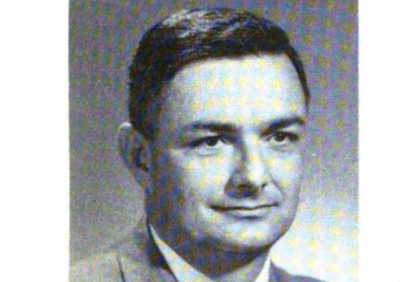
About the Author

A speech is drafted for delivery at 6:30 p.m. on Friday, July 3, at the Hawaiian Village Coral Ballroom. It is intended for the lieutenant governor, who shall address the International Brotherhood of Electrical Workers, Local Union No. 1186.

The lieutenant governor’s remarks will launch directly into a singular topic, noting with frustration that the state of Hawaii has been “treated to several months of euphoria about housing.” He is angry and his words will preface a politically painful declaration, one his audience might not like to hear.
He still proceeds, stating “it would be easy for the unknowing to assume that we are well on our way to a solution of our housing crisis. This is not so. If anything, the situation has deteriorated.” His frankness is colored by an accelerating campaign for governor of the state of Hawaii.
The year is 1970. The figure addressing the ballroom is not Dr. Josh Green, born less than six months before the speech. The lieutenant governor is instead Thomas P. Gill, an iconoclast challenging incumbent Gov. John Burns in that year’s Democratic primary.
‘Bonanza For Developers’
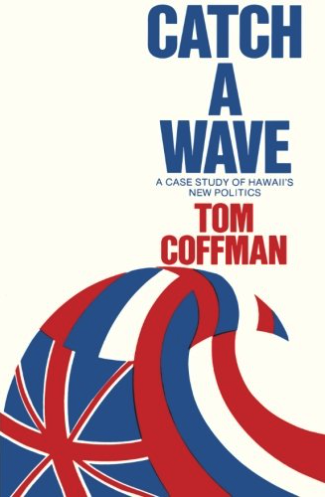
A former territorial and state legislator, U.S. congressman, and director of the state Office of Economic Opportunity during President Lyndon B. Johnson’s War on Poverty, Gill’s campaign is credible. In “Catch A Wave,” the journalist and historian Tom Coffman describes the battle between Burns and Gill as “a confrontation of strong personalities, a parking of heavyweights, a contest that would open the new decade.”
To underscore his arguments, Lt. Gov. Gill cites reports from Hawaii Business and the Bank of Hawaii, whose collective analysis renders two critical conclusions: 1) residential dwelling permits are in a state of free-fall with housing supply reaching an unprecedented rate of low vacancy; and 2) the pace of hotel construction faces curtailment while the condominium market softens.
Following the adjournment of the 1970 legislative session, Gill then analyzes a housing bill passed and signed by Burns into state law as Act 105. The innovative law establishes policies like the Dwelling Unit Revolving Fund, “which authorized the issuance of $125,000,000 of general obligation bonds to carry out the purposes of the Housing Development Program.”
While not opposed to the legislation, Gill warns of how Act 105 may serve as “a bonanza for developers” and is not guaranteed to “necessarily produce any substantial amount of low priced housing.”
Gill’s criticisms tie into concerns about how state government could misuse public funding for housing, producing “an effect of pouring tax money, in the form of subsidies, into an already overpriced and inefficient industry.”
Depending on how Act 105 is utilized, Gill asserts that the state of Hawaii can employ the law to inaugurate a “second housing market.” In this vision, the state will function as a housing developer, constructing large numbers of units through competent contracted builders, providing units to persons “who need a house, do not have one already, and who cannot buy one on the private market” while maintaining a right to repurchase housing “to prevent speculation.”
Furthermore, Gill did not hope to compete with the private housing market, pledging that private interests could continue to “produce the higher priced houses and speculative condominiums, just as they are now doing.” Together, Gill argues the two markets will compete to provide 150,000 across Hawaii by 1980.
The vigor of government — in Gill’s mind — could set Hawaii’s housing crisis on a pace of gradual alleviation, whereby a housing crisis might have never existed in 2022.
‘Chronic Housing Crisis’
In 2022, Gill’s vision presages the opening of a simple question: how has Hawaii’s housing crisis evolved in response to his attitude? A 2017 state Senate bill praises Act 105 of 1970, noting it “expanded the powers of the then Hawaii Housing Authority to provide for-sale affordable housing units to the general public, in addition to providing affordable rental housing units,” functioning as a foundation for the formation of the Hawaii Housing Finance and Development Corporation.
However, has Hawaii taken the letter of law far enough — as far as Gill wanted to go?
The legacy of Gill’s vision haunts Hawaii in the guise of a chronic housing crisis. I alone do not see the lingering ghost of 1970; Hawaii’s contemporary housing crisis is explored by Richard Borreca in a Honolulu Star-Advertiser column published on July 3, exactly 52 years to the day of Gill’s scheduled remarks. It is on July 3, 1970, where a primary race between Burns and Gill becomes near-identical to the present-day primary race of 2022.
Hawaii’s housing crisis was just as pressing in 1970 as it is in 2022. Like his predecessor, incumbent Lt. Gov. Josh Green’s gubernatorial campaign (alongside the campaigns of primary opponents U.S. Congressman Kai Kahele and former First Lady Vicky Cayetano) tries to address housing, acknowledging the “housing crisis has reached a state of emergency.” The point at which this “state of emergency” was reached might well be the year of Green’s birth. What then is the progress of the last half-century, and how shall the candidates build on such progress (or lack thereof)?
Gill’s name fades from historical memory with the passage of every year since his death in 2009. However, the Hawaii Congressional Papers Collection of the Thomas Hale Hamilton Library at the University of Hawaii Manoa maintains two copies of Gill’s forgotten speech. These papers open new insight into a consequential campaign made eponymous by Coffman’s political history.
Gill’s criticisms tie into concerns about how state government could misuse public funding for housing.
“The new act, and those already on the books,” Gill concluded in the Coral Ballroom, “can give us answers and opportunities we have not had before, but only if we use them in new ways.”
Laws enacted in 1970 or 2022 can serve to alleviate systemic ills or exacerbate crises. Depending on who serves as chief executive, “it all depends on how it is used.”
In line with Gill’s statutorial awareness, gubernatorial candidates in 2022 should maintain a standard of humility in this race. In dialogue concerning such topics as our chronic housing crisis, campaigns are neither fresh nor their ideas innovative.
Such gubernatorial races, after all, are eventually singular pins placed along a narrative trail mapping Hawaii’s history, whereby the only certainty is a crisis perpetually settled as prologue to a future unknown. By their participation, gubernatorial candidates in 2022 enter a historical dialogue of many decades concerning our housing crisis.
 Sign up for our FREE morning newsletter and face each day more informed.
Community Voices aims to encourage broad discussion on many topics of community interest. It’s kind of a cross between Letters to the Editor and op-eds. This is your space to talk about important issues or interesting people who are making a difference in our world. Column lengths should be no more than 800 words and we need a photo of the author and a bio. We welcome video commentary and other multimedia formats. Send to news@civilbeat.org. The opinions and information expressed in Community Voices are solely those of the authors and not Civil Beat.

Local reporting when you need it most
Support timely, accurate, independent journalism.
Honolulu Civil Beat is a nonprofit organization, and your donation helps us produce local reporting that serves all of Hawaii.
ContributeAbout the Author