Beth Fukumoto: I've Seen How Ranked Choice Voting Can Help Overcome Political Tribalism
When voters see alternative parties or candidates as viable options, many of them will choose change.
February 23, 2023 · 6 min read

About the Author

Throughout Belfast, security gates separating unionist and nationalist communities loom nearly 25 years after the Good Friday Agreement, a deal which marked the end to a period of political violence known as the Troubles. Many of the gates still close at night and some rarely open at all. Their presence reminds passersby that despite a significant reduction in violence, conflict persists.

On April 18, 2019, that conflict spilled into our global consciousness with the fatal shooting of 29-year-old journalist Lyra McKee by a paramilitary group known as the New IRA. This murder of a ceasefire baby, a member of the promising generation who came of age after the Troubles, is a tragic reminder that progress is fragile. In itself, that’s a lesson for Hawaii and our country.
But, there are more lessons for us here — just stick with me.
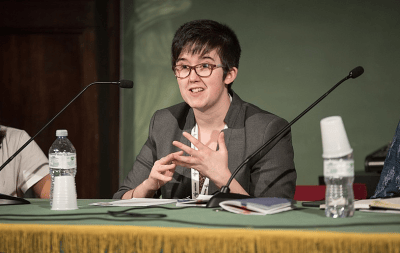
My trip to Belfast took place in the shadow of Lyra’s death when the country’s grief was palpable. Seeking to understand, I took a black cab tour through once-warring neighborhoods, saw their differences expressed on wall murals, and signed a peace wall that still divides their communities. But I knew there must be more.
After falling down a Google rabbit hole, I found the best essay on voting I’ve ever read. Claire Mitchell’s “Can Northern Ireland Change?” records her country’s despair yet offers a way forward. She writes, “(Northern Ireland’s potential) will only be realized if we do something different. And keep doing it, over and over. Hope has to be deliberately chosen.”
For Mitchell, that choice starts with a vote.
“Listen to the children of the ceasefire,” she pleads, arguing that Lyra’s generation is focused more on whether they will have homes, jobs and a livable planet than they are on a united Ireland. “I don’t care if you vote for the big parties or small,” Mitchell concludes. “Vote in a way that you can look these kids in the eye – whether they are Irish or British or both or gay or straight or brown or white – and know that you have voted for someone with a vision of a better future than this.”
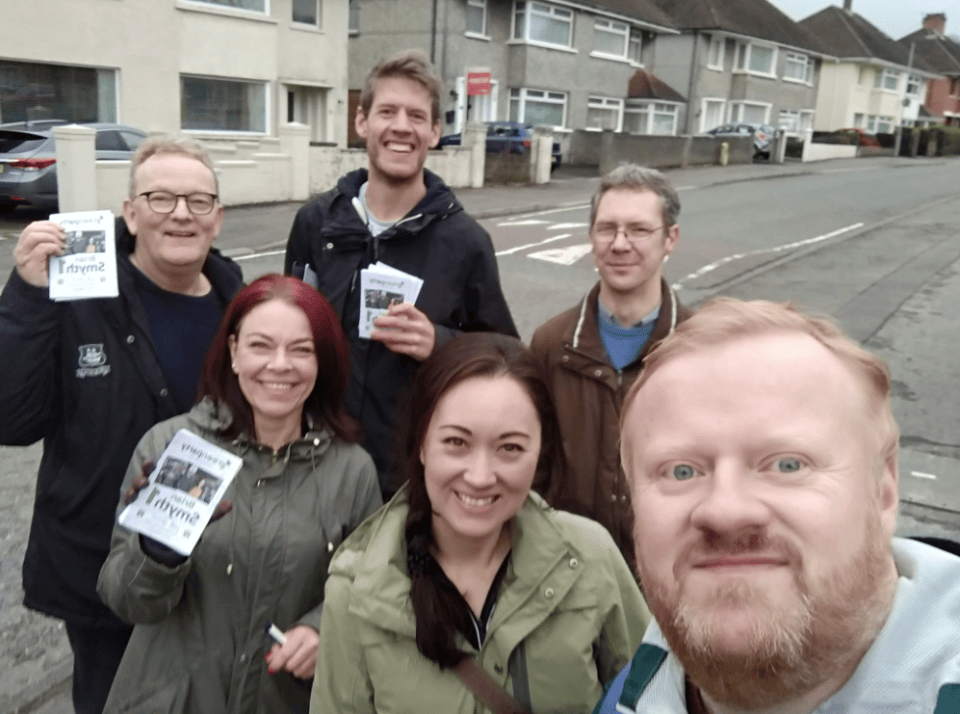
Inspired by her call to action, I asked a newfound friend to connect me to a party focused on Belfast’s shared future. Hours later, I skipped out on my conference to go canvassing with Green Party candidate Brian Smyth.
With his City Council election less than 48 hours away, Brian had the familiar glow of a candidate on the rise, feeling ecstatic, exhausted, and ready to burst into laughter, tears, or both simultaneously. Clare Bailey, then-chair of the Green Party and a member of Northern Ireland’s Legislative Assembly, took me under her wing, commiserating with me over vitriolic partisanship, double standards for women and leadership fatigue. I found a kindred spirit on the other side of the world.

And, finally, this brings me to my point. Northern Ireland is one of the most polarized places in the world, but politicians like Clare and Brian are forging a way through. New parties that aren’t burdened with the politics of the past are finding their place in the arena, and Northern Ireland will benefit from that diversity.
We would too.
Let me state at the outset that I’m not starting a third party. I’m happy where I am. However, I do believe that competition breeds progress. Any party without viable opponents is vulnerable to powerful influencers that predetermine outcomes.
In our current system, fledgling parties that could increase voters’ options don’t have a chance. One solution that would improve those odds is facing a key deadline in the Senate Judiciary committee next week. Senate Bill 401 would authorize ranked choice voting in all partisan primaries, special elections, and nonpartisan general elections.
Last year, the Legislature established RCV in special elections held for federal and vacant county council seats. This bill seeks to expand that innovation and, if amended to include partisan general elections, it would be a gamechanger.
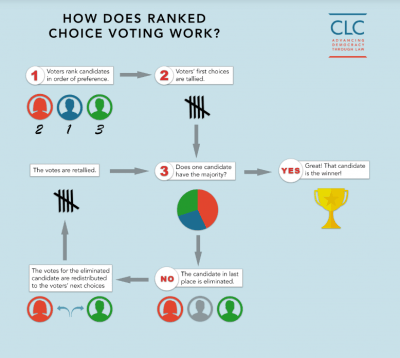
Ranked choice voting allows voters to rank candidates in order of preference. If their first choice doesn’t get enough votes to win, their vote automatically goes to their next choice.
According to reform advocates FairVote, RCV “frees voters from worrying about how others will vote and which candidates are more or less likely to win” and allows candidates to “compete without fear of ‘splitting the vote’ with like-minded individuals.” Voters are more willing to take a chance on new candidates or parties because they know their vote won’t be wasted if the newcomers don’t garner enough support.
Northern Ireland’s elections use proportional ranked choice voting, a form of RCV. In 2022, FairVote found that PRCV “helped to bridge sectarian differences between nationalist and unionist parties” in Northern Ireland and “could help solve the polarization and governance challenges facing the United States.”
Walking with Clare in East Belfast, I saw how it works.
In many ways, the experience was just like canvassing in my Mililani house district. Some residents were out, and some hid when we knocked. The rustling of curtains at the window gave them away. However, most voters were willing to listen.
“I like her, but she can’t win” could be the epitaph for my political career. I’ve spent a lot of time at voters’ doors begging them to give me a chance. Claire had to do the same, but her pitch was a more logical proposition – choose us first, and if we fail, your vote goes to your second choice. Taking a chance on something new isn’t much of a gamble in an RCV system. You vote for what you want not what you think you can get.
Brian Smyth won that election. The Green Party and the Alliance Party, which is Northern Ireland’s largest “cross-community” party, saw monumental gains. Following the election, Alliance Party Leader Naomi Long reportedly said it was “a breakthrough election … with many voters choosing to reject the ‘tribal politics’ of unionism and nationalism.”
When voters see alternative parties or candidates as viable options, many of them will choose change.
In Hawaii, ranked choice voting might simply add a wider range of candidates in the Democratic primary or additional left-leaning parties on the general election ballot. Either way, it will open the field to new ideas and visions for progress. And, while I know systems don’t change overnight, the Legislature can move us forward now.
 Sign up for our FREE morning newsletter and face each day more informed.
Read this next:

Local reporting when you need it most
Support timely, accurate, independent journalism.
Honolulu Civil Beat is a nonprofit organization, and your donation helps us produce local reporting that serves all of Hawaii.
ContributeAbout the Author