Beth Fukumoto: We Must Take Action To Help Teens Struggling With Mental Health Issues
More youth advisory councils would enable young people to be involved in decisions about the future of their community.
March 16, 2023 · 5 min read


About the Author

Whether you’re a parent or not, I’m sure you can imagine this scenario. Your 13-year-old daughter seems moodier than usual. She’s doesn’t want to go out with her friends. She’s not enjoying the hobbies she loves. But she shrugs you off when you try to talk about it.
One day, she opens up. She’s overwhelmed. She’s worried. She’s sad. She can’t figure out why. And she doesn’t believe it’s going to get better.

You’ve seen recent headlines about post-pandemic teen mental health.
“Record Levels of Sadness in Teen Girls, CDC Reports,” “Teen Girls Are Facing a Mental Health Epidemic,” etc. Every article you’ve read quotes the same Centers for Disease Control and Prevention findings: “Nearly 3 in 5 U.S. teen girls felt persistently sad or hopeless in 2021.”
Knowing that many teens don’t talk about their depression, you’re ecstatic that your daughter reached out for help.
You call her doctor who recommends a behavioral health specialist. You call 10 different offices and not a single provider calls you back. All your pediatrician can say is – be persistent.
Dr. Jesse Lam of Kapaa Pediatrics on Kauai has experienced an increase in depression in his own practice with 1 in 6 patients screening positive for “significant depressed feelings and often suicidal ideations.”
Lam said, “When our patients are given a list of 20 plus mental health providers on Kauai, they often call everyone on the list without finding a single provider that has any space.”
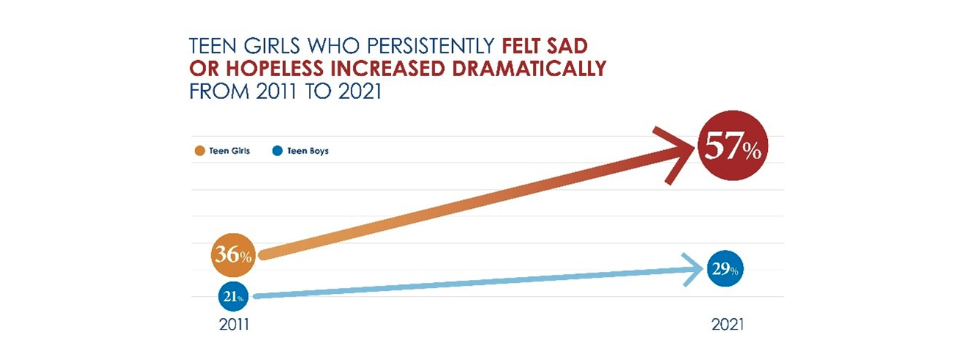
Watching your kid transition from a smiling, unburdened child to a teen facing the difficult emotions that accompany adolescence is difficult. But watching them struggle to cope with those emotions is heartbreaking, especially when you can’t get medical help.
According to Mental Health America, three-quarters of Hawaii youth with major depression didn’t receive treatment. Only 11% of Hawaii’s youth with severe depression received “some consistent treatment.”
Many of these teens are girls, but adolescent mental health is deteriorating overall with 40% of students reporting persistent feelings of sadness or hopelessness.
Amongst LGBTQ+ students, 70% experienced symptoms of depression and 1 in 4 attempted suicide. While providers across the nation are struggling to meet rising youth behavioral health needs, Hawaii is one of three states with the most severe shortage of care.
Limited care as well as pandemic-related isolation and anxiety are helping to drive this crisis. But the U.S. Surgeon General’s 2021 report on youth mental health suggests use of digital media, increases in academic pressure, and broader stressors such as climate change and gun violence are also significant, contributing factors.
What Can We Do?
In last week’s column, I noted three bills that could help increase our mental health workforce. In addition, Hawaii lawmakers are considering legislation to create a crisis mobile outreach team for children and adolescents, appropriate funds for behavioral health specialists to serve rural public schools, and establish a school psychologist incentive program.
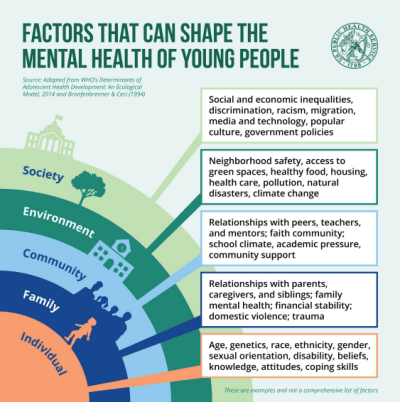
Regarding social media’s impact on youth, Gov. Josh Green is joining 46 states in a multi-state investigation to “to determine whether the company (Tik Tok) engaged in deceptive, unfair, and unconscionable conduct that harmed the mental health of TikTok users, particularly children and teens.”
The state Department of Education has also requested millions of dollars for funding to increase support for students’ behavioral health needs. Their proposal includes $850,000 for a mental health mobile app that would provide students with an easy 24/7 method to share their needs and access crisis support. The current House budget bill suggests the Legislature will agree to the request.
Access to student health services and quality health education are two of the three ways the CDC says we can improve youth mental health. And the state needs to take action to provide those resources.
The third evidence-based method for supporting our youth is increasing “school connectedness” through community-based initiatives that partner with local schools.
Together, we can implement those initiatives now.
The first action would be creating youth advisory councils which allow youth to partner with adults to make decisions about the community’s future, which can provide youth with a sense of belonging, belief in the future, and self-efficacy. Adding youth to neighborhood boards, condo associations, and other councils are a good place to start.
Providing service opportunities, connecting students to adult mentors, and fostering peer relationships through clubs and community activities are also proven methods to improve youth mental health. These initiatives show students that they matter and can help them develop the skills to cope with loneliness and emotional distress.
As individuals and communities, we are the first line of defense. We can alleviate some of the burden on Hawaii teens and make a difference now. Our youth need us.
For youth or adults experiencing mental health challenges, call Hawaii Cares at 808-832-3100 for 24/7 local support. If you’re in an emergency or fear danger to yourself or others, please call 911 — or go to the nearest emergency room immediately for assistance.
For parents, caregivers, and youth, the National Library of Medicine provides a list of tools and resources to help navigate teen mental health, here.
 Sign up for our FREE morning newsletter and face each day more informed.

Local reporting when you need it most
Support timely, accurate, independent journalism.
Honolulu Civil Beat is a nonprofit organization, and your donation helps us produce local reporting that serves all of Hawaii.
ContributeAbout the Author