Civil Beat photographer Kevin Fujii was on hand to document emerging life on the East Oahu beach earlier this week.
It’s been nine years since the last recorded green sea turtle nest was discovered on the famous body and boogie boarding, spine-crushing Sandy Beach.
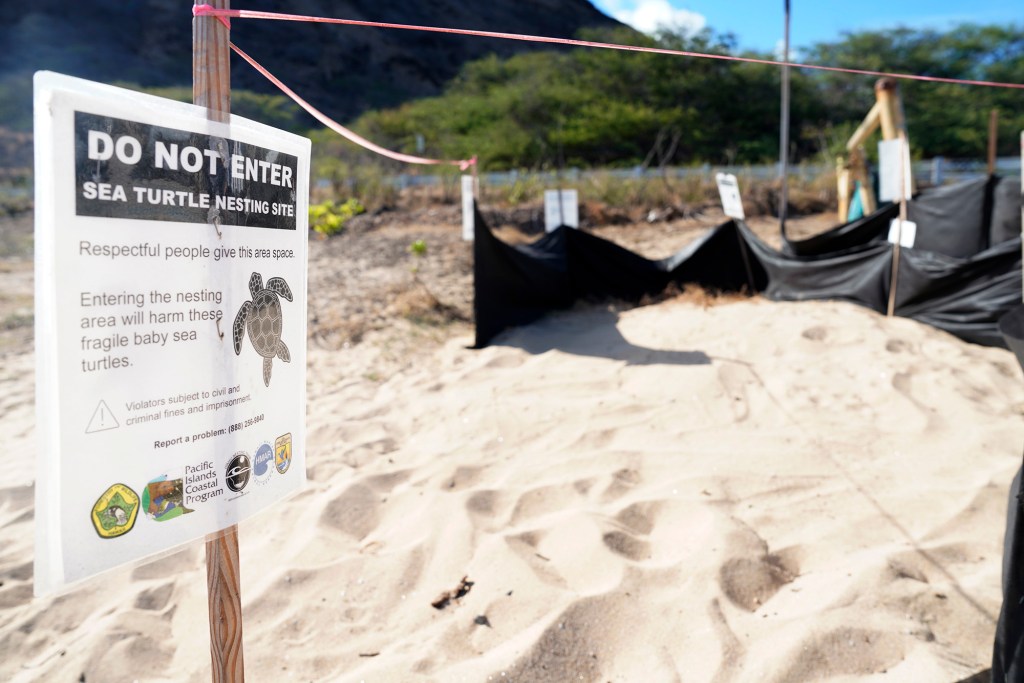
This year six potential chambers of eggs with dozens of hatchlings were found and protected by Malama No Honu volunteers, U.S. Fish and Wildlife Service scientists and community members.
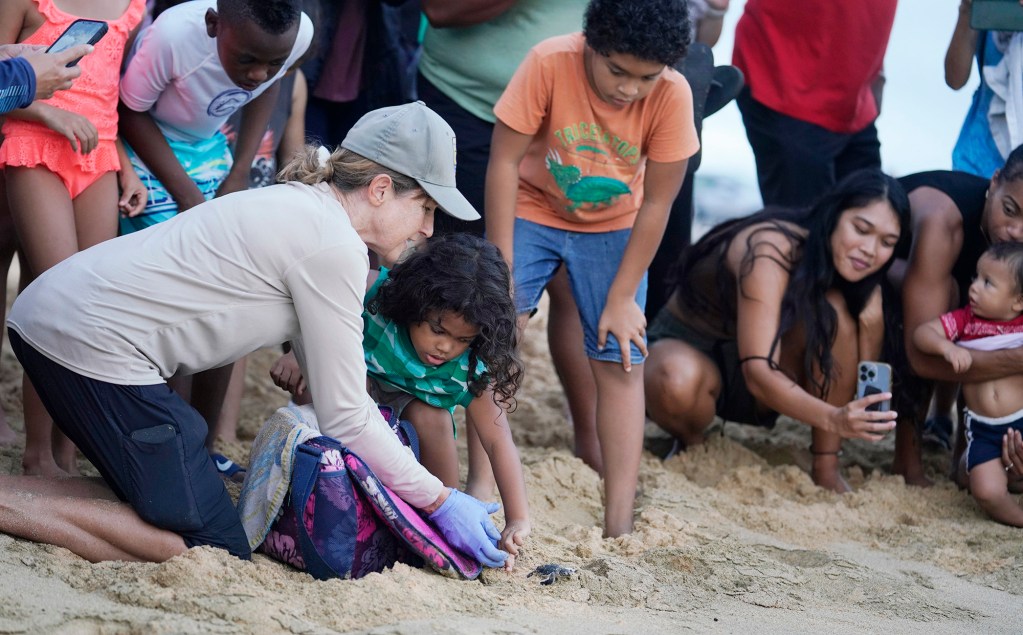
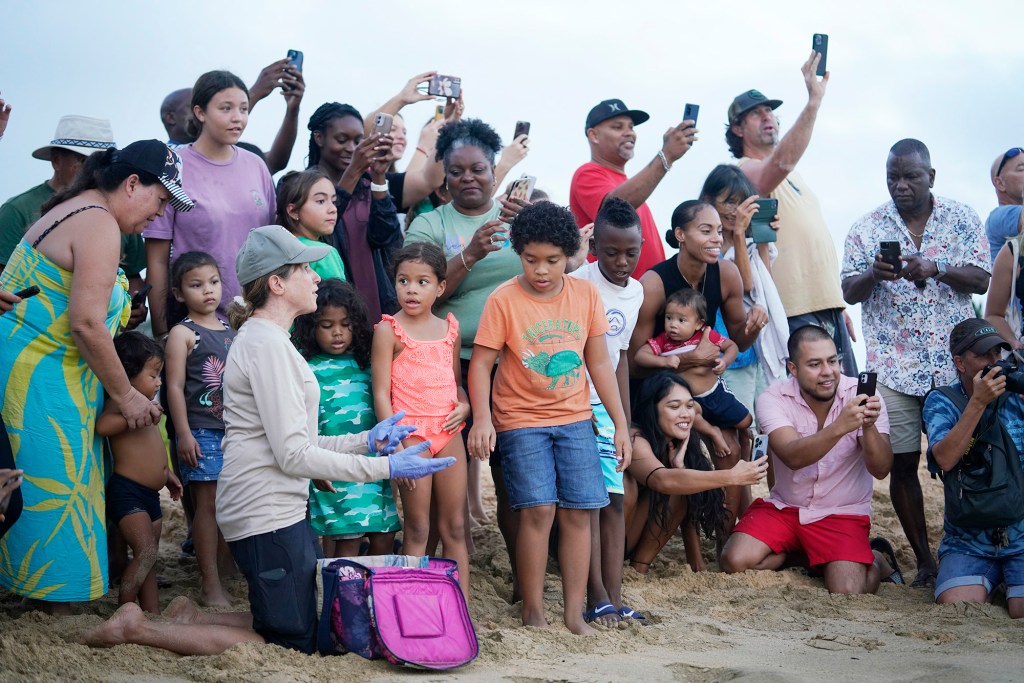
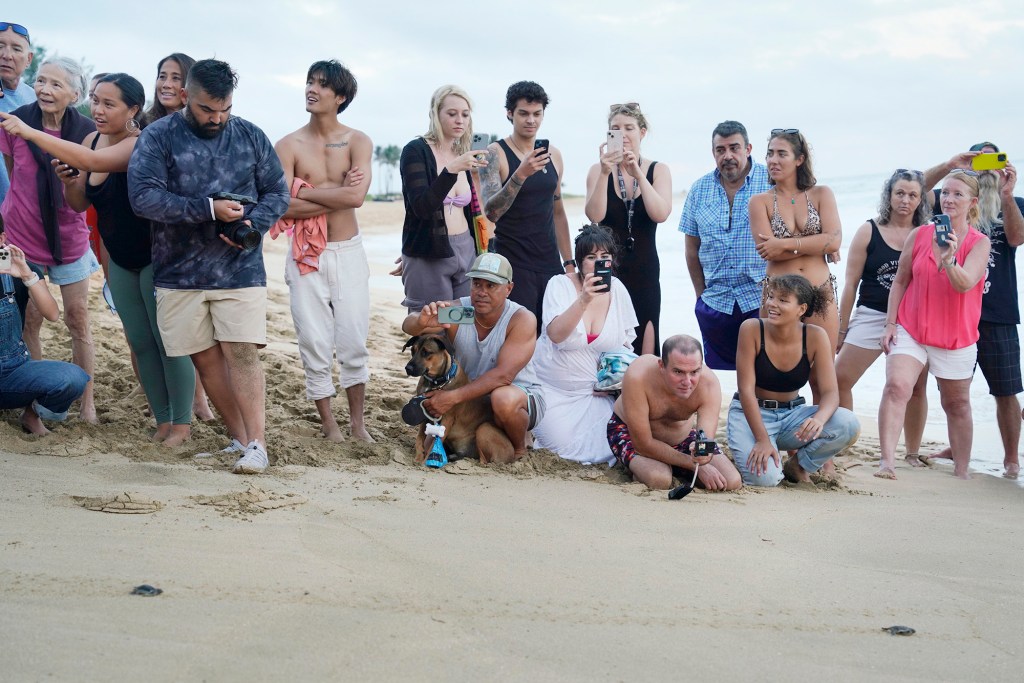
Sandy Beach Park onlookers Monday witnessed some of the honu hatchlings rescue and release. The educational experience emphasized the threatened species challenging life made more difficult by human impacts.
Approximately 75% of the honu eggs hatched at Sandy Beach. “That’s about average or maybe a little bit below average of what we see elsewhere on Oahu,” U.S. Fish and Wildlife Service Pacific Islands Coastal Program biologist Sheldon Plentovich says.
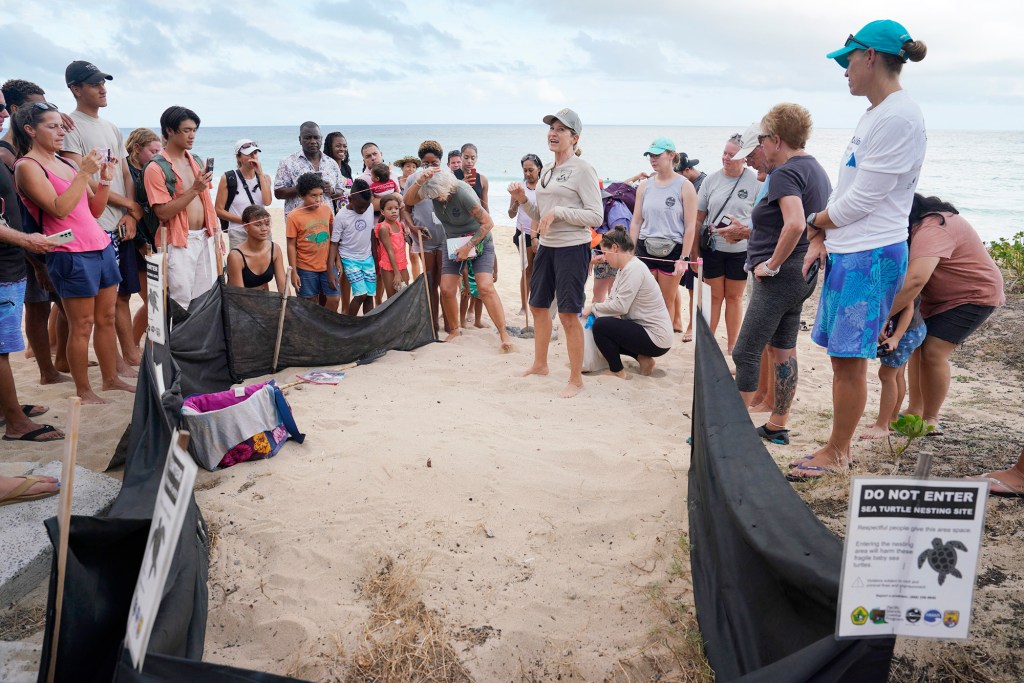
One of potentially six honu nests waits to be excavated on Monday at Sandy Beach Park in Honolulu. The hatchlings needed help after only six emerged from the nest two nights earlier. This led the biologists to believe other hatchlings were somehow trapped. (Kevin Fujii/Civil Beat/2023)Biologist Sheldon Plentovich, standing, welcomes the crowd of about 80 onlookers who came to watch honu hatchlings get released. The black fabric is an attempt to block the lights from Kalanianaole Highway, the beach parking lot and restroom lights. The hatchlings instinctively move toward the brightest light, which, without human-made, artificial lights, is usually the ocean reflecting ambient light from the setting sun. (Kevin Fujii/Civil Beat/2023)
After a plea from U.S. Fish and Wildlife Service and Malama No Honu, the City and County of Honolulu turned off lights to make it easier for the hatchlings to find the ocean.
Plentovich said at least two hatchings were disoriented by the parking lot lights. “We followed their tracks to the parking lot and far down the beach. Although two of the six hatchlings were found by the trash cans and were released into the ocean, they were lethargic and likely died. The other disoriented (by artificial lights) hatchlings were not recovered.”
Biologists also found 61 hatchlings entangled in fishing line and trapped in the nest that the other six baby turtles had come out of.
“They would have died without intervention,” Plentovich said. “Our team was able to disentangle them so that they could walk into the ocean.”
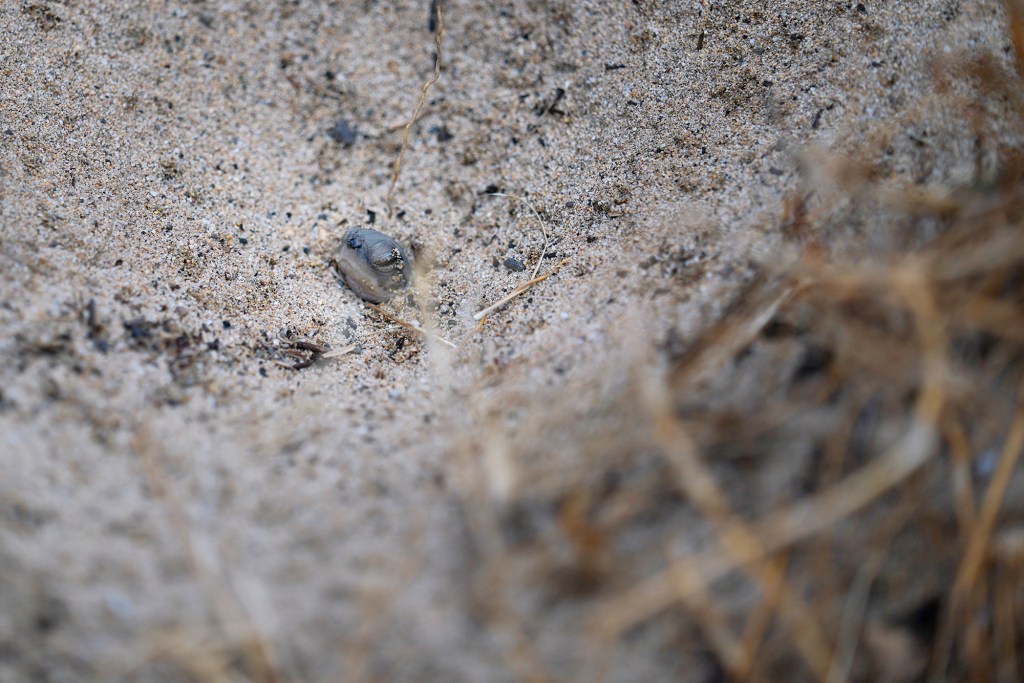
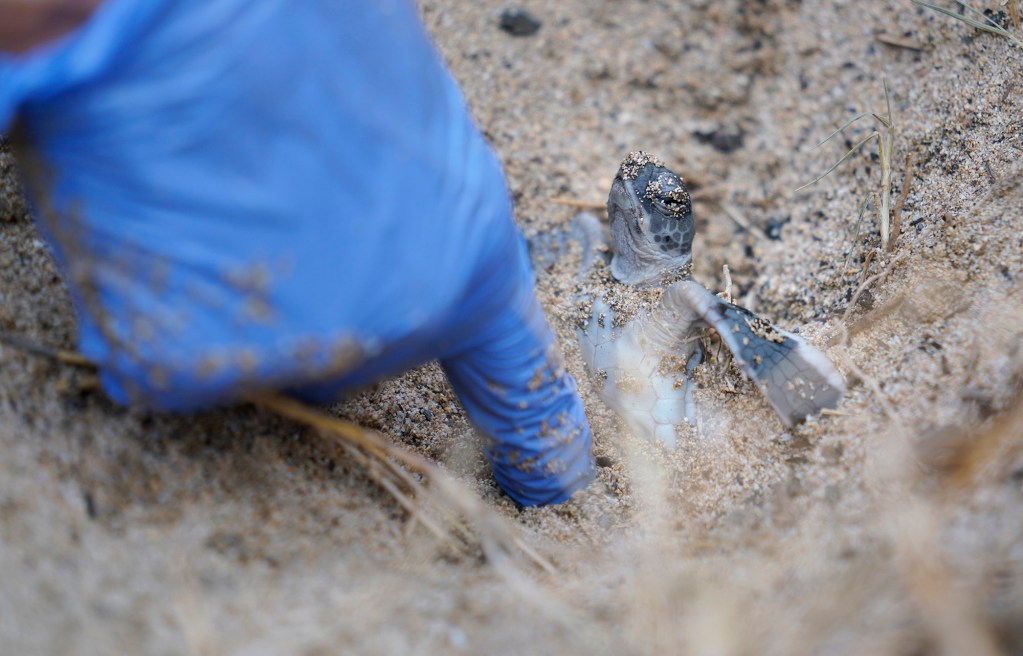
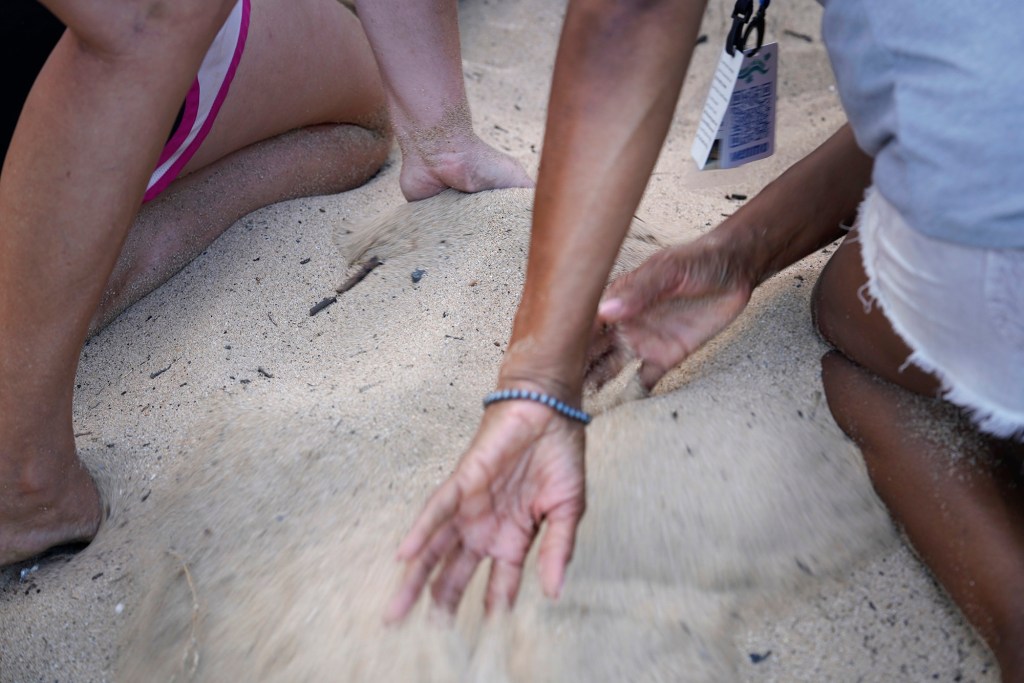
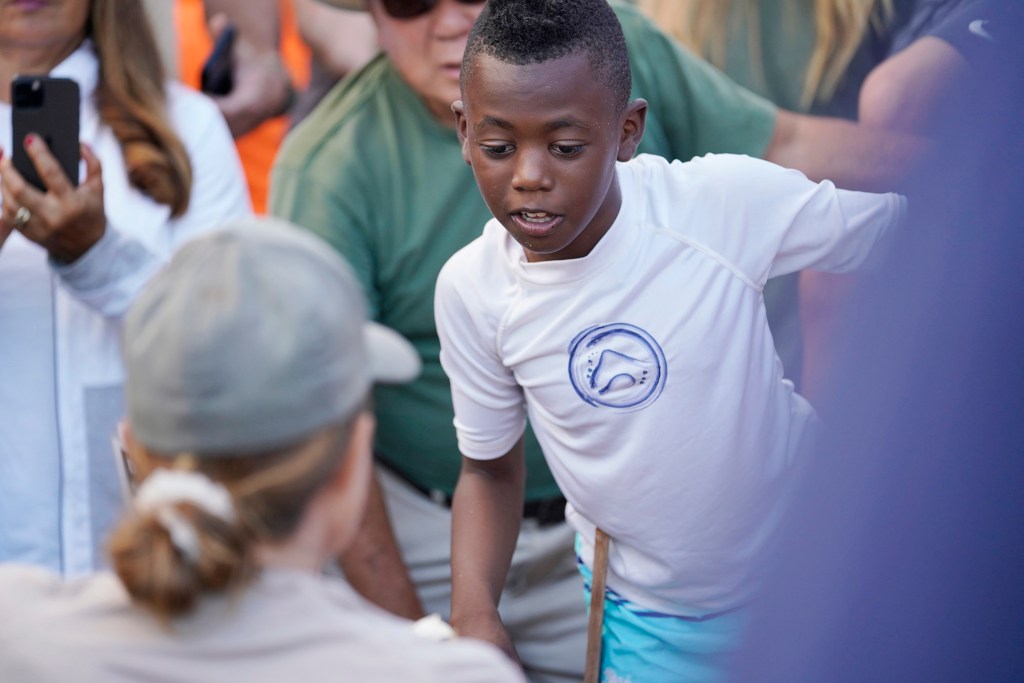
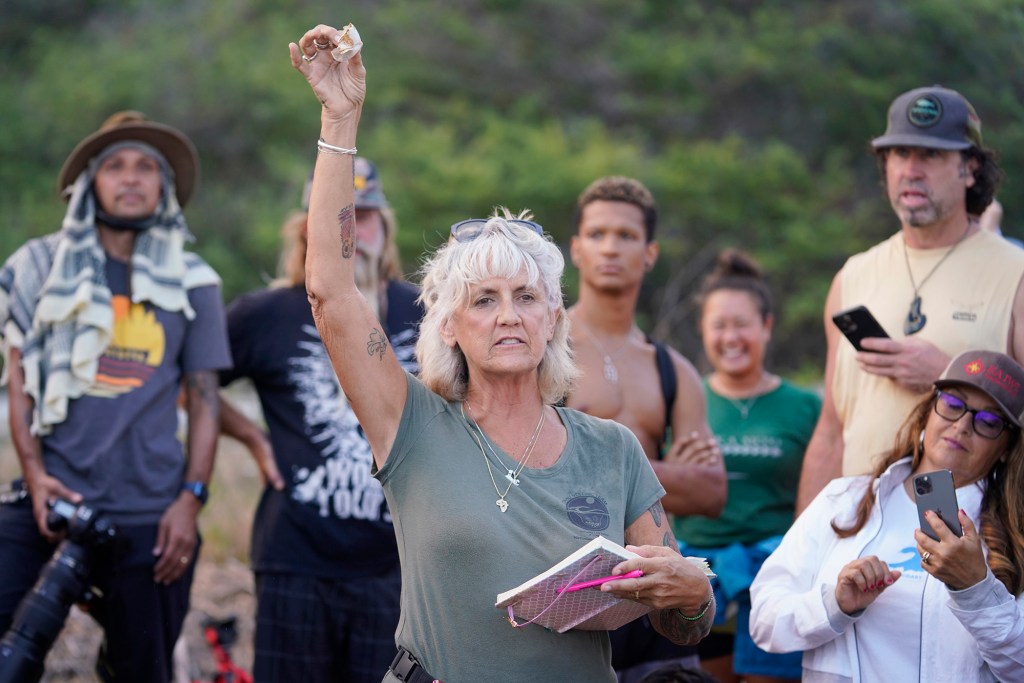
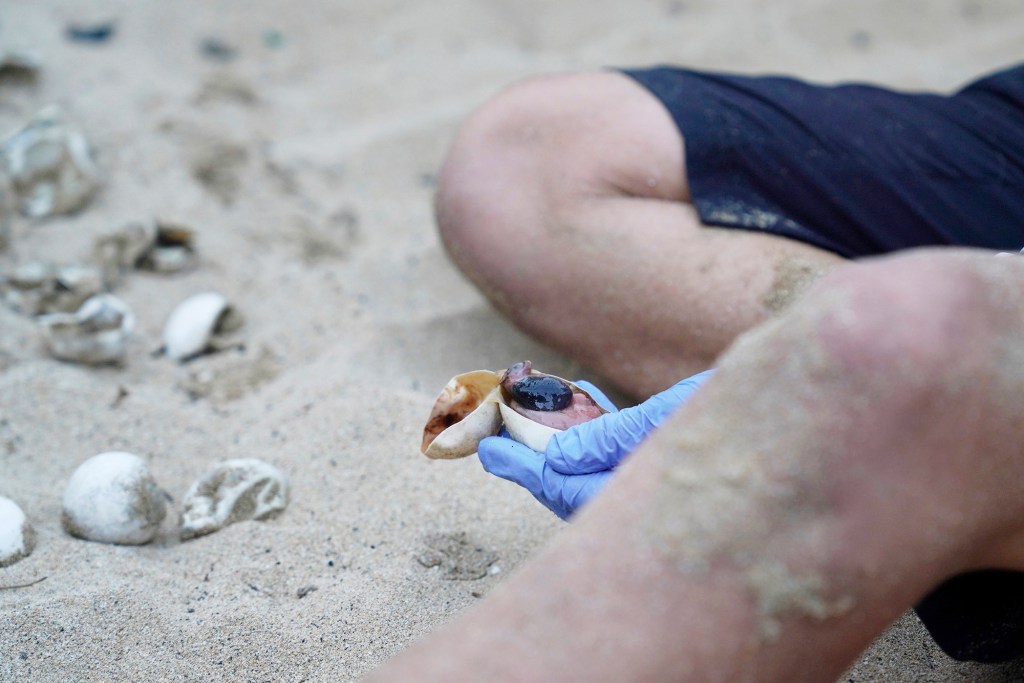
Sheldon Plentovich, left, carefully begins moving sand with assistance from USFWS biologist Elyse Sachs. Volunteers recorded only six honu hatchlings making it out of this nest 48 hours earlier. Because the number of hatchlings was so small, the biologists and volunteers became concerned the hatchlings were trapped. The first three clutches contained 64, 60 and 88 eggs respectively. (Kevin Fujii/Civil Beat/2023)After about five minutes of carefully moving sand, the first honu hatchling’s head is uncovered. This baby green sea turtle became immobile on top of more hatchlings and eggs, entangled by improperly disposed fishing line and the roots of grass. This prevented it and the others below it to emerge with the first six hatchlings two nights earlier. Biologist Elyse Sachs said the intervention is like an emergency cesarean section so the remaining hatchlings can survive. (Kevin Fujii/Civil Beat/2023)Plentovich carefully moves sand away from the first honu hatchling. Fishing line and grass roots tangled this honu hatchling’s body and fins and acted like an anchor. “A short segment of fishing line, like 10 inches, can entangle a hatchling,” she said. “This could be a death sentence for a turtle.” This blocked the other 60 hatchlings below it from emerging with their siblings, who made it out of the next earlier. (Kevin Fujii/Civil Beat/2023)Malama I No Honu volunteers move the sand that U.S. Fish and Wildlife Service biologists excavated from the top of a honu egg chamber. (Kevin Fujii/Civil Beat/2023)Everest Jackson, 8, of Phoenix, is mesmerized by the honu eggshell Plentovich shows. Everest and his family are spending his fall break in Hawaii. He takes home an unforgettable experience to tell his classmates about. (Kevin Fujii/Civil Beat/2023)Malama I No Honu volunteer Debbie Herrera holds up an empty honu eggshell. Unlike the hard yet fragile chicken eggs most grocery shoppers know, a honu eggshell is soft and pliable so it doesn’t break when dropped on other eggs in the deep chamber. (Kevin Fujii/Civil Beat/2023)Plentovich counts honu eggshells. The remains give scientists and volunteers good data on the nest. There were 88 eggs found in this chamber. (Kevin Fujii/Civil Beat/2023)Plentovich opens a late-stage embryonic honu which didn’t fully form. The not fully viable honu in this and 10 other eggs like it give biologists good data. Sixty-one hatchlings were excavated from this chamber from 88 total eggs. (Kevin Fujii/Civil Beat/2023)
After all the hatchlings emerge, biologists examine the unhatched eggs. They can tell by how the egg looks and feels if there is a live hatchling inside.
“Unhatched eggs are examined to determine the stage of development,” Plentovich said. “This helps biologists better understand when something went wrong.”
Honu nesting season runs between April and November. After eggs are laid, incubation lasts about 50 days.
Plentovich said this year there are 27 documented nests on Oahu so far, about three-fourths of the way through the hatching season.
She expects there will end up being between 35 and 45 nests total. But about half end up being what biologists call “false crawls,” where the female turtle didn’t lay any eggs because she was just checking out the area or something disturbed her so she headed back to the ocean.
“One honu can lay four to eight nests each year,” Plentovich said. “The nests at Sandy Beach could have been made by one honu.”
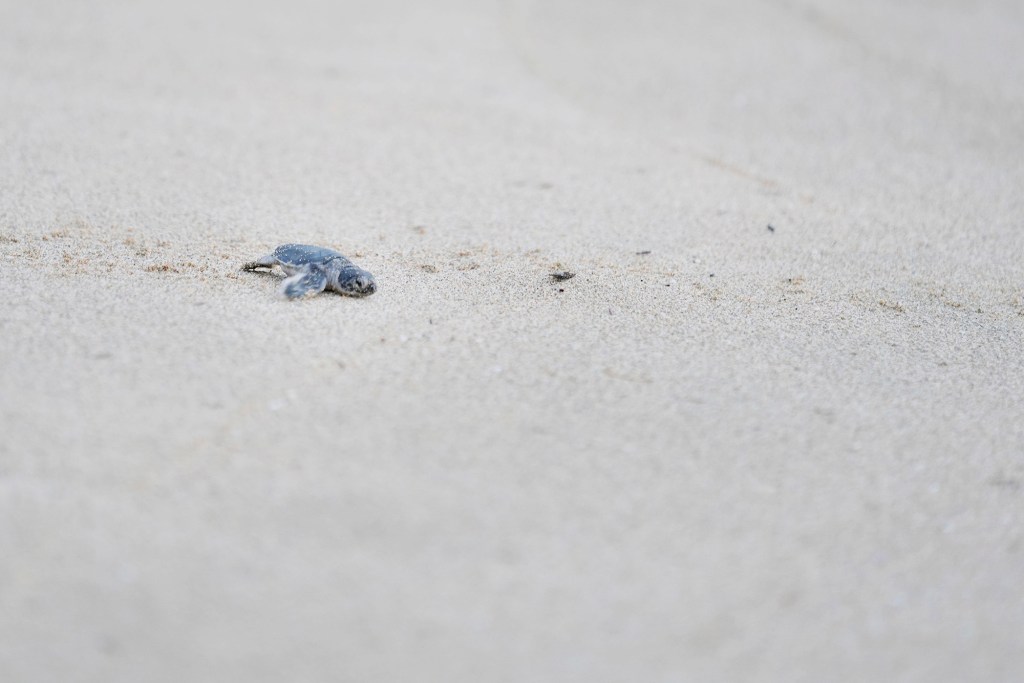
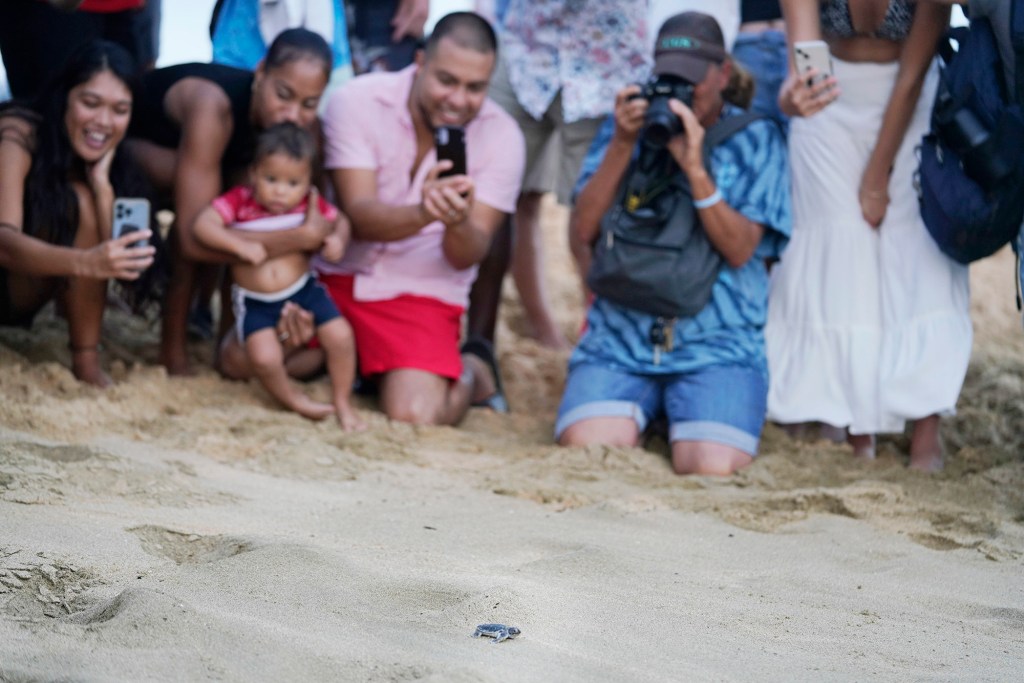
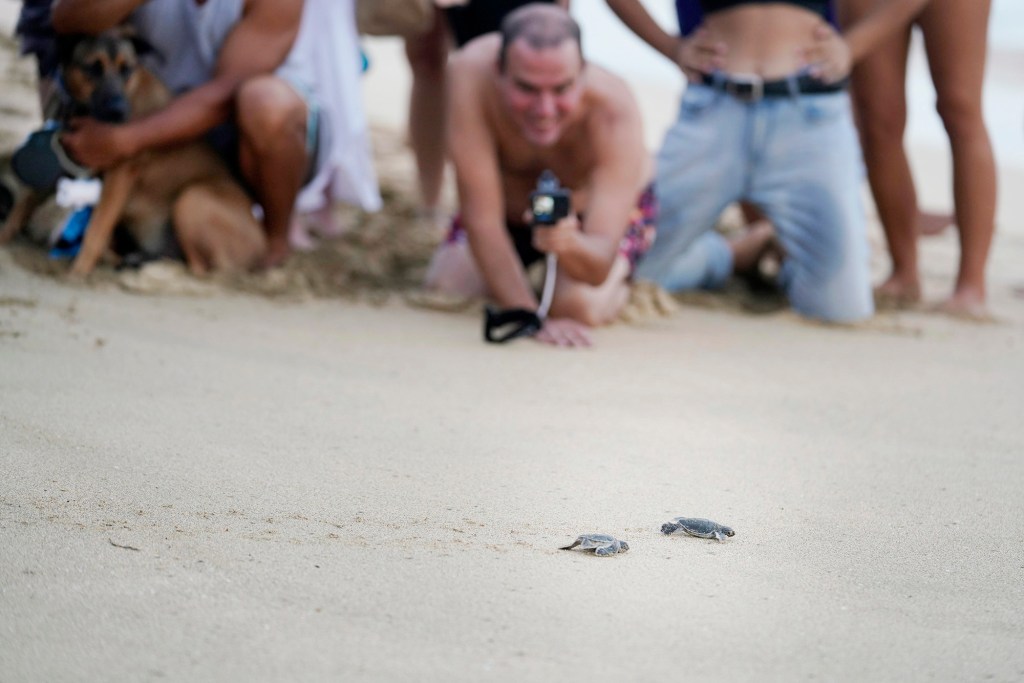
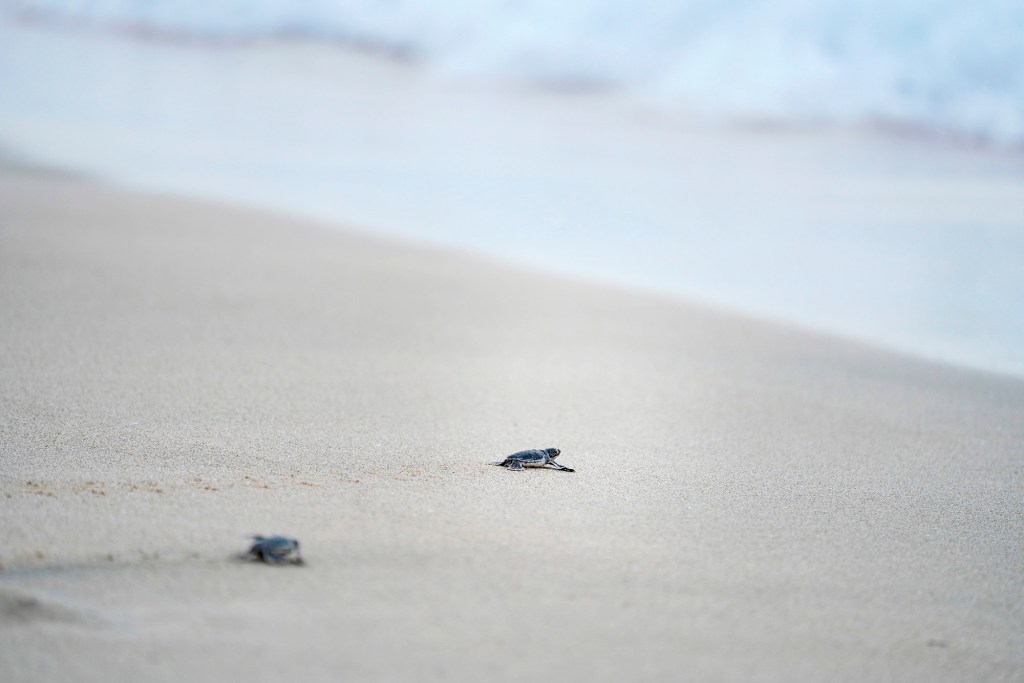
Spectators watch the honu hatchlings make their way toward the ocean. Approximately 80 people came to watch U.S. Fish and Wildlife Service biologists and Malama No Honu volunteers excavate and release the green sea turtles. The hatchlings instinctively move toward the bright, white foam and light reflecting off the ocean. (Kevin Fujii/Civil Beat/2023)Plentovich and Rafael Bencomo, 3, of Aiea, release the first honu hatchling at Sandy Beach. The first hatchling was found approximately a foot deep, buried and trapped in the sand by fishing line and roots. It took another two feet of digging to uncover the remaining 60 hatchlings. (Kevin Fujii/Civil Beat/2023)The first baby honu makes its way toward the ocean. Smooth sand makes the journey to the sea easier. Footprints can create an impassable obstacle. (Kevin Fujii/Civil Beat/2023)A large crowd watches the first honu hatchling make its way toward the ocean. (Kevin Fujii/Civil Beat/2023)“Isn’t this cool?” Plentovich asks the crowd. (Kevin Fujii/Civil Beat/2023)Spectators were clearly fascinated as the tiny turtles made their way toward the ocean. (Kevin Fujii/Civil Beat/2023)Two honu hatchlings begin the next stage of their lives Monday at Sandy Beach Park in Honolulu. (Kevin Fujii/Civil Beat/2023)These two honu hatchlings are well on their way to a new life in the ocean. (Kevin Fujii/Civil Beat/2023)
Sign up for our FREE morning newsletter and face each day more informed.
Help power essential news and information
As a local newsroom, Civil Beat has a unique public service role in times of need. Your support ensures that we can pivot when emergencies arise and get vital information out to everyone, from all communities.
Support timely and accurate breaking news stories as well as impactful coverage across the state. Donate today.