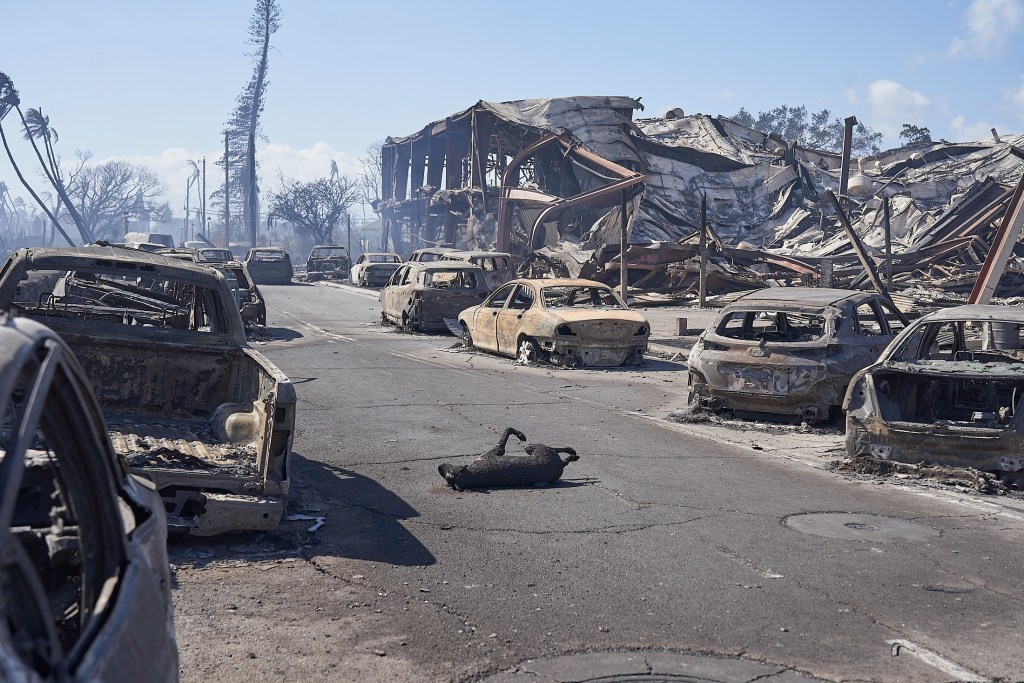
Ku'u Kauanoe/Civil Beat/2023

About the Author

Naka Nathaniel

Naka Nathaniel was an Editor-at-Large at Civil Beat from January to September 2024. Naka returned to regular journalism after being the primary parent for his son. In those 13 years, his child has only been to the ER five times (three due to animal attacks.)

Before parenting, Naka was known as an innovative journalist. He was part of the team that launched NYTimes.com in 1996 and he led a multimedia team that pioneered many new approaches to storytelling.

On 9/11, he filmed the second plane hitting the South Tower. His footage aired on the television networks and a sequence was the dominant image on NYTimes.com.

While based in Paris for The New York Times, he developed a style of mobile journalism that gave him the ability to report from anywhere on the planet. He covered the invasions of Iraq and Afghanistan and was detained while working in Iran, Sudan, Gaza and China. He is one of a handful of Americans who has been in North Korea, but not South Korea. He worked in 60 countries and made The Times’s audience care about sex trafficking, climate change and the plight of women and children in the developing world.

Besides conflict, The Times also had Naka covering fashion shows, car shows and Olympics. He did all three of those events in the same week (Paris, Geneva and Turin) before going to Darfur to continue reporting on the genocide (it was the fifth of sixth trips to the region.)

Naka lives in Waimea on the Big Island.


We’ve learned a lot from previous disasters. Those lessons should be applied to our own situation.

Now that we are two months beyond the horrific fires that devastated Maui, a lot of the national and international attention has moved on. I’ve been a part of those news caravans in the past. The urgency to cover the breaking news is always there and, given the world we live in, there is always news breaking somewhere. 

I remain reluctant to keep making 9/11 parallels, but I am sincere in wanting the lessons learned from previous catastrophes to be applied to current crisis here in Hawaii. Here are three questions that concern me the most: 

First, are we making sure that the people of Maui are being heard?

Debating the decision to open West Maui to tourism does little good. West Maui is now open to tourism and hotels are taking bookings. 

The more helpful question going forward is whether — and how — the wishes of the people of Maui will be heard. The Maui County Council voted unanimously to ask Gov. Josh Green to delay the opening and a petition with thousands of signatures was delivered to the governor’s office last week. 

I asked Green’s office how he is planning on making sure the people on Maui are heard. 

“In 20 visits to Maui in the first 53 days following the disaster, Gov. Green met with hundreds of working-class people as well as owners and operators of businesses large and small to learn from them and understand the recovery steps they want to see,” wrote Erika Engle, the governor’s spokesperson. “He further continues to engage with Mayor Richard Bissen as well as community members across West Maui as recovery efforts continue across several fronts.”

I wrote a few weeks ago about how I saw this play out in New York in the aftermath of Sept. 11. The initial attempts to bring back lower Manhattan by New York’s governor and the developer in charge of the site was met with stiff resistance by citizens who were angry that they weren’t being heard. 

Instead of ignoring those voices, “Listening to City” sessions were conducted in New York, and ultimately went a long distance to making Lower Manhattan a better place than it was before the attacks. 

There should be paths, going forward, for the people of Maui to be better heard. 

Second, who is in charge of the phased opening of Maui?

There are so many interested parties. I was reviewing how New York brought back Wall Street.

Following the attacks, the stock exchanges were closed for the remainder of the week, but they reopened on Sept. 17. It was meant to be a quick rebound for the city and the financial markets. The NYSE also learned its lesson and built a second emergency trading floor in case of another attack. 

The leaders were motivated by the money. There was no time to process. The economy needed to keep humming and Americans were being encouraged to help by shopping.

The pressure to get West Maui’s economy back up and running feels similar, as does the lack of clarity on who is in charge of the phased opening and how West Maui recovers. 

“Governor Green and Mayor Bissen have regular conversations with one another and with federal and non-profit recovery partners in order to make informed decisions about next steps,” wrote Engle in response to my question.
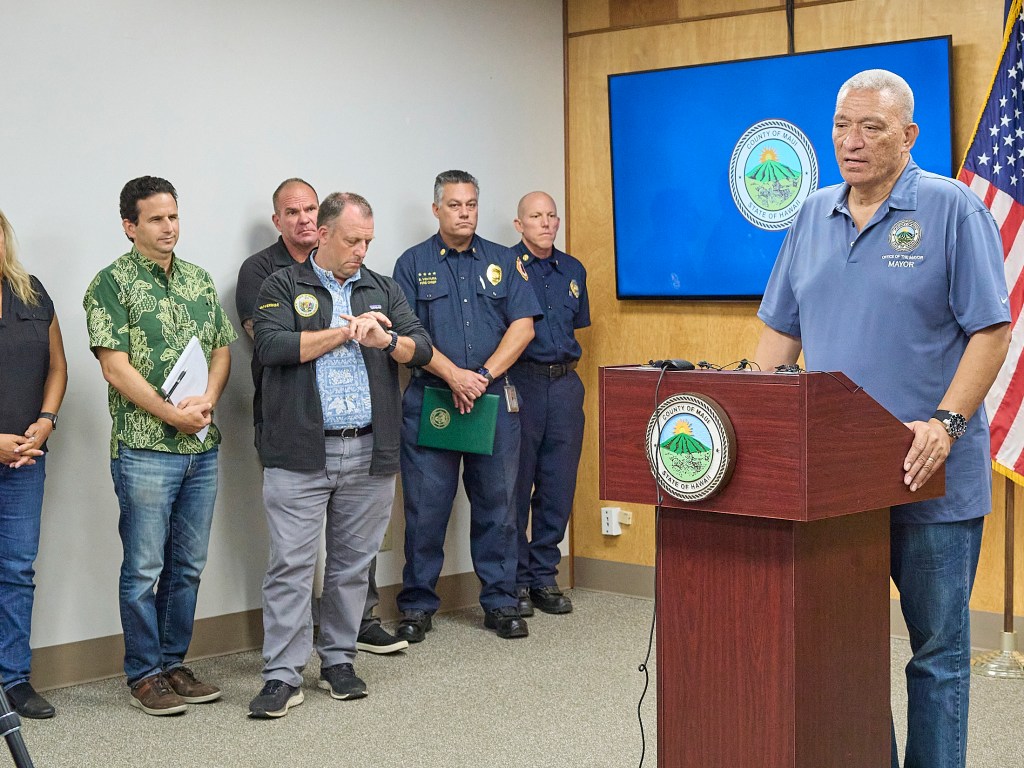
Numerous state, county and federal officials have been involved in the Maui fire situation. But going forward the pub needs to know who is in charge and making decisions. Key decision makers pictured at this press conference are, from left, U.S. Sen. Brian Schatz, Gov. Josh Green, Maui Police Chief John Pelletier and Maui Fire Chief Brad Ventura. Maui Mayor Richard Bissen is at the podium. (David Croxford/Civil Beat/2023)

My third concern is the health risks concerning the reopening of West Maui.

As I see the images of Lahaina and read Paula Dobbyn’s story about toxins, I’m worried that we aren’t taking into full account of what’s in the air, in the soil and in the water.

In early September 2002, I was in a helicopter hovering a couple thousand feet above the holes where the two towers had been. Most of the rubble had been cleared from the site and preparations were being made for the anniversary commemorations. 

What I remember from then is the hole in the city and feeling the urge, like most others, to rush in and fill it. 

Sadly, those urges to rush in and quickly build back had dire consequences.

Last month, the New York City Fire Department announced the deaths of an EMT and a fire firefighter from illnesses contracted from their exposure to Ground Zero. The two deaths meant more NYFD first responders were killed in the aftermath of Sept. 11, 2001, than were killed on the day of the attacks. 

There are fears that Lahaina will become a future cancer cluster. It’ll be terrible to think that enough precautions weren’t taken to safely bring people back to a place rife with illness-causing chemicals and debris. 

I’m hoping we can resist the urge to rush a return before we understand the full scope of what needs to be dealt with and the best ways to mitigate those future health risks. 

Those are the conversations that should be happening now. Listening to concerns, sharing what is known and unknown about how to make a return to Maui that happens in a prudent and pono way. 

Civil Beat’s coverage of Maui County is supported in part by grants from the Nuestro Futuro Foundation.


Read this next:

The Sunshine Blog: Blangiardi Builds His War Chest


Local reporting when you need it most

Support timely, accurate, independent journalism.

Honolulu Civil Beat is a nonprofit organization, and your donation helps us produce local reporting that serves all of Hawaii.

Contribute

About the Author

Naka Nathaniel

Naka Nathaniel was an Editor-at-Large at Civil Beat from January to September 2024. Naka returned to regular journalism after being the primary parent for his son. In those 13 years, his child has only been to the ER five times (three due to animal attacks.)

Before parenting, Naka was known as an innovative journalist. He was part of the team that launched NYTimes.com in 1996 and he led a multimedia team that pioneered many new approaches to storytelling.

On 9/11, he filmed the second plane hitting the South Tower. His footage aired on the television networks and a sequence was the dominant image on NYTimes.com.

While based in Paris for The New York Times, he developed a style of mobile journalism that gave him the ability to report from anywhere on the planet. He covered the invasions of Iraq and Afghanistan and was detained while working in Iran, Sudan, Gaza and China. He is one of a handful of Americans who has been in North Korea, but not South Korea. He worked in 60 countries and made The Times’s audience care about sex trafficking, climate change and the plight of women and children in the developing world.

Besides conflict, The Times also had Naka covering fashion shows, car shows and Olympics. He did all three of those events in the same week (Paris, Geneva and Turin) before going to Darfur to continue reporting on the genocide (it was the fifth of sixth trips to the region.)

Naka lives in Waimea on the Big Island.


Latest Comments (0)

SMH ...just not the Council members, Legislators, and 10,000 petitioners asking to delay the Oct 8 reopening of west Maui to tourism. I'd like the names of those individuals - who were directly in the fire's path and are now trying to re-stabilize their lives - who "engaged" with Gov Green, supporting this reopening schedule. It sounds like wala'au to me... a press statement for the sake of a sound bite. BTW, the Mayor cannot, politically or in hierarchy, supersede the Gov. in decisions such as this.

Naauao · 2 years ago

Great questions, Naka, But I wonder how relevant in the end. We know Lahaina will be rebuilt, sooner or later, but will it be simply North Kihei? A string of resorts with golf courses for the wealthy, with an authentic "Hawaiian Village" or two, and crowded clusters of resort worker housing. "Lahaina", the quaint remnant of a bygone Maui, is gone, and even Walt Disney couldn't sell a plastic reborn "Whaler's Village" Maybe if the land WERE turned over to the Hawaiian people for the practice of Hawaiian culture, it would be worth visiting again. But nah, no ways brah.

MyBrothersKeeper · 2 years ago

Great article. Our elected officials have to sometimes make tough decisions that aren’t agreeable to all. I support the Governor in reopening West Maui to tourism. The sooner people can get back to work and a routine and get back to some sense of normalcy, it seems that would be for the better. On top of losing everything to the fire, we’d certainly not want the economy to crash, too, thereby causing more hardship for the people of West Maui. I believe that in a crisis, the sooner people can get back to normalcy, the better. One foot in front of the other.

MauiAloha · 2 years ago

Join the conversation

About IDEAS

Ideas is the place you'll find essays, analysis and opinion on public affairs in Hawaiʻi. We want to showcase smart ideas about the future of Hawaiʻi, from the state's sharpest thinkers, to stretch our collective thinking about a problem or an issue. Email news@civilbeat.org to submit an idea.

Mahalo!

You're officially signed up for our daily newsletter, the Morning Beat. A confirmation email will arrive shortly.

In the meantime, we have other newsletters that you might enjoy. Check the boxes for emails you'd like to receive.

  • What's this? Be the first to hear about important news stories with these occasional emails.
  • What's this? You'll hear from us whenever Civil Beat publishes a major project or investigation.
  • What's this? Get our latest environmental news on a monthly basis, including updates on Nathan Eagle's 'Hawaii 2040' series.
  • What's this? Stay updated with the latest news from Maui.
  • What's this? Weekly coverage of Hawaiʻi Island news and community.

Inbox overcrowded? Don't worry, you can unsubscribe
or update your preferences at any time.