Denby Fawcett: Blangiardi Vowed To Revitalize Chinatown. It Hasn't Happened Yet
Community leaders are trying to stay positive, but there’s a lot of work that still needs to be done to help the area thrive.
January 30, 2024 · 9 min read

About the Author

Honolulu Mayor Rick Blangiardi is up for reelection this year.
One of his promises at the beginning of his term was to create a “new Chinatown” of which we can all be proud.
In his first State of the City Address on March 15, 2021, Blangiardi called Chinatown “a hidden gem with so much potential that has been terribly neglected.”

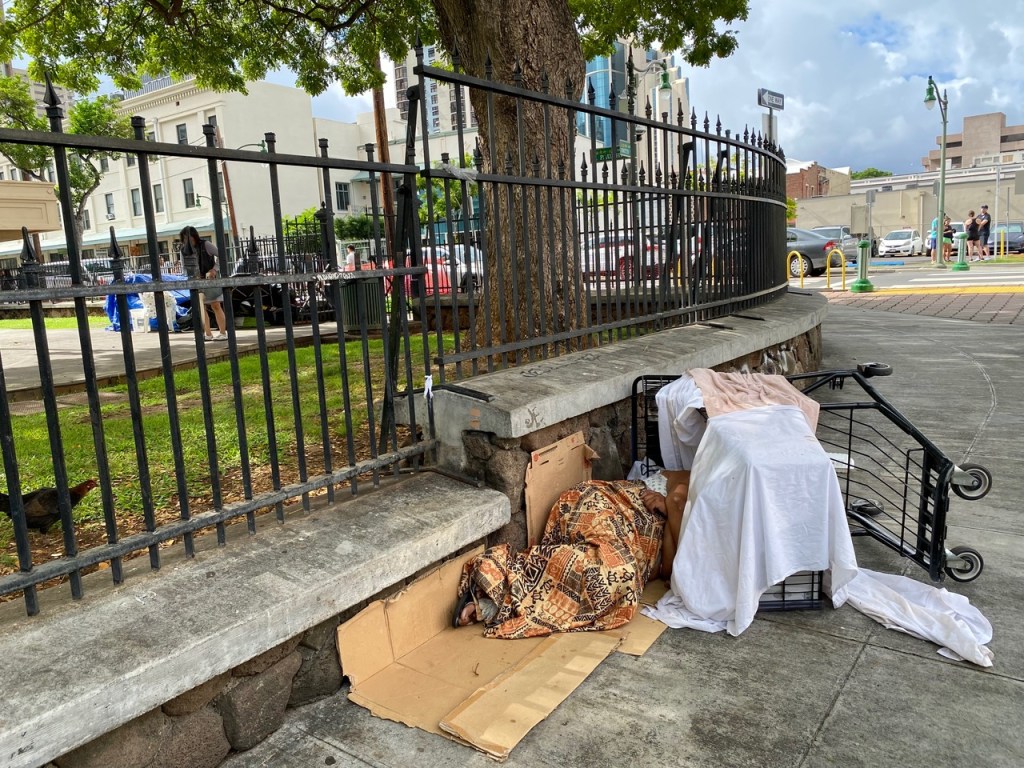
Now almost three years later, fewer homeless sleepers dot the sidewalks and people have started coming back to shop and eat lunch in the area but the “hidden gem” of Chinatown still is not sparkling.
To be fair, when Blangiardi was elected mayor in 2020, the historic area was in the throes of the Covid pandemic; the streets were empty, devoid of restaurant-goers and shoppers, many visitors scared away by the zombie land of wandering homeless who had taken over the sidewalks.
Community activists say although Blangiardi has made many improvements since then, much more still needs to be done to convince people it’s safe to return to Chinatown.
“It is two steps forward, one step backward,” said Tyler Dos Santos-Tam, Honolulu council member for the Chinatown area.
‘It Can’t Happen Overnight’
Dos Santos-Tam was on a walking tour with the mayor and community advocates and residents in Chinatown on Saturday, sponsored by the Downtown-Chinatown Neighborhood Board.
Some of the community leaders on the tour seemed protective of the mayor as they guided him around blanket-encased people sleeping on the sidewalks and occasionally over tippy broken pavers on walkways.

The mayor mostly listened to the other walkers instead of rattling off a boastful list of all the things he had done for the community.
The tour participants seemed happy he had come, welcoming him rather talking stink.
“I am trying to stay positive. He’s done a lot but there is still a lot to be done. It can’t happen overnight. It took decades for this place to get this degraded,” said Ernest Caravalho to a walker on the tour who asked why he wasn’t highlighting Chinatown’s problems.
Caravalho, a 15-year resident of Chinatown, is chair of the Downtown-Chinatown Neighborhood Board. When he mentioned decades of degradation, he meant the changes to Chinatown that began during World War II when municipal authorities turned the area into a government regulated red light district of bars and brothels for military personnel.
With the aim of keeping the event positive, Caravalho changed his original plan to take the mayor to North Kukui Street behind the Pali Safeway — a longtime neighborhood sore spot — where a needle exchange van comes on Mondays, Tuesdays and Fridays. The van’s mission when it arrives in the downtown residential neighborhood is to offer drug users new, clean syringes for their used needles to prevent HIV and other bloodborne infections such as hepatitis C.
Critics have been asking the city for years to move the needle exchange van from North Kukui Street to another location. They say it is wrong for neighborhood school children on their way to and from Princess Ruth Keʻelikolani Middle School to have to walk past the prostitutes and drug addicts who hang around by the van and brazenly shoot up after they get their new syringes.

“The van attracts users, which attracts dealers, which in turn creates drug consumption and sex marketing,” said Chinatown business owner Oren Schlieman.
The city says it is working with the Hawaii Health and Harm Reduction Center to move the needle van from the streets into a Chinatown building or over to Iwilei.
Some Chinatown residents on the tour such as Manu Tauala, who joined the walk with his pitbull rescue dog “Kuku,” were skeptical that the city could do much to help Chinatown
An Army veteran of Iraq and Kuwait who was once homeless himself, Tauala said he hoped Blangiardi — like other Honolulu mayors before him — would not promise a lot and end up doing very little.
But even the strongest critics of the Blangiardi administration say the mayor has tried to stay on top of Chinatown issues from the beginning of his term with regular, repeated visits with his cabinet members to listen to the concerns of Chinatown merchants, residents, advocates and property owners.
The mayorʻs managing director Mike Formby who came on the tour has been at the forefront of addressing complaints about Chinatown.
“I just (keep) thinking there is so much more we could do here. But our commitment to the community is not to give up.I think they know us for that, “ Formby said.
Top Concerns
Chinatown residents and business owners say one of the mayorʻs key accomplishments was getting the River of Life Mission to stop serving free daily hot meals to homeless in Chinatown and instead to take its feeding program out to many other areas of Oahu.
“That was huge. Once River of Life stopped serving meals in Chinatown there was less urinating in the streets,” said Chu Lan Shubert-Kwock, president of the Chinatown Business and Community Association. “It got cleaner and felt safer.”
However, Shubert-Kwock says she is dismayed by the dangerousness of some of Chinatownʻs sidewalk curb cuts — the ramps that help people in wheelchairs or using walkers or pushing baby strollers across the street. Particularly one in front of Sing Cheong Yuan Bakery on Maunakea Street, which she says is dangerously steep and caused her and other elderly people to fall.
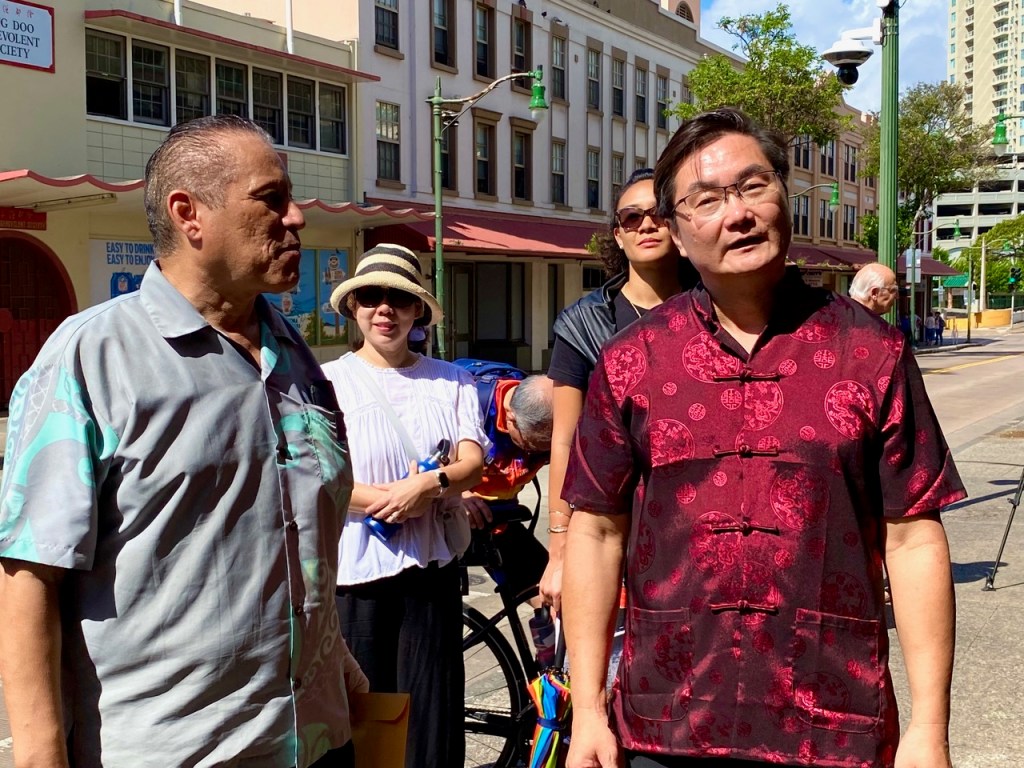
On the community walk, Neighborhood Board Chair Caravalho highlighted areas where there has been progress including Maunakea Marketplace, where market owner Ave Kwok cleaned up the musty structure and improved safety by hiring private security guards.
The city has also hired private security, but critics say the cityʻs guards are ineffective.
Caravalho kept urging people on the tour to get their friends to come to Chinatown and spread the word that the area is safe.
“It is getting better,” Caravalho said.
One thing that makes residents shake their heads is the Honolulu Police Departmentʻs Chinatown substation with its locked front door and window shades pulled down tight — an unfriendly structure that expresses a negative message of shunning the public the police are hired to protect.
The police substation gives the impression of being closed for business as patrol officers duck in the door, which locks behind them as they disappear behind the closed blinds.

The administration says the reason the blinds are closed is concern that someone might do a drive-by shooting at the officers. Bulletproof glass for the windows and door has been ordered but it is not expected to be installed until sometime in 2025. The city has budgeted $925,000 for the substationʻs bulletproofing and new exterior lighting
Except for bars and restaurants, many businesses in Chinatown continue to close between 3 and 4 p.m. Owners told me their clients and customers no longer want to come after dark.
Chinatown business owner Fran Butera, who was on the walking tour, wishes the mayor would reclaim for the neighborhood Smith-Beretania Park, a small rectangle of green in the heart of Chinatown she says has been commandeered by homeless campers.
“They sit with their shopping carts and piles of stuff right at the entrance of the park, glaring at people like they are daring them to come in so nobody does which makes it so much worse,” Butera said.
The Blangiardi administration has promised Chinatown safety will increase when the 53 new security cameras it ordered are up and running. Only six are fully operational now. The remaining 47 are expected to be installed at all intersections in Chinatown by the end of the year.
Highlighting New Approaches
Managing director Formby emailed me a list that I requested of what the mayor considers his five top accomplishments in Chinatown.
The list included the administration’s continuing efforts to meet in person with Chinatown residents and business owners to address their concerns, as well as spending money for overtime pay to deploy more police officers on foot to detect criminal activity in the hidden alleys and dark corners of the area.
Also, creating the Crisis, Outreach, Response and Engagement program to get homeless people in crisis off the streets and into temporary housing and medical and drug treatment programs instead of having them end up in jail or crowding into hospital emergency rooms.
And what Formby described as “robust coordination” with Honolulu Prosecutor Steve Alm’s Weed and Seed program to address criminal activity in Chinatown.
But the residents say however sterling the improvements, the core issues in Chinatown remain: drugs and crime.
As council member Dos Santos-Tam said, “Itʻs two steps forward and one step backward,” in the city’s quest to address Chinatown’s enduring problems.
 Sign up for our FREE morning newsletter and face each day more informed.
Read this next:

Local reporting when you need it most
Support timely, accurate, independent journalism.
Honolulu Civil Beat is a nonprofit organization, and your donation helps us produce local reporting that serves all of Hawaii.
ContributeAbout the Author