Beth Fukumoto: A Bipartisan Spirit Continues To Elude Hawaii's GOP Legislators
It’s hard to encourage cooperation across the aisle when you’re championing many of the same issues that are tearing the country apart.
February 19, 2024 · 6 min read


About the Author

One of my central guiding beliefs about the world is that anyone with too much power is bound to abuse it.

It’s why I originally joined the Hawaii Republican Party in a Democratic supermajority state. I thought I could help to even the playing field for people who felt undervalued and ignored by their political leaders.
I left because I couldn’t stand by the party’s values. I didn’t want to continue compromising to keep peace within the party. And I couldn’t be the opposition leader my caucus wanted.
Reading through this year’s House Republican priorities, watching their press conference, and listening to Republican Leader Lauren Matsumoto’s Opening Day speech, I found myself reflecting a lot on my own role, but more importantly, the role of the minority party in the Legislature.
Minority parties can champion the causes of marginalized groups or those outside the mainstream. They can insert diverse perspectives into the debate, ensuring that policymaking doesn’t solely cater to the dominant narrative. Minority parties can look to future issues instead of being caught up managing the present. And, as most people can agree, minority parties can expose flaws in proposed and rushed-through legislation, leading to more effective and representative laws.
But, whether minority parties fill those roles effectively is a different question.
As the minority leader, my view was that effective minority parties understand the power of negotiation and compromise. By identifying areas of shared interest and proposing amendments, they can build bridges across the aisle, leading to more inclusive and broadly supported legislation. In seeking out partnerships, minority parties can also build goodwill and credibility with the majority, which they can call on when big issues inevitably arise.
Since constant public criticism erodes trust and the Legislature’s culture values discretion, I encouraged my members to use their fiery condemnations only as a tool of last resort when they needed it most. I thought collaboration increased our chances of success, so I ignored the members of my caucus who argued otherwise.
Our debate over the minority party’s responsibilities in the Legislature only spilled into public view once, when during a floor debate I refused to yield time to Rep. Bob McDermott who wanted to continue his speech criticizing the budget bill. His furious response, “Start acting like a fucking Republican,” just about summed up our difference of opinion.
With age and distance, I’ve realized that, colorful language aside, he did have a point. I’m not sorry that I prioritized cooperation over opposition. Yet, in doing so, I sacrificed a few of the other roles Republicans thought the caucus should be fulfilling.
Republicans wanted a caucus that spoke for them and championed their issues. Democrats can spread out the responsibility to represent their party values across a robust party apparatus and plethora of elected officials. The few Republicans in the Legislature carry that burden themselves.
Republicans also wanted the caucus to be more strident and vocal in our criticism of Democrats. Some argued that we could only differentiate ourselves by tearing down the other party. Others pointed out that creating conflict was the only way to gain the public’s attention and win elections.
I still don’t like it, but I do get it. Hawaii Republicans felt marginalized, and, by collaborating with Democrats, I made them feel unrepresented. I would argue that legislators have a duty to represent their constituents over their parties, but that argument wasn’t very popular amongst Republican circles. Of course, it all got worse when Donald Trump was elected and the party gave up its “big tent” veneer.
Last week, we saw national Republicans block the immigration reform they’ve been arguing for because progress would make it harder for Donald Trump to win back the presidency. The farce was a clear indicator that, whether in Congress or the Hawaii Legislature, Republicans are increasingly being forced to choose between bipartisan governance or advancing their party’s interests.
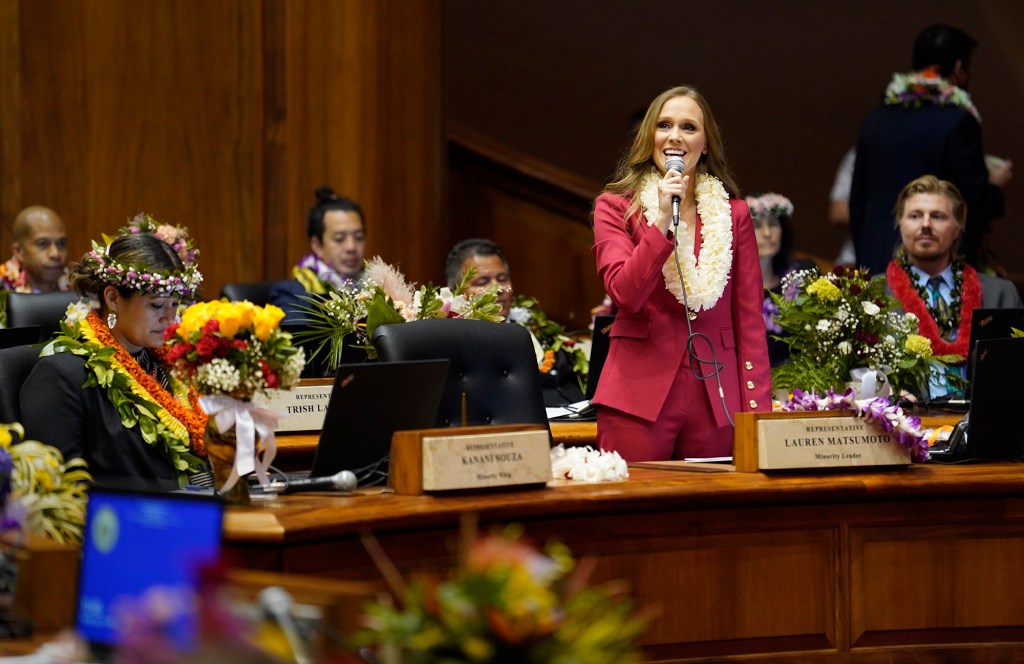
So, which way is the current Hawaii House Republican Caucus leaning? It’s not clear.
This year, Hawaii’s House Republicans based their caucus package on the concerns that citizens raised during the caucus’ “Listening Tour.” The tour consisted of public meetings in Kaneohe, Hawaii Kai, Mililani and Kapolei where Republican members could survey attendees and ask them questions about their biggest concerns. Reaching out to constituents to gain input on issues they care about regardless of party is a great approach, which appears to have resulted in a few novel issues for the caucus.
That caucus is prioritizing improving access to Hawaiian homelands, a long overdue responsibility that the state has failed to fulfill. Members want to create a curriculum-to-career pipeline in public schools. And, they proposed expanding paid family leave for public workers.
On the other hand, their bill package mimics most major national Republican talking points. Citing concerns about voter fraud and doubt, they want to impose voter identification restrictions, install 24-hour video surveillance on ballot boxes, and make it more difficult to vote by mail. They’re also proposing banning ranked choice voting.
In schools, they’re making it easier to maintain a medical exemption from vaccinations, restricting the participation of transgender athletes in sports, establishing a parental right to inspect library books and school curriculum, requiring schools to notify parents if their children request to change their gender pronouns, and creating a number of other parental rights ranging from monitoring health care to school assembly guests.
They’re also proposing that the state eliminate income taxes, reduce environmental reviews on construction, and broaden the circumstances in which a person can use deadly force.
In her opening day speech, House Minority Leader Lauren Matsumoto began with a story about bipartisanship, but it’s hard to encourage cooperation across the aisle when you’re championing many of the same issues that are tearing the country apart. You can’t have it both ways.
Once upon a time, I was required to choose between partisanship and cooperation. This caucus will have to choose too. And, these days, most Republican officials seem to be leaning the wrong way.
 Sign up for our FREE morning newsletter and face each day more informed.
Read this next:

Local reporting when you need it most
Support timely, accurate, independent journalism.
Honolulu Civil Beat is a nonprofit organization, and your donation helps us produce local reporting that serves all of Hawaii.
ContributeAbout the Author