Neal Milner: Making The Shaka An Official Hawaii Gesture Is Not As Dumb As It Sounds
The shaka is a source of origin stories, family stories, and a way to talk about life in Hawaii.
March 21, 2024 · 5 min read

About the Author

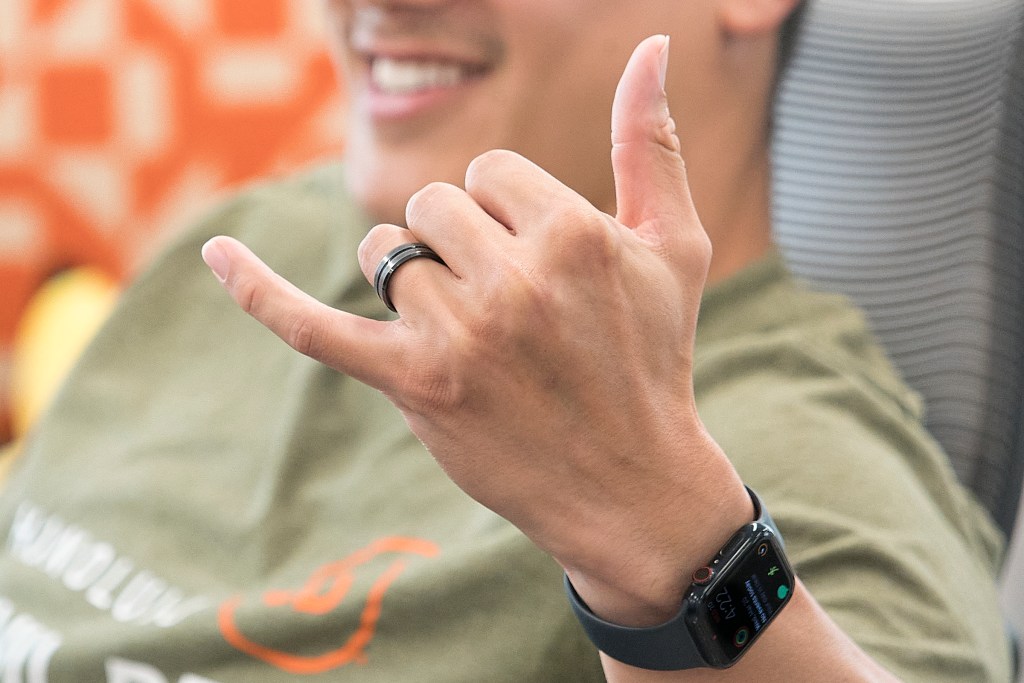
“Extending the thumb and smallest finger while holding the three middle fingers curled, and gesturing in salutation while presenting the front or back of the hand; the wrist may be rotated back and forth for emphasis.”

No, that’s not the text of a YouTube instructional video. It’s the definition of a shaka as stated in a resolution the Hawaii Legislature is considering that would make the shaka Hawaii’s official gesture.
Whenever the Legislature gets involved with this kind of commemorating, honoring or designating, critics ask, with all the really important things legislators have to do, why do they waste time on this?
Fair question. The answer is yes, it’s worth the time. We’ll get to the reasons why in a bit.
Resolutions like this are fairly common. Some of them are good, some are truly awful.
A good way to see why officially recognizing the shaka is good is to learn from an awful one.
Take the stinker that came up about 17 years ago — the Legislature’s embarrassing, wrongheaded and over-the-top attempt to honor Duane Chapman, better known as Dog the Bounty Hunter.
By looking at what lawmakers did wrong, which is everything, we can understand why they are right about shaka recognition.
Chapman expanded his bounty hunting horizons by going to Mexico, capturing a serial rapist fugitive from the U.S., and bringing him back across the border.
The trouble was that doing this violated Mexican law.
Bounty hunting is a crime in Mexico. Illegally taking a person by force sounds a lot like kidnapping, don’t you think?
The Mexican government saw it as an affront to its national sovereignty. Mexican authorities arrested him and released him on $300,000 bail. Dog jumped bail and returned to the U.S. At the behest of the Mexican government, the U.S. extradited Chapman to face charges.
Mexico became the bounty hunter while Dog was the bail-jumper.
That’s not how Hawaii legislators saw it. To them, Dog was not an absconder. He was a martyr.
Up came a resolution asking the Mexican government to cease and desist. Legislators did this by wrapping up his actions in cultural references that were more than overblown. They were inappropriate and offensive.
One House member described Dog’s work as “spreading justice and aloha around the world.”

Never mind the justice part. Focus on the use of the A-word. “Aloha” here is a seals-it-with-a-kiss word that paints over the warts and makes everything OK. That’s an undeserved free pass, using a powerfully good word to justify bad things.
This was a graphic example of incompetence and impropriety in every way.
It made a hero out of a felon. It interfered with the affairs of the Mexican government, a friendly sovereign nation that had an extradition treaty with the U.S. When it comes to international relations like this, legislators have no authority.
Short version of advice to today’s legislators is don’t do that, any of that. Period.
Official recognition is valuable because the shaka is so culturally resonant, so much a part of this place.
That’s the negative. Here are more positive reasons why officially recognizing the shaka is a good thing.
Is the shaka gesture a proper use of the Legislature’s time? Doing these kinds of things are customary. All states do plenty of it.
Hawaii has an official state fish, flower, three kinds of mammals and a state limu or water plant.
Customary is not automatically worthwhile, but custom counts for a lot.
Here’s the best reason. Official recognition is valuable because the shaka is so culturally resonant, so much a part of this place. The gesture is a source of origin stories, family stories, and a way to talk about life in Hawaii. Look at this wonderful tidbit that’s a tease for a shaka documentary coming out this year.
It’s a reflection of this place so obvious that it immediately raises “uh huh” moments.
But here’s a less obvious but more significant way the shaka is so culturally important. It so accurately illustrates an ambivalence here that’s as much a part of today’s Hawaii as the shaka itself.
People here talk about the shaka in two ways. They brag about how it’s been adopted all over the world. At the same time, people want to keep it as Hawaii’s own, keeping it local and keeping it distinctive.
Proud about its spread, protective of its origins. That’s so much a part of Hawaii today, as much as extending the thumb and smallest finger while holding the three middle fingers curled.
Think of Kona coffee or that especially distinctive aloha shirt you buy before you visit friends on the mainland so that your pattern looks different from the circular racks of decent but same-same aloha shirts sold in every Costco in the Northern Hemisphere.
Pride in the place’s influence combined with worry about keeping a distinctive sense of place. That’s as much a part of Hawaii as the gesture itself.
Here’s a final defense of the shaka resolution. Shaka recognition is happy talk, and we could all use more happy talk.
 Sign up for our FREE morning newsletter and face each day more informed.

Local reporting when you need it most
Support timely, accurate, independent journalism.
Honolulu Civil Beat is a nonprofit organization, and your donation helps us produce local reporting that serves all of Hawaii.
ContributeAbout the Author