If This Is To Be The Pacific Century, We Must Listen To The People Of The Islands
The Festival of Pacific Arts and Culture comes to Hawaii for the first time.
June 5, 2024 · 5 min read

About the Author
Thursday is the 40th anniversary of when my family left the Marshall Islands. We were trading the frontlines of the Cold War for the landlocked heat of Texas.

I remember my father saying the gentle sprinkles on the morning of our departure were a blessing. It was his telling me that I needed to accept that our departure was meant to be. Of course, he was born and raised in Hilo, so rain could rationalize just about any action or activity.
As we lifted off from one of the notable Pacific battlefields of World War II, I remember poring through the Time magazine dedicated to the 40th anniversary of D-Day. We were on a C-141 transport bound for Hickam, so I spent the six-plus hours devouring the Robert Capa photos of the Normandy invasion and studying the maps and stories of that momentous crossing of another ocean.
The anniversary of the invasion and our departure from my birthplace are firmly interlocked in my memory. They also remind me of the thousands of Pacific Islanders who have left their homes for Honolulu.
Starting Thursday, Hawaii is hosting a wonderful event for the first time: the 10-day Festival of Pacific Arts and Culture. FestPAC is the largest gathering of Indigenous Pacific peoples and while this is ostensibly a cultural event, no doubt many conversations will be had about the uneasy future of our collective island homes.
Those Who Were Sacrificed
When I think of this summer festival, I can’t help but compare it to the one in “Those That Walk Away From Omelas,” a famed short story written by Ursula K. Le Guin.
The story starts with an idyllic summer festival in a city called Omelas and builds out a tale of a place with unimaginable happiness. However, the underpinning of this happiness is an atrocity. To achieve the happiness of everyone else, a single child is locked up in squalor and subjected to intolerable filth, despondency and despair.
In Le Guin’s story, there are those that can’t accept the bargain. Those who leave to go to “a place even less imaginable to most of us than the city of happiness. I cannot describe it at all. It is possible it does not exist. But they seem to know where they are going, the ones who walk away from Omelas.”

Omelas could easily be the name of some small Pacific island.
The island I grew up on, Kwajalein, was a socialist paradise under the auspices of the American military. Everyone benefited from the mission of the island: Children were educated in Department of Defense schools, medical care was readily available and everyone understood resources were limited.
However, just up the atoll was an island, Ebeye. Ebeye, and the rest of Micronesia, helped guarantee the societal imperiousness of the West after World War II.
The Marshallese were sacrificed in the great ideological battle between the capitalists and communists. The Marshallese weren’t the only Pacific people affected by atomic bomb tests. Throughout the Pacific you will find island after island, atoll after atoll, archipelago after archipelago, confronting crises of safety, security and mental and physical health due to the behaviors of continental powers.
If this is truly to be the Pacific Century, then Pacific peoples need to be listened to and given agency to affect the change that the rest of the world needs if we are to remain like the blissful citizens of Omelas.
Appeals to better angels and morals might actually be effective, if only because the existential crisis confronting Pacific peoples is also one that affects everyone on this planet. Pacific peoples went from being on the frontlines of World War II to the Cold War to now the fight against sea level rise.
In This Together
I consider myself to be a thoroughly Pacific person. I was born and raised in such a small and remote place that I still consider Hilo to be a metropolis.
After living and working around the world, I’ve come to truly cherish my island upbringing. When you live on an island in the middle of the Pacific, you learn to be patient and to make do with what’s before you. You understand that to make life on an island work, you need to pull in your elbows and make space for others.
For too much of the last two centuries, the peoples of the Pacific have suffered the indignities of the rest of the world. I can’t help but think that this has come at the detriment of our planet.
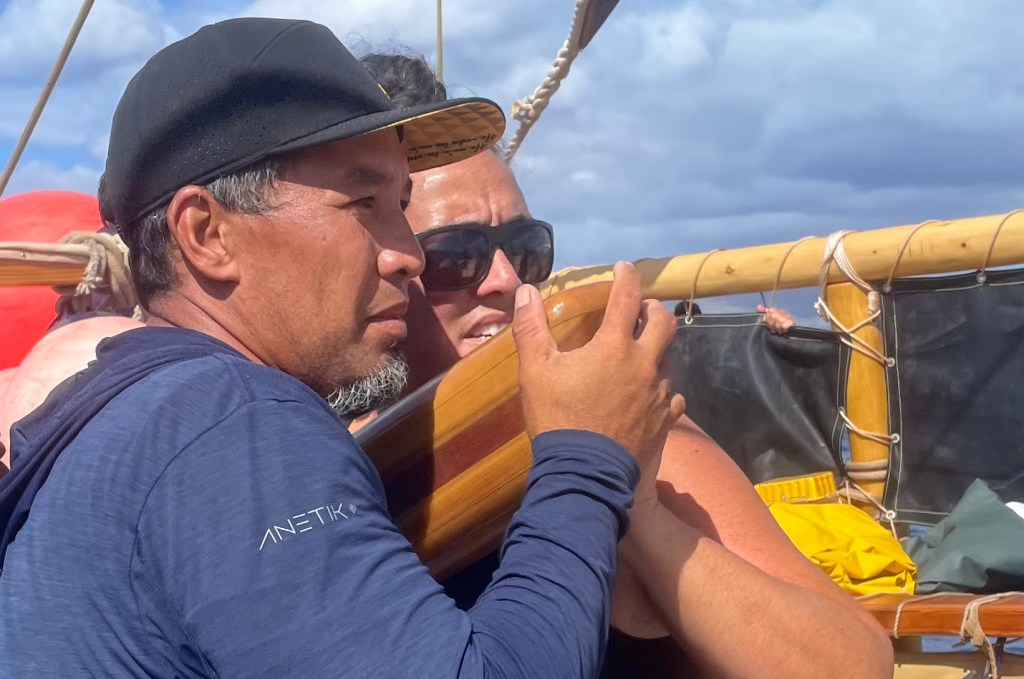
There’s a saying across the Pacific: “He wa’a he moku, he moku he wa’a” (The canoe is an island, the island is a canoe). When I think of this phrase, I think of my friends who sailed on Makali’i from Kawaihae to participate in FestPAC’s opening ceremony.
They sailed from Hawaii island across the rough channels alongside a double-hulled canoe from Tahiti. They found their way to Kualoa and the gathering of fellow Pacific wayfinders and voyagers.
If we’re to make it through a tumultuous future, it won’t be as individuals. We will make it by working together. Hopefully those bonds of togetherness will be on display these next 10 days here in Hawaii.
 Sign up for our FREE morning newsletter and face each day more informed.

Local reporting when you need it most
Support timely, accurate, independent journalism.
Honolulu Civil Beat is a nonprofit organization, and your donation helps us produce local reporting that serves all of Hawaii.
ContributeAbout the Author