Why Hawaii Needs A Strategy For The Hottest Day Ever
From Delhi to Honolulu, air conditioning and trees are in the forecast to combat extreme heat.
August 2, 2024 · 6 min read


About the Authors


The day we landed in Delhi was the hottest day ever recorded — 122 degrees Fahrenheit felt surreal. As we rode in our air-conditioned car, we saw farmers out in the fields with their animals, and construction workers with pickaxes working the roads. It looked miserable.

High temperatures aren’t just uncomfortable, they can also be dangerous. According to the Centers for Disease Control and Prevention, prolonged exposure to high temperatures without the ability to cool down can result in dehydration, fatigue, dizziness, heat exhaustion, heat stroke, and death.
Extreme heat-related illness and deaths continue to rise everywhere. Global heat deaths are projected to increase by 370% if action is not taken to limit the effects of global warming, according to a recent Lancet study.
What is happening in Delhi is a harbinger for Hawaii.
We don’t typically associate Hawaii with extreme Delhi-like heat, or the unprecedented global heat waves of this summer, because temperatures here have historically been moderate. This is changing — Hawaii is getting hotter, and is not prepared for what’s coming.
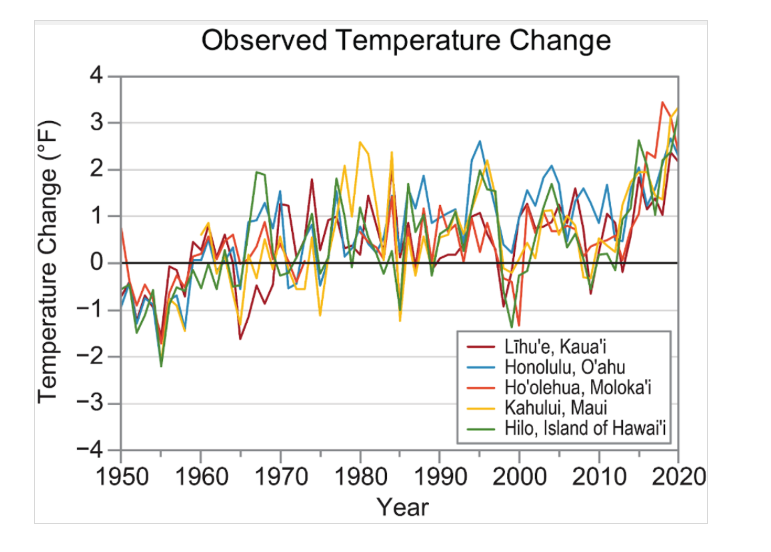
It’s not just the heat that’s a problem, it’s the humidity — and Hawaii has some of the highest rates of humidity in the nation. High humidity reduces the body’s ability to cool itself down through sweating to prevent illness. As the Lancet’s Health and Climate Change data portal demonstrates, the number of health-threatening temperature days have steadily increased over the past two decades globally.
As Hawaii also heats up we need an extreme heat strategy to cover the many aspects of heat abatement- building design, cooling centers, outdoor worker protection, and more. Such a strategy must prioritize our most vulnerable residents, just as Delhi has done for its 16 million denizens, almost one-third of whom live in substandard homes or no homes at all.
Heating Abatement Needed
Indoor and outdoor cooling is key to heat abatement.
Hawaii has a history of using nature to facilitate indoor cooling. Buildings like the Gus Ishihara-designed Campus Center at UH Manoa take maximum advantage of the trade winds to keep people cool.
Unfortunately, we can’t rely on consistent trade winds — UH studies show that trade winds have declined by a third over the 30-year observation period.
Hawaii needs to put many more heat abatement measures into law or policy. Cities like Phoenix, New York, and Chicago have building code rules requiring rooftops be painted white to reflect sunlight away and cool ambient temperatures by up to 2 degrees Celsius.
In Hawaii only 57% of residents have A/C in their homes, says a 2020 U.S. EIA survey. As Hawaii heats up, even well-designed homes will need A/C.

As the demand for air-conditioning increases, we’ll need to fuel it from clean sources to prevent further warming of our surroundings. We’ll also need to use more energy efficient appliances to keep pace with the increased demand for cooling. For Hawaii, this is possible, according to a study done for the Public Utilities Commission.
But what if you can’t afford A/C, or are unhoused as temperatures climb — especially in Delhi and Honolulu where urban poor and unhoused rates are high?
Some states are experimenting with financial assistance to help low-to-moderate income residents cover the cost of home cooling systems. This year, Oregon became the first state to approve Medicaid funds to pay for air conditioning to mitigate health impacts of extreme heat.
The closest Hawaii comes is LIHEAP, a state program which provides eligible households with a one-time payment assistance towards their electric or gas bill. It does not cover an A/C purchase, nor reduces the burden of running a cooling system during the hottest months.
Recognizing that A/C is no longer a luxury, during the 2015 El Nino year, when temperatures surpassed the 90s and keiki felt the impact of this heat, Gov. David Ige signed a law to put A/Cs into classrooms.
Aside from heat-related illnesses, research says that school performance slows with high temperatures and leads to poor test scores. This program is still being rolled out nine years later. Hawaii needs to hurry up.
There has been some murmuring in Hawaii around cooling centers. What would these look like — new buildings, longer hours for libraries, something else entirely? How would they be cooled and who would have access?
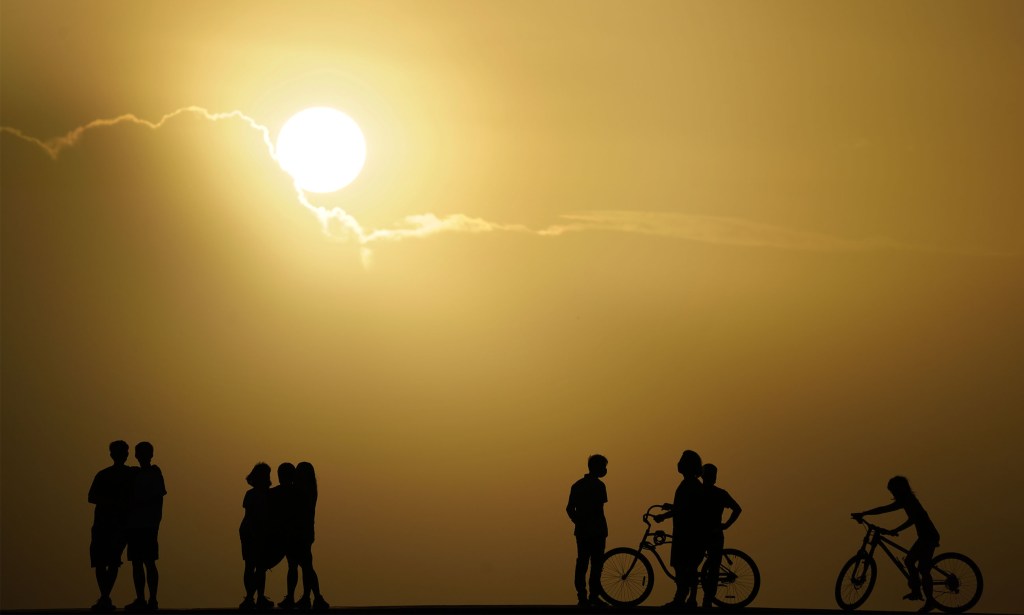
A heat strategy could contain the specifics. Cities such as Washington, D.C., have opened cooling centers, along with spray parks, but how well these are working for the unhoused is up for debate.
And what if you work outside, like those construction workers and farmers we saw in Delhi?
In the U.S., the Biden administration recently released proposed rules to establish the first federal safety standard for protecting workers from extreme heat, offering 15-minute paid breaks every two hours for heat indexes above 90 degrees — which could mean many days in Hawaii. How will Hawaii build these into construction, farming, maintenance jobs?
Along with air-conditioning indoor spaces, cooling outdoor ones is crucial. The World Health Organization says cities are not being designed to reduce urban heat generation. Loss of green space, increase in impervious surfaces such as parking lots, and heat absorbing housing materials are adding to heat generation. Temperatures in urban areas can be nine degrees higher than temperatures in surrounding areas, says the U.S. EPA.
Trees help reduce the heat, keep keiki cool during outdoor school recess — and are good for mental health, air quality, and for preventing soil erosion and flooding.
Hawaii is getting hotter, and is not prepared for what’s coming.
Oahu’s tree-planting program has a goal of planting 100,000 trees by 2025 across Oahu, and the City is committed to increasing the urban tree canopy to 35% by 2035.
However, cities need tree plans, just as they need plans for other infrastructure.
“Trees should be thought of as infrastructure, like any other utility,” says Shannon Noelle Rivera, the former community partnership coordinator for the state’s urban forestry program. “We should start managing for and creating long-term plans for trees.”
The city’s Climate Action Plan says it will also update planting standards, guides, and ordinances to realize more and healthier urban trees, and fully integrate trees into infrastructure programs.
As with many climate change issues, there is no clear agency mandated to lead. County collaboratives and the state’s multi-jurisdictional bodies could help steer the conversation and any existing guidance into meaningful action for Hawaii.
Delhi has a heat strategy, Washington, D.C., files one with the Homeland Security and Emergency Management Agency, and Hawaii urgently needs one.
Let us learn the hard lessons from Delhi and use this time we have to prepare for our own hottest day ever.
 Sign up for our FREE morning newsletter and face each day more informed.
Community Voices aims to encourage broad discussion on many topics of community interest. It’s kind of a cross between Letters to the Editor and op-eds. This is your space to talk about important issues or interesting people who are making a difference in our world. Column lengths should be no more than 800 words and we need a photo of the author and a bio. We welcome video commentary and other multimedia formats. Send to news@civilbeat.org. The opinions and information expressed in Community Voices are solely those of the authors and not Civil Beat.

Local reporting when you need it most
Support timely, accurate, independent journalism.
Honolulu Civil Beat is a nonprofit organization, and your donation helps us produce local reporting that serves all of Hawaii.
ContributeAbout the Authors