Now Is The Time To Protect The Pacific Remote Islands
It’s Joe Biden’s moment to address the ocean crisis and conserve cultural heritage.
October 11, 2024 · 5 min read

About the Authors

As two ocean elders, a lifelong oceanographer and a Native Hawaiian cultural practitioner, we have a deep reverence for the ocean. But unprecedented commercial exploitation of our planet threatens the ocean and humanity.

Super marine heatwaves, a newly coined term underscored in the recent State of the Climate report, can contribute to coral deaths and fisheries collapse. The global assessment, based on contributions from more than 590 scientists in nearly 60 countries, warns that ocean heat and global sea level were the highest on record. We are doing worse, not better.
The ocean is warning us and urging action. Now is the time to act and protect some of our last wild, blue places like the Pacific Remote Islands.
Just as former Secretary of State John Kerry shared in a Climate Week event last month, we call upon President Joe Biden to honor Pacific Islanders’ heritage and create the world’s largest highly protected marine area to truly cement his climate and conservation legacy.

Starting the designation process is certainly a milestone, which Biden rightfully celebrated in his Sept. 27 Proclamation on National Public Lands Day. But it’s time to finish the job and fully protect the sacred cultural heritage and remarkable ecology of the Pacific Remote Islands.
President Biden has built a strong environmental policy foundation with historic investments in clean energy and environmental justice. His administration has made record-breaking strides toward the America the Beautiful initiative, with a goal of conserving 30% of U.S. lands and waters by 2030 (known as “30×30”).
Seeking Sanctuary
Indigenous Chamoru, Native Hawaiians, and other Pacific community members of the PRI Coalition submitted a national marine sanctuary nomination to President Biden with the request for an inclusive process to protect, rename, and co-manage the area. Biden has the opportunity to follow through on the calls of Indigenous leaders and fully protect the Pacific Remote Islands to meet the ocean conservation goal.
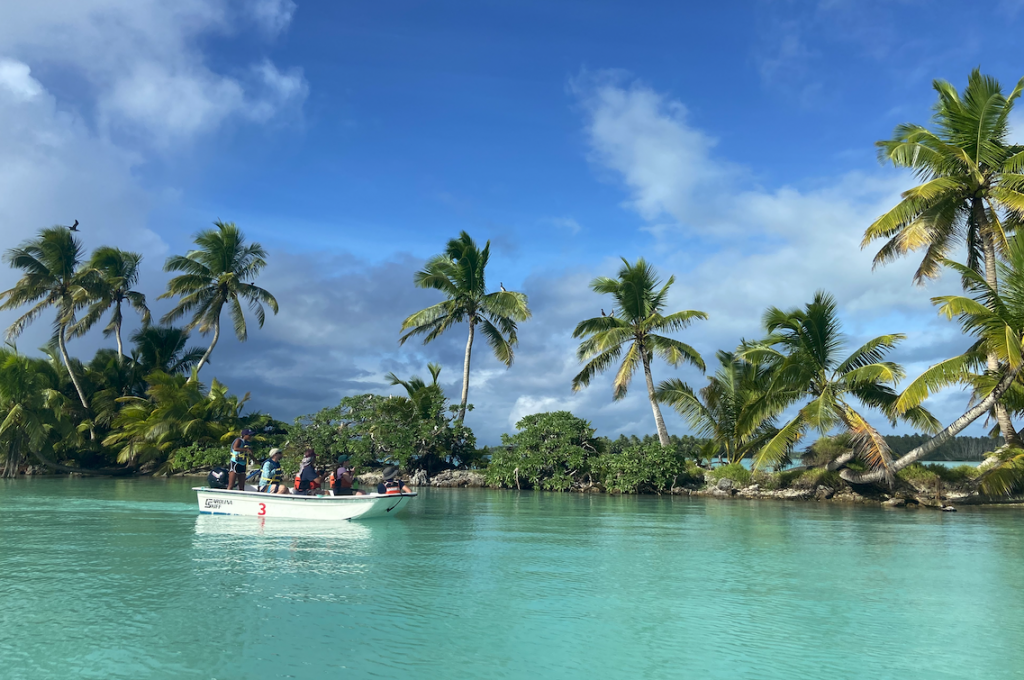
The PRI are a group of uninhabited reefs, atolls, and islands in the Central Pacific with ecological and cultural significance to Indigenous communities. They contain some of the world’s last wild and healthy ocean ecosystems and are home to resilient coral reefs and threatened and endangered wildlife. The area has also long held significance for Native Pacific Islanders’ cross-oceanic migration, voyaging, and cultural practice.
The ocean embraces 97% of the biosphere. Yet, less than 3% of the ocean is highly or fully protected from extractive industries like overfishing and deep-sea mining that harm precious marine ecosystems on which local communities and our global humanity rely.
Global overfishing, reinforced by billions of dollars of subsidies, is a serious threat that has depleted fish and other marine life by about half since the 1950s. Purse seine fishing in the unprotected area of the Pacific Remote Islands is a particularly destructive method known for the bycatch of sharks, turtles and marine mammals.
Fully protected areas not only protect vital biodiversity and safeguard planetary processes but also provide havens where heavily exploited wildlife such as tuna and squid can recover.
Recently, the potential for abundant minerals on the Central Pacific seafloor has opened up the possibility of highly destructive deep-sea mining activities with questionable economic benefits, high costs and risk of permanent damage to ancient deep sea ecosystems.
Industry pressures are particularly strong for some small islands that are exploring the false economic promise. However, state, territory and Indigenous leaders are pushing back, seeking to restore a sustainable relationship with the ocean. West Coast states, Hawaii, and American Samoa have all outlawed deep-sea mining in their waters.
For Indigenous people throughout the Pacific, their creation story is linked with the deep sea where life began. Take for example the Kumulipo, the origin story of Native Hawaiians, translated by Queen Liliuokalani while she was imprisoned under colonial rule, that the koa, or coral polyp, was the first organism created.
The Pacific Remote Islands will be remembered by future generations as a magnificent legacy.
Indigenous Pacific Islanders need to be part of the decision-making process for future management of the area, especially in culturally significant places where they have ancestral ties. Co-management means a collaborative governance structure not limited to government agencies but includes community groups and other stakeholders.
Amid a warming climate and growing extractive threats, the Pacific Remote Islands deserve full protection. Currently, only three out of the five management areas have protection to the full 200 nautical miles surrounding them. Howland and Baker Islands, and Kingman Reef and Palmyra Atoll, remain without full protection. This includes 98 underwater seamounts known as biodiversity hotspots.
Now, after 10 years of advocacy from local communities, it is time to act. The Pacific Remote Islands will be remembered by future generations as a magnificent legacy that endures or an unprecedented opportunity forever lost.
 Sign up for our FREE morning newsletter and face each day more informed.
Community Voices aims to encourage broad discussion on many topics of community interest. It’s kind of a cross between Letters to the Editor and op-eds. This is your space to talk about important issues or interesting people who are making a difference in our world. Column lengths should be no more than 800 words and we need a photo of the author and a bio. We welcome video commentary and other multimedia formats. Send to news@civilbeat.org. The opinions and information expressed in Community Voices are solely those of the authors and not Civil Beat.
Read this next:

Local reporting when you need it most
Support timely, accurate, independent journalism.
Honolulu Civil Beat is a nonprofit organization, and your donation helps us produce local reporting that serves all of Hawaii.
ContributeAbout the Authors