What Honolulu Can Learn From An Empty Homes Tax In Vancouver
Honolulu Council members are looking to the Canadian city as a model for their own version.
Suffering from a housing crisis, a desirable city nestled between mountains and the ocean with mild weather and a low property tax rate imposed a new tax on empty homes.
The main goal was to increase the supply of rental housing. In addition to its normal property tax rate, vacant properties were taxed at 1% of their assessed value, with the rate gradually increasing until hitting 3% in 2020.
Supporters lauded it as a way to put more housing units on the market, while opponents said the new tax rate was unfair.
Sound familiar? The debate over the empty homes tax that was implemented in 2017 in Vancouver has many similarities with that underway in Honolulu.

Measures in the two cities have key differences, especially with regard to how Honolulu would allocate revenue and how its reliance on the tourist economy would impact the definition of empty homes.
3rd Time The Charm?
But like Honolulu, the Canadian city is an attractive place to live — and an attractive place to invest in the real estate market.
“Vancouver is a very stable housing market. It’s a very stable country. It’s a safe place to invest money in housing,” Alexandra Flynn, director of the Housing Research Collaborative at the University of British Columbia, said.
Bill 46, introduced this year by Honolulu City Council Chair Tommy Waters and council member Radiant Cordero, is the council’s third attempt since 2018 to pass an empty homes tax.
It would consider homes vacant if they’re unoccupied for more than six months per year and includes exemptions for things like being in the military, receiving medical care or if the home is undergoing renovations.
“It takes a lot of funds to enforce the empty homes tax.”
Alexandra Flynn of the University of British Columbia
As is the case in Vancouver, the Honolulu tax would be in addition to regular property taxes, and would start at 1% of assessed value before gradually going up to 3% over a few years.
This year is the closest the proposal has come to passage.
Three hearings remain, two of which will be in the budget committee, Cordero said. From there it would go to a final vote at a monthly full council meeting, as soon as November but more likely in December, she added.
The new tax would take effect starting July 1, 2026.
Fewer Homes Sitting Empty
Vancouver’s empty homes tax seems to have helped increase the supply of housing for residents, but it’s only one small part of a larger housing strategy, researchers at the University of British Columbia said.
“Many experts think it probably had some effect. It’s hard exactly to know, because there’s so many other things that are going on at the same time – it’s sort of an everything everywhere all at once kind of policy landscape,” Flynn said.
Like in Honolulu, the goal is to increase occupancy rates and decrease the number of homes sitting empty.
That seems to be working in Vancouver, where the price of a typical single-family home is about CA$1.5 million, more than 30% higher than Oahu’s median sales price for single-family homes. Correction: Due to a currency conversion error, an earlier version of this story said Vancouver’s price was almost double Oahu’s.
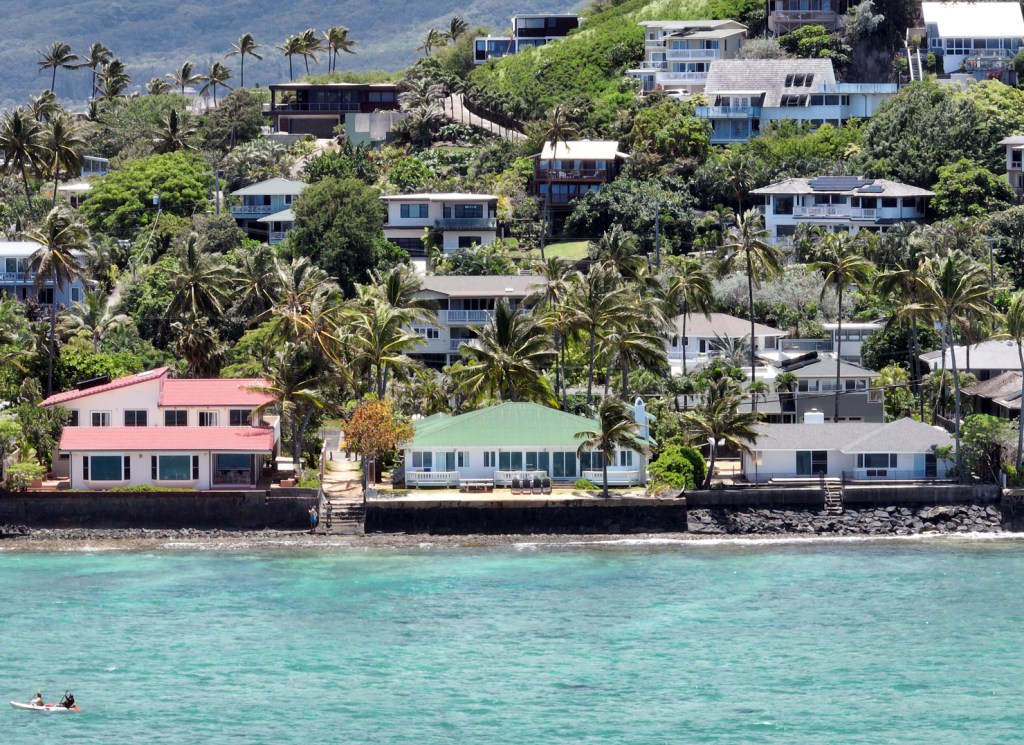
Since Vancouver’s tax passed, many formerly empty homes have been converted to rental units, associate professor at the University of British Columbia’s Sauder School of Business Tsur Somerville said.
“As a general observation, it was certainly successful at moving a bunch of units,” he said.
Of the total number of homes in Vancouver, 1.36% were considered vacant in 2017 and 4.3% were considered vacant or unoccupied but exempt from the empty homes tax. By 2022, the most recently available data, those percentages fell to 0.58% and 2.5%, respectively.
That translated to about $38 million of empty homes tax revenue in 2017 and $47 million in 2022, according to the city’s most recent annual report. The city also said it spent over $140 million on affordable housing initiatives aimed at promoting social housing and boosting supply and affordability for renters, including giving grants to nonprofit social housing providers.
The Cost Of Enforcement
Finding the resources to stand up the new program is one concern Honolulu’s critics have raised, including from high ranking officials within the city’s Department of Budget and Fiscal Services like real property assessment division administrator Steven Takara.
The city is paying almost half a million dollars to consulting group Ernst & Young for help figuring out what resources would be needed to implement an empty homes tax, which could include new technology and new jobs.
For Vancouver, the overhead cost was estimated to be almost $7.5 million between 2016 and 2018, up from an earlier estimate of $4.7 million. Homeowners self-declare whether they own a vacant property, and about 10,000 to 15,000 yearly audits help enforce compliance, which has been above 95%.
“It takes a lot of funds to enforce the empty homes tax. So there’s been mixed reviews on how much it actually brings in versus how much it costs to enforce it,” Flynn said. She added that she sees the goal as being less about making revenue and more about reducing the number of vacant units.
In Honolulu, the bill’s language restricts how revenue can be used. No more than 5% could be used for administrative costs, and at least half of the revenue must go toward affordable housing and homelessness initiatives. But those allocations may change during an upcoming budget committee meeting.
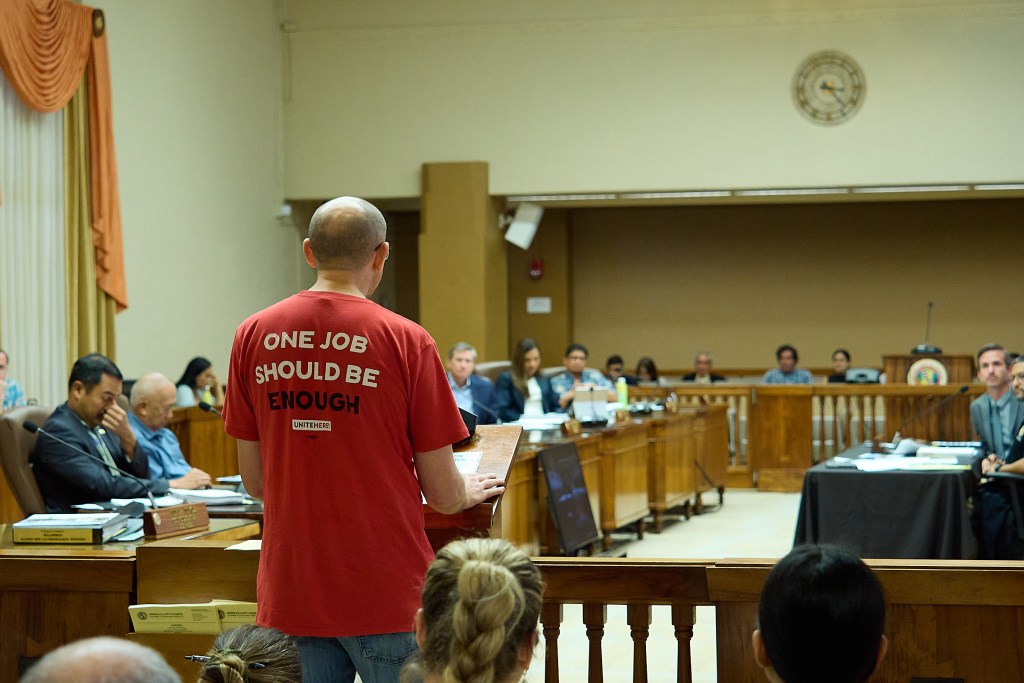
That’s because the bill needs three votes to pass this five-member committee, and to gain the necessary support it may need to make concessions.
Of the five members, council member Augie Tulba voted against the measure during this month’s full council meeting. Cordero and council member Matt Weyer are in support.
That leaves two outstanding votes: one from council member Esther Kiaaina and one from council member Calvin Say. Each said during this month’s full council meeting that they would vote no on the bill if they weren’t satisfied with the next iteration of amendments.
Kiaaina wants the revenue to enter the general fund rather than be earmarked for affordable housing and homelessness, and she referenced the big question mark over how much money the city will need to spend on Covid hazard back pay. Say wants to be sure that local residents who own multiple properties won’t be too negatively affected compared to off-island investors.
Supporting The Local Economy
Say’s point was mentioned by Somerville, too. While the goal of both cities’ empty homes taxes is to reduce the number of vacancies, they also want to do this through reducing the number of investment properties.
But not all empty houses in Honolulu are from investors – some are owned by local residents, and some are vacation homes owned by people who visit for brief periods during the year and, as supporters note, spend money at local establishments.
“It’s a channel for supporting a sector of the economy,” Somerville said.
That reflects Honolulu’s status as more of a visitor-oriented economy compared to Vancouver, he said, which impacts who would be affected by the tax.
While Vancouver’s tax only exempts homes occupied by residents who are on a lease or sublease, Weyer amended Honolulu’s bill last month to exempt short-term rental owners after the bill received much testimony in opposition from members of the Oahu Short Term Rental Alliance.
Now, the alliance is one of the bill’s most consistent supporters, a dynamic that might seem strange in Vancouver despite other similarities.
“It’s not quite the same as Oahu, obviously, for many reasons. But in terms of its allure as a place to own property, that’s where cities who are introducing vacancy taxes — or vacant homes taxes — are seeing some promise,” Flynn said.