Eric Stinton: Fairness Means Giving Trans Athletes A Chance To Play
You can couch it in terms of safety and inequity, but this is really about flat-out discrimination.
February 19, 2025 · 8 min read

About the Author

Last November, Punahou graduate and University of Nevada volleyball player Sia Liilii joined 11 other players to file a lawsuit over the participation of a transgender woman playing on the San Jose State University team.

The lawsuit alleged violations of Title IX and the First and 14th Amendments, and was filed two weeks before the Mountain West Conference tournament. It sought an immediate injunction to prevent the trans player from participating in the tournament.
The injunction was denied. San Jose State was in compliance with the existing conference policy that transgender athletes may compete so long as they’ve been on testosterone suppressants for a year. The trans player played in the tournament, and her team went on to lose in the championship game.
“This has never been about one individual athlete,” Liilii told ESPN. “This is about safety and fair competition for all women’s sports.”
Safety and fairness are the main issues people have with the participation of trans women in female sports. They are understandable sentiments; there is a reason why most competitions and record books separate men from women. Intuitively, someone born male could have athletic advantages.
So let’s investigate these claims, starting with safety.
She Was Average At Best
When I first started writing about combat sports, a fighter named Fallon Fox was the source of similar controversy. She won her first three professional fights, which is normal, but since she is trans, her marginal success was elevated to sportwide scandal.
Joe Rogan, Dana White and Ronda Rousey – the sport’s biggest star at the time – all weighed in on Fox, even though she never fought in the Ultimate Fighting Championship, the behemoth fight promotion that has become synonymous with the sport itself. All of them said Fox had an unfair advantage due to her bone structure and bone density, and since mixed martial arts is a sport of violence, it was unsafe for Fox to compete.

Fox finished her career with a solid yet unremarkable record of five wins and one loss. Maybe her bone density is why she won those five fights, but more likely it was because her opponents were not stellar; none had a winning record and two never won a fight. Her only opponent who made it to the UFC knocked her out.
Despite the theoretical advantages Fox had, in actual competition she was at best average. There are plenty of cisgender female fighters who began their careers more dominantly, more punishingly physical, more spectacularly violent than Fox did. Any hypothetical safety concerns were not borne out by what actually happened.
Similarly, the lawsuit against the San Jose State volleyball player claimed she spiked the ball upwards of 80 mph – faster than most male players. An ESPN investigation found her fastest spike to be 64 mph, which is on the high end for women but not unheard of.
Turning The Issue Into Simple Politics
But Donald Trump jumped on the story, saying, “I never saw a ball hit so hard, hit the girl in the head.” He claimed the trans athlete injured an opponent by spiking the ball in the face of a San Diego State University player. Since Trump said it, conservative media ran with it.
San Diego State officials denied the claim: their player was hit on the arm and remained in the game with no apparent injury. They asked Fox News to correct their report, but Fox opted not to.
Deliberately dishonest coverage of a sensitive issue should be a red flag that something is amiss – if safety is truly your concern, why lie about it? But most people don’t look past the headlines (and of course, headlines are never about the trans athletes who come in seventh place).
For people who have already decided they know trans people better than trans people know themselves, all they’ll remember is that Fallon Fox was unfairly brutalizing opponents with super dense man bones, and the San Jose State volleyball player was hospitalizing opponents with 80 mph sniper spikes.
Of the half-million total NCAA athletes, NCAA president Charlie Baker said that he is aware of fewer than 10 transgender athletes. There are likely a handful more that are not publicly out – for reasons that should be obvious – but it’s ludicrous to argue that a few dozen athletes out of half a million are comprehensively warping the natural fairness of sports.
A review of the scientific studies about transgender athletes by the Canadian Centre for Ethics in Sports – a meta-analysis of biomedical and sociocultural studies from 2011 to 2021 – found that “Available evidence indicates trans women who have undergone testosterone suppression have no clear biological advantages over cis women in elite sport.”
Savvy readers will notice the study is prefaced by noting that “biological data are severely limited, and often methodologically flawed.” Why? Because there are so few trans athletes, and most of them are heavily discouraged if not outright banned from athletic participation.
Athletic Competition Is Inherently Unfair
But what does “fair” even mean? If it’s having “no clear biological advantages,” then is any sport fair?
Is it fair that former UFC champion-turned-Hawai’i gubernatorial candidate BJ Penn was flexible enough to put his legs behind his head without using his hands? Or that his skin was mutant-like in its ability to never cut or break? Or that he could seemingly get kicked by a horse without losing consciousness?
All athletes, trans and otherwise, have a wide range of athletic traits, all of which make athletic competition fundamentally unfair. As fight analyst Connor Ruebusch cheekily but accurately coined: athleticism is cheating.
This goes for any sport, whether we’re talking Michael Phelps’ wingspan, Michael Jordan’s vertical jump, Brittney Griner’s height or Serena Williams’ power.
This is to say nothing of the most arbitrary and unfair advantage there is: being born into a family able to afford private lessons, specialized coaching, club team memberships and the like.

But we accept that unfairness because regulating it would mean interfering with a person’s right to spend money how they want. In America, people are free to do what they want to do and be who they want to be. Unless they’re trans.
Last month the Republican-controlled House of Representatives passed the “Protection of Women and Girls in Sports Act” using similar language about fairness and safety to justify banning trans people as young as kindergarten from playing sports.
At that level, the games aren’t even competitive; youth sports are about developing communication and social skills, making friends and being part of a community. Is it “fair” to further isolate and discriminate against an already marginalized and exceedingly small group of people?
And yes, trans kids in elementary schools exist (and no, they don’t exist because teachers who can’t get students to charge their computers before class are somehow convincing them to change their genders).
Some Wish Trans People Simply Didn’t Exist
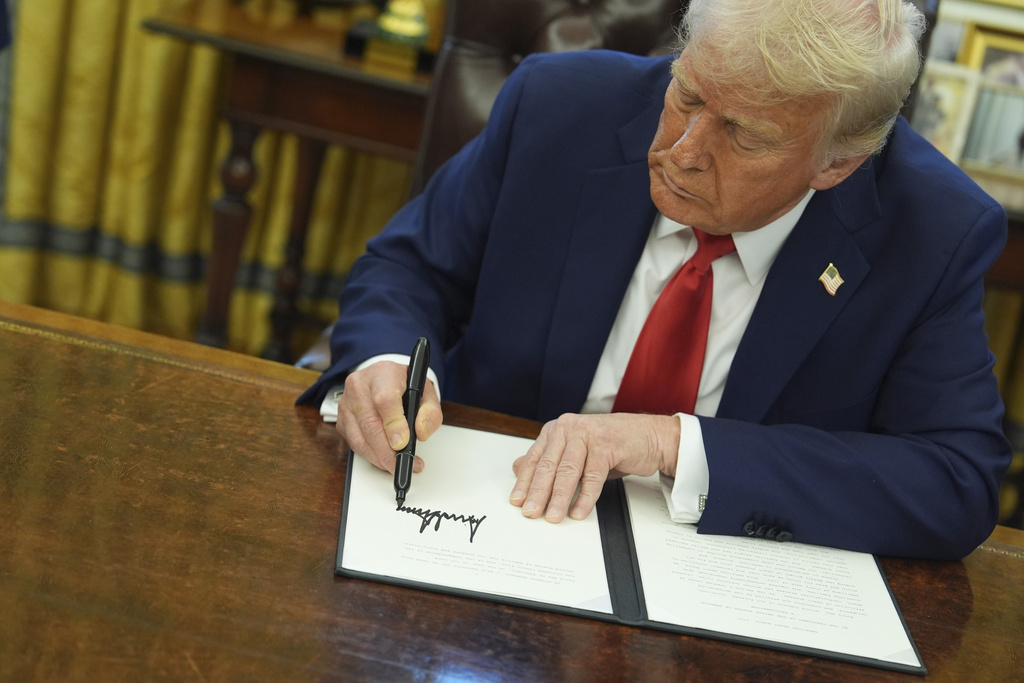
When Trump signed the executive order recognizing only male and female sexes, trans people didn’t cease to exist. That order did not materially benefit anyone. All it did was communicate to trans people that “you are not welcome.”
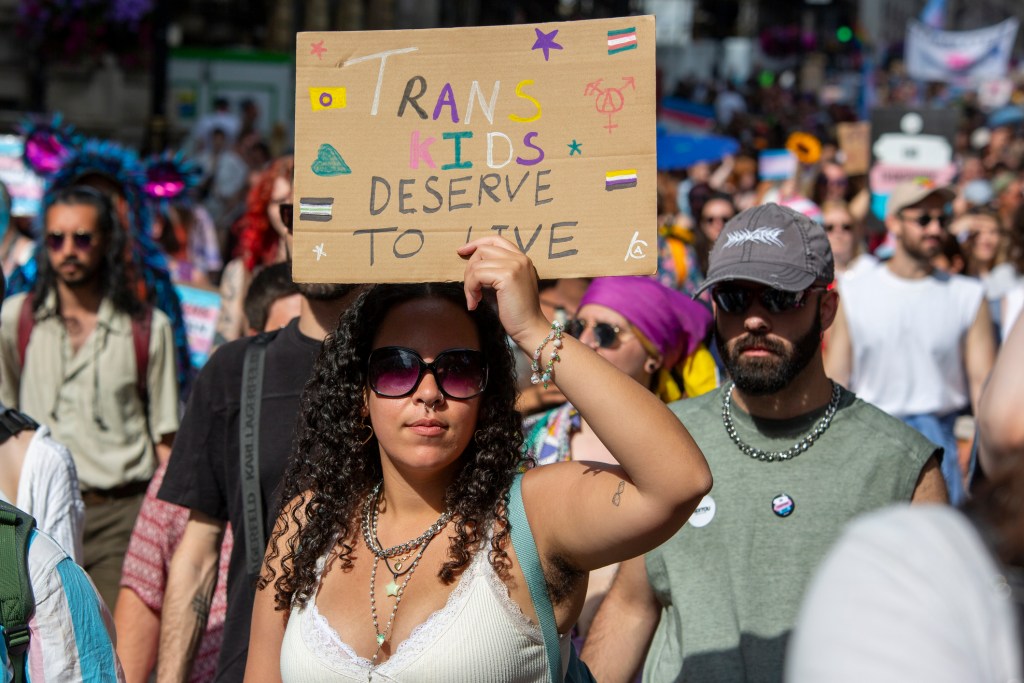
None of this is about sports. The intention behind the “Protection of Women and Girls in Sports Act” and Trump’s executive orders are part of an effort to prevent trans people from being a part of society, one domain at a time.
Trans people have always existed. Hawai’i has māhū, Samoa has fa’afafine and fa’afatama, Tonga has fakaleitī – and that’s just Polynesia. Here’s a map of cultures around the world that have acknowledged gender identities outside the male-female binary.
In conversation, people tend to preface their anti-trans beliefs by saying “people can do whatever they want in their personal lives, but…” before going through the same arguments about fairness and safety that they aren’t curious enough to look into.
But seeing how gleefully people have responded to Trump’s anti-trans agenda, I don’t think they actually believe in the individual freedom of people to do what they want to do in their personal lives.
It seems to me, if they could make all trans people just go away, they wouldn’t hesitate. For now, they’re going for the next closest thing: removing trans people from taking part in regular life under polite pretenses until, eventually, they no longer need to sanitize what it is they really want.
When a society no longer sees the mere existence of certain people as legitimate, what’s left for those people?
 Sign up for our FREE morning newsletter and face each day more informed.

Local reporting when you need it most
Support timely, accurate, independent journalism.
Honolulu Civil Beat is a nonprofit organization, and your donation helps us produce local reporting that serves all of Hawaii.
ContributeAbout the Author