Kirstin Downey: A Hawaiian Princess Who Died Too Young Captivated These Writers
A Punahou English teacher and a veteran literary scholar didn’t live to see the promotion of their ambitious historical book.
February 14, 2025 · 7 min read


About the Author

Three untimely deaths converged with the publication of an ambitious new book about the Hawaiian monarchy.
Princess Kaʻiulani, the fairytale figure who is the subject of a new biography, “Princess Victoria Kaʻiulani: Last Heir of the Hawaiian Kingdom,” died at the young age of 23 in 1899, her life cut tragically short soon after the Hawaiian Kingdom was overthrown.

In late March, Ralph Thomas Kam, 67, lead author of the new book and then the newly installed director of the Hawaiian Mission House Historic Site and Archives, collapsed with a fatal heart attack in his office, seven months before the book’s official release date in October. His unexpected death brought promotional efforts to a halt.
At last a book signing by the book’s other co-author, Marilyn “Nellie” Stassen-McLaughlin, was scheduled for Feb. 1. But Stassen, 94, who had worked on research for the book since the 1970s, slipped away into death herself in late January, just days before the signing occurred. The event was abruptly canceled.
The book is a bold new effort to pierce the haze of sentimentality and overblown fiction that have clouded the historical reality of the life of a woman who may have been one of Hawaii’s most alluring princesses. While other similar works have been “fuzzily romanticized, a pink gauze covering over her life,” according to the authors, this book’s 675 bibliographic references and more than 800 footnotes make it a work of dogged scholarship that seeks to strip away the legend and myth from princess’s epic story.
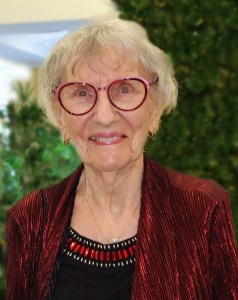
Stassen, a veteran English teacher at Punahou School, had been fascinated by Kaʻiulani’s life for four decades, a topic she began investigating when she taught a course in Victorian literature. She wrote articles about the princess for Honolulu Magazine and the Hawaiian Journal of History. She combed archives, studied old maps and visited castles and grand country estates in Europe to describe the places the young princess had lived.
Kam, a graduate of ʻIolani School, earned bachelor’s and master’s degrees at the University of Southern California, returning home to Hawai‘i to become a spokesman and executive for Wahiawā General Hospital, Bank of Hawai‘i and American Savings Bank. In the 1990s, he embarked on a parallel career as a historian, educator and conservationist, earning more advanced degrees at the University of Hawaiʻi. As a scholar, he was a whirlwind: He eventually wrote at least 11 articles for the Hawaiian Journal of History, including landmark works on the American Civil War and its effects in Hawaiʻi and identified the names, backgrounds and origins of the men who overthrew the monarchy.
The new book, based on Hawaiian and English language newspapers, archival manuscripts written in English and Hawaiian, government records, contemporary testimony and works of literature and poetry, provides a chronological account of the princess’s life, starting from her birth in 1875. She was the daughter of a sister of King David Kalākaua and a Scottish businessman named Archibald Cleghorn, which meant she grew up as both Hawaiian and British. King Kalākaua and his wife Kapiʻolani were childless. As a rare surviving child within the Hawaiian aliʻi and an heir to the Hawaiian throne, Kaʻiulani, who called herself “VK” or “Vike,” attracted attention in Hawaiʻi like a celebrity.

She was a charming girl, enchanting to people who met her, including noted author Robert Louis Stevenson, who visited Hawaiʻi in her childhood.
Kaʻiulani’s mother died when she was 11 and her father took her abroad. She was gone for more than eight years, living as a European aristocrat. Like other princesses of the era, considerable attention was paid to her marriage prospects.
Her uncle’s death and then the overthrow of his sister, Queen Liliʻuokalani, changed her fortunes as well. She visited Washington, D.C., in 1893, meeting with American officials to protest the overthrow, but didn’t return to Hawaiʻi until 1897.
Her relatives at home, including Queen Liliʻuokalani and the Dowager Queen Kapiʻolani, were imprisoned during some of that time. Kaʻiulani could have strengthened her position by returning to Hawaiʻi in solidarity with them and presenting herself as an alternative to Liliʻuokalani, which some people suggested. She also could have strengthened her position as rightful ruler by marrying David Kawānanakoa, Kapiʻolani’s nephew, a full-blooded Hawaiian and an heir to the throne with an elite pedigree reaching back to King Kaumualiʻi of Kauai. But the princess seems to have been uninterested in him and rejected the idea.
In fact, the book raises questions about how effectively the princess and her male advisors managed the difficult situation as the throne slipped from her grasp and as the Hawaiian people lost control of their own destiny. She did not appear desperately eager to rule, in this telling. Her letters depict her more concerned with outings and concerts than public affairs. But once she returned to Hawai‘i she attempted to navigate relations with the United States diplomatically while also making her opinions known by the flags she flew at her ʻĀinahau estate in Waikīkī — Hawaiian and British, not American.

Her death, as portrayed in the book, was haunting. She died unexpectedly after an outing to Waimea on the Big Island, where she caught cold and quickly declined in health. She was deeply grieved. After her death, her life was celebrated in poem, song, in novels and more recently, in documentaries.
Kam and Stassen started working on the Princess Kaʻiulani book in 2020, when Stassen, then 89, contacted Kam and asked him to review the vast store of material she had gathered about the princess to see how it could best be used. Kam was intrigued: he had written an article about Kaʻiulani’s home in 2011. Kam told Stassen they would do it together.
“A new biography of the princess seemed destined,” Kam recalled in the introduction to the new book.
But the research proved challenging, he wrote, because the coronavirus pandemic caused various archives in the state to close down for months or later reopen with much truncated hours, making documentary research almost impossible. But he and Stassen managed to complete the manuscript in 2023.
Meanwhile, in October of that year, Kam landed what he told his friends was his dream job, combining his public relations, education and scholarship skills, when he took the helm at the Hawaiian Mission House, a position that brought together his interests in Hawaiian history and culture. His new job would have presented a perfect forum for sharing the book and promoting it.
But Kam died before the book was published.
“We lost him too early,” said historic preservation advocate Bill Chapman, dean of the University of Hawaiʻi School of Architecture, who served with Kam on the Historic Places Review Board.
Kam’s death made it difficult for Stassen, who by now was 93, to promote the book. She placed her hopes on the book signing scheduled for Feb. 1, when her daughter Martha would be visiting and available to help.
Kam’s widow, Kathy, who had been disappointed that no book events occurred after her husband’s death, intended to come to Stassen’s home and bring other friends who had been supporters of the project.
Stassen’s death upended those plans as well.
“She always wanted a book signing, with something she had written,” said her daughter, Martha Stassen. “Mom knew it was going to happen, and she was thrilled about that.”
But well-wishers and Kaʻiulani enthusiasts will have a second chance to gather, on Feb. 22, when a memorial service for Stassen will be held at 9:30 a.m. at the Episcopal Parish of St. Clement at 1515 Wilder St. Copies of the book will be available for sale at that time.
 Sign up for our FREE morning newsletter and face each day more informed.
Local reporting when you need it most
Support timely, accurate, independent journalism.
Honolulu Civil Beat is a nonprofit organization, and your donation helps us produce local reporting that serves all of Hawaii.
ContributeAbout the Author