Sen. Angus McKelvey: California Fires Mean Bad News For Lahaina
The Maui lawmaker who lost his own home in the 2023 fires is also leading some government reform efforts.
February 16, 2025 · 12 min read

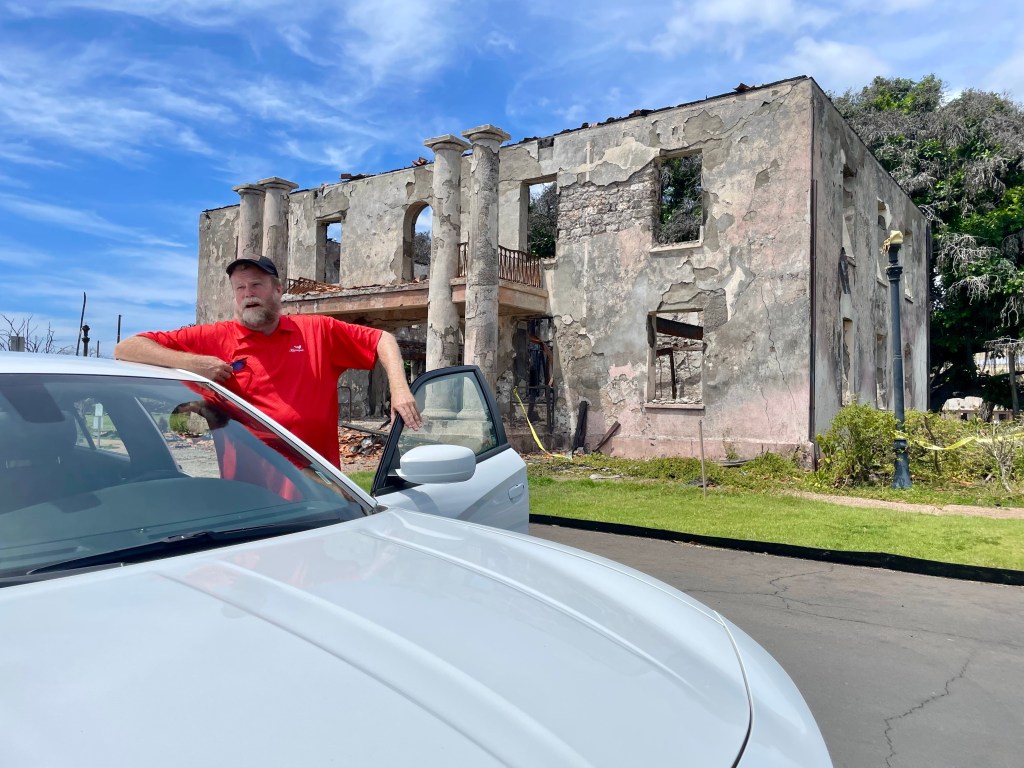
About the Author

Editor’s note: Sen. Angus McKelvey, who chairs the Senate Government Operations Committee, is a key figure in recovery efforts following the August 2023 Maui fires. In an interview edited for length and clarity, he discusses the latest obstacles to rebuilding Lahaina and talks about the government reforms he is backing.
You said last May you could imagine two futures for Lahaina: Either taken over by monied outside interests, kind of becoming the Kakaako of West Maui, or restored in a way that brings back many of its former local residents and at least some of the old businesses. Which direction do you think it’s going at this point?
Right now, unfortunately, I think we’re headed in the direction of the monied interests. We’re still at that fork of the road, but what’s adding unbelievable pressure is what’s happened in California and now with the federal government. This has completely changed the entire tapestry of reality for the future of Lahaina.
How so?
You have the issue of interruption or potential loss of future federal monies. You have the fact that you’ve got tariff wars breaking out and counter-tariffs. Most of the construction material — because of the supply chain and other issues — before the Pacific Palisades fire was being bought from China in an effort to try to start rebuilding before the insurance money started lapsing. Now you’ve got the potential tariffs coming in against China, 10% plus the additional 25% from all aluminum and steel.
You’ve got potentially a lot of workers who are from the immigrant community, who have now taken off. People who, I guess it was anticipated, would do a lot of the manual, blue-collar laboring. You’ve got all of these issues.

And of course, you’ve got Pacific Palisades. After that fire happened, I was hearing about how Maui’s not going to get anything. The contractors are going to sell to LA because they don’t have to put it on a barge and wait, they can go ahead and these guys are paying cash. So we’re going to see a huge diversion, or interruption, of materials coming from the West Coast because of California.
Now you’ve got tariffs popping in all over the place for other materials from other places, and meanwhile, the clock is running out on so many people because of their insurance policies requiring them to start substantially rebuilding already, or before this coming August.
Time is totally on the side of the outside interests.
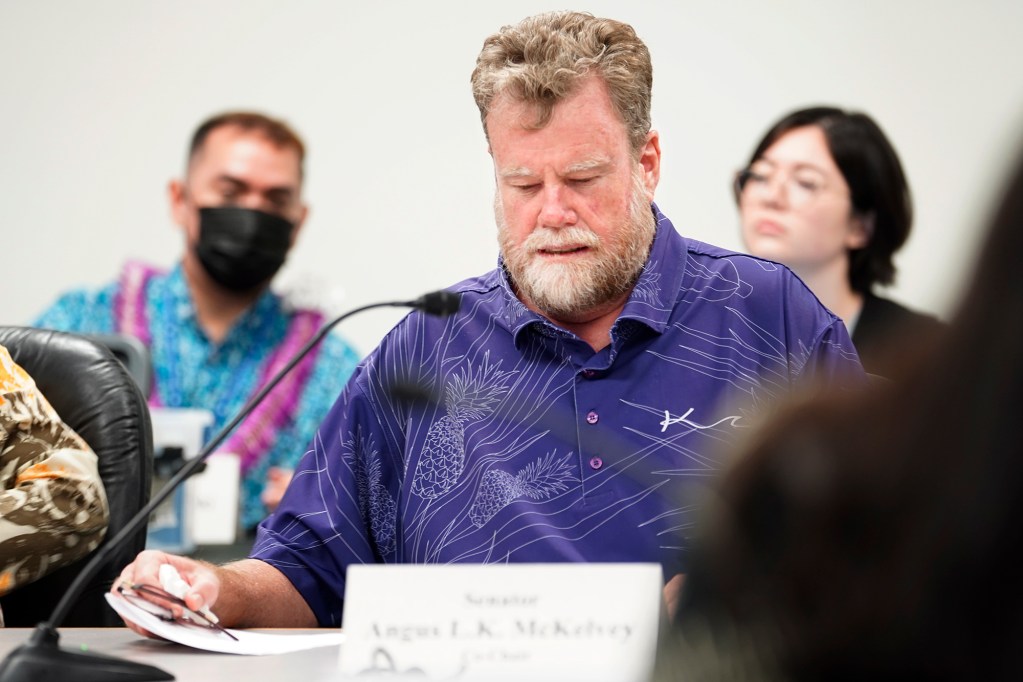
Last year you were proposing establishing a community district to oversee both state and county restoration efforts. Are you still pushing for that?
It was a bill was to create a community development association that would kind of transcend the county and the state. But given everything that’s been going on, especially now with the changes with the federal government, I didn’t reintroduce the bill this year.
There are a lot of people in the community who, over the summer, were talking about it. They thought it was an idea that we should keep discussing, and I was contemplating putting together a community working group.
But right now, with all of this raining down on everybody’s head, even though I do believe for the future of Lahaina this could be a very powerful tool for community control over this very precious place, it would create so much disruption to an already disruptive and chaotic environment and government system that it could literally push people over the edge.
So at this point, this is a discussion best had when we start to get people back into homes, we start working with local partners who are trying to develop housing strictly tailored for Lahaina people.
You also proposed that the state acquire all West Maui water districts. Are you still pushing for that?
I did put it in again this year. Unfortunately, the bill was deferred in the Water and Land Committee after the hearing.
I know that that’s something that the county of Maui has really been pushing. When I introduced the bill last time, there was no discussion going on anywhere about it. But in the meantime, even though the bill failed last year, the Maui County Council has picked it up and is continuing to discuss it on their end.
You had also said that it was essential that the state establish concessionary lending programs for the underinsured and mortgage forbearance for fire victims. Where does that stand?
None of it happened. I was very disappointed. It was basically the banks won. And this is where special interests do rear their heads, despite efforts to get the executive branch and others to see that this was a way to save people.
Now many of the places that are being sold are due to the fact that people can’t continue to pay mortgages, and they’re underinsured, and they’re not going to be able to rebuild. And then, of course, when they do get an insurance check, it goes to the bank for the mortgage.

And so you’re watching the situation where now it looks to the people like the best thing to do is to sell, put it on the market. We do have some bills this year to strengthen the community land trust program and establish it statewide. And I’m hoping that the Lahaina Community Land Trust can get some serious support, because they’ve been working on trying to be an alternative for people who feel like they have to sell but they don’t want to sell it to an offshore interest.
I’m really bummed that we didn’t do any kind of public financing. And again, the banks don’t want to underwrite these customers. There was a hearing on a bill, and I said, “why do you guys oppose every type of public financing? You don’t want these customers anyway. You won’t give them loans, you won’t give them mortgages. But yet, when the state tries to offer something to them, you come in and kill it.”
And this goes for the state, the Department of Commerce and Consumer Affairs. They have, consistently, with their regulated entities, been on the side of the industry, not the consumer.
How about the tax surcharge on rental cars to help pay for the northern extension of the Lahaina bypass?
That moved, and it’s moving on to the next committee. The bill also calls for diverting the Transient Accommodations Tax to building the bypass, because originally the resort areas were supposed to build the northern terminus of the bypass as the condition of the approval for their developments in Kāʻanapali, and they never did it.
By using the TAT in addition to the rental surcharge, we can hopefully get them the money to get the project going, and then we can bond out the rest of it as we get moving. But this is a way to get this critically needed highway going.
And I’ve got to tell you, the No. 1 legislative accomplishment of my whole career was working with (then-state Sen.) Roz Baker and Sen. Dan Inouye in getting the original bypass bill. I couldn’t imagine what that night of the fire would have been like had there been no bypass.
Let’s move on to a couple of overall government reform measures. You’re the lead introducer of a bill to charge a 5% fee on independent expenditures by non-candidate committees. Where did that idea come from?
It’s to help pay for public campaign financing. I absolutely loathe campaign fundraising, everything about it, and to have a public financing system where that is basically off your shoulders and you can run your race, and you know you have the resources to get your message out regardless of everything, is a good thing for democracy.
More people run, and we get more talent. Getting talent on the bench has always been a struggle for neighbor island delegations. So having a public financing system, I believe, gives neighbor islanders the ability to run and to serve.
The PAC (political action committee) fee is a way we can create more funding for it that we’re not taking from other things. A lot of times these PACs come in and do these independent expenditure committees against candidates who don’t have many resources to compete with anyway, and blow them out of the water.
So why not create funding from their activity that these candidates can now use to get their message out? Use a fee on the PACs because the more activity they’re doing in a race, the higher fee they’re going to pay. And that, of course, will create a hopefully robust public financing system.
Didn’t this bill get amended to where the proceeds of this PAC fee, if it were adopted, would actually go to the Campaign Spending Commission instead of straight to the public campaign funding?
Yeah, I asked for that because they’re going to need to do structural things to effectuate the campaign financing thing far beyond money in the fund, and this way we can go ahead and structurally set up the public financing system. The candidates can report easily and qualify and get the money.
We’re trying to give the commission additional resources so they can stand it up and have the flexibility to oversee it. I thought it was a good amendment.
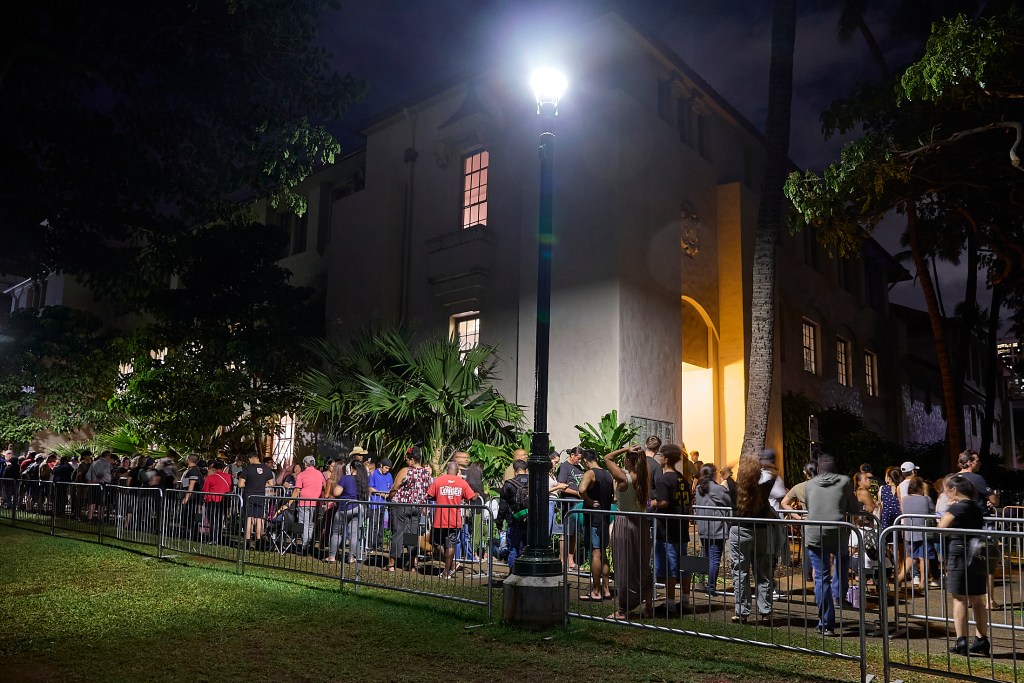
Another election measure that you signed on to would establish at least three additional voting centers on Oʻahu so we don’t end up with the long lines and delays that occurred last November. Do you think that’s going to happen?
I hope so. It’s going to be an issue of money and staffing. But we can’t have long lines like this repeatedly. People should have the ability to come in and be able to vote at the last minute and not sit in long lines or get turned away or have this chaos.
So I hope that we can find the revenue for these additional voting centers.
You’re still sold mainly on mail balloting though?
Oh yeah, it’s just so much easier and efficient. And, you know, people on Maui really took to it. And of course, most people over there basically vote by mail.
But some things have to be discussed going forward because of all those ballots that were considered spoiled because the signatures did not match, and a lot of people said they were never given notification enough to go in and cure them.
One issue with the mail-in is you’re signing your signature on the outside of an envelope. If I’m an identity thief, I’m having a field day with that.
You were a co-sponsor of a proposal to ask voters to amend the constitution to create a 12-month Legislature. That’s been deferred for now, but the House speaker and Senate president have introduced bills to at least create a task force to study the idea of a year-round Legislature. Do you think that represents progress and that maybe something might happen there?
I hope so. I mean, just look at what’s going on this year. You’ve got 30 members of the House who have two or less years’ experience. You’re asking them to literally step into a $4 billion budgetary picture.
You’re expected to come in and do this all in the span of the 60 legislative days. Then on top of that, in order to promote more transparency, you’re trying to do 72-hour advance notice of hearings. This is why you’ve had weird stuff happen at the very end of the session, and you wouldn’t have this happening if you had a longer session.
I like the idea that you spend the first five months of the session working on the budget bills. And then members can really sink their teeth into the policy stuff.
Are you agreeable to the House speaker’s notion that you could still only have 60 days of floor sessions, but just spread them out over the year, with a lot more days for committee hearings and other business?
I agree. I think we could do that.
And if we had a longer legislative session, we could actually do committee hearings in the community, instead of just all in the square building. That’s one of the advantages of having more time is you could do more outreach types of things.
You’re also the lead introducer of a bill to require the selection of heads of public agencies or divisions be done in in open meetings, through an open public process. What’s behind that?
We need transparency because that’s a critical decision that’s going to determine the direction and fate and efficacy of these boards and commissions and that should be decided in public. I understand the concern of proprietary, confidential information, but the selection itself should be an open and transparently deliberate process.
So that’s what I’m trying to achieve with the bill. It’s come up before and didn’t make it, and so I felt it was worth bringing back again, especially with these very powerful boards that exist and are growing statutorily every year.
 Sign up for our FREE morning newsletter and face each day more informed.

Local reporting when you need it most
Support timely, accurate, independent journalism.
Honolulu Civil Beat is a nonprofit organization, and your donation helps us produce local reporting that serves all of Hawaii.
ContributeAbout the Author