Denby Fawcett: Hawaiʻi Hits The ʻUkulele Jackpot With Gifts From Collectors
Big donations of the vintage instruments enrich the stateʻs Hawaiian Music Archives. Soon, you may be able to check them out.
March 25, 2025 · 8 min read

About the Author

Hawaiʻi’s State Archives has amassed what it considers to be the largest collection of vintage ʻukulele in the world — all from private collectors in Hawaiʻi and the mainland.

Donors believe their ʻukulele rightly belong in the Hawaiian Islands where the ʻukulele was invented by three Portuguese men from the Madeira Islands who arrived by ship in 1879 to work on sugar plantations.
In recent years the archives has made it known it is seeking vintage ʻukulele and other items relating to Hawaiian music.
The remarkable collection — now a key part of the state’s Hawaiian Music Archives — features everything about the ʻukulele including some of the rarest instruments ever made, as well as ʻukulele sheet music, ʻukulele-making plans, tuners, instruction books and vintage records, some of which are more than 100 years old.
It’s all stored in a large air-conditioned room off limits to the general public in the State Archives building on the grounds of Iolani Palace.
But in a couple of months, State Archivist Adam Jansen says any adult who wants to handle one of the ʻukulele in the collection will be able check out a vintage instrument to take to a sound-proof booth that’s been built in the archives’ public research room to play with their own hands.
“It is about public access,” Jansen said. “The risk is worth it to provide people the opportunity to experience the sounds of one of the vintage ʻukulele. They are meant to be played, meant to be heard. Not locked up behind glass.”

Huge Donation Arrived In 89 Boxes
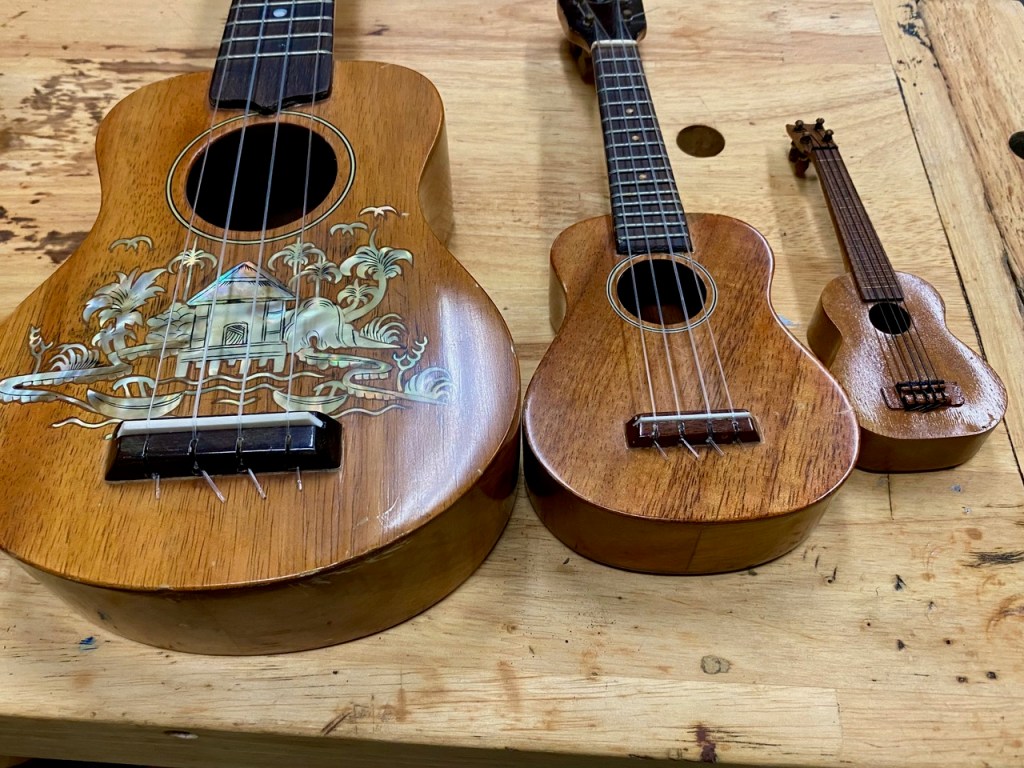
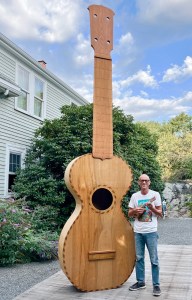
The expanded collection holds ʻukulele of many sizes, from what is believed to be the largest playable ʻukulele in the world standing 15 feet 2 inches tall – a contender for the Guinness World Records — to a couple of tiny ʻukulele only 7 inches tall — also playable.
The shapes are also astounding. There are classic pineapple ukes and ʻukulele that look like banjos and violins, with others made out of polished coconuts and cigar boxes.
The bulk of the donated instruments — about 700 — came to Honolulu in November from the ʻUkulele Hall of Fame in West Orange, New Jersey. Hall of Fame founding directors Paul Syphers and Tom and Nuni-Lyn Walsh gave their personal ʻukulele collections and ʻukulele-related items they had been collecting for decades — all of it packed in 89 boxes and sent by air to Honolulu.
“For a long time we talked about starting our own ʻUkulele Hall of Fame museum but we are a small organization without the resources to make it happen. In our dreams, Hawaiʻi — the birthplace of the ʻukulele — is where we always wanted it to be,” said Tom Walsh.
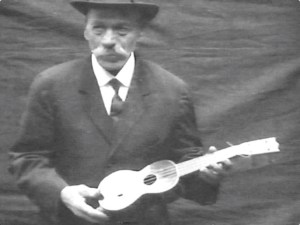
His wife, Nuni-Lyn, is the great-granddaughter of Manuel Nunes, one of the three men from Madeira who came up with the notion of combining the features of the four-stringed traditional Portuguese instrument called the machete with the tuning of the five-stringed Portuguese instrument called the rajão into the four-stringed instrument recognized the world over as the ʻukulele.
ʻUkulele historian Jim Tranquada thinks the Hawaiian people’s love of koa wood played a role in the transformation of the body of the traditional machete instrument into something entirely new. The top board of the traditional machete was always constructed with a lighter wood such as fir or cedar. The ʻukulele is all hardwood koa.
Tranquada is the great-great-grandson of Augusto Dias, another of the three ukulele inventors along with Manuel Nunes and fellow Madeiran Jose do Espirito Santo.
When the three men from Madeira completed their contracts with the plantations on the neighbor islands, they returned to Honolulu to set up their own furniture-making and stringed instrument manufacturing shops starting in 1884 on King Street in Chinatown and on Nuʻuanu Avenue.
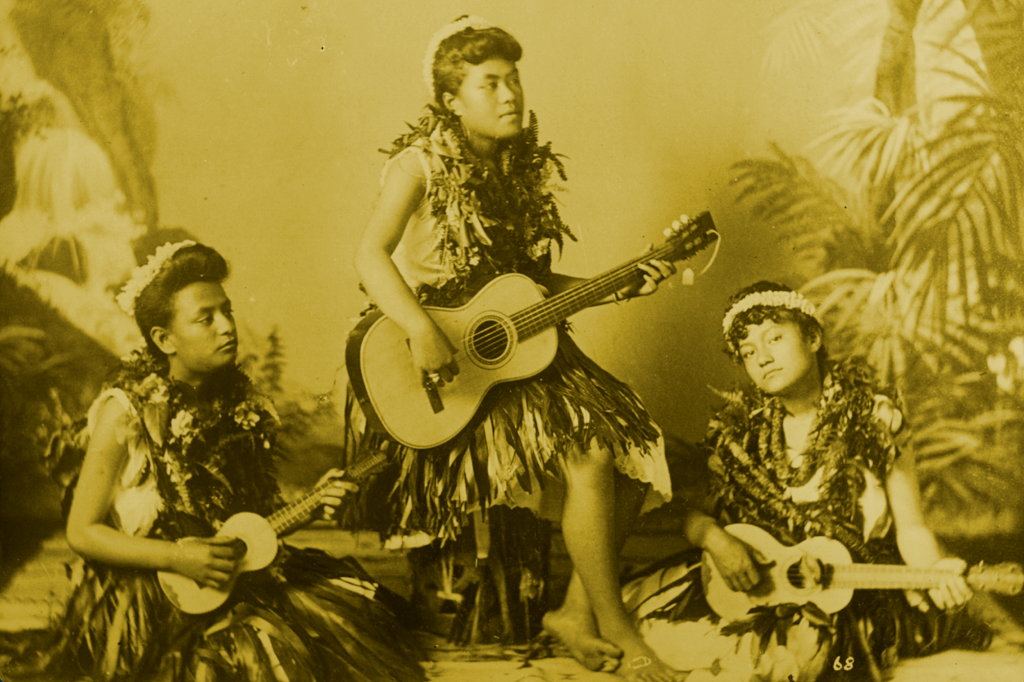
Tranquada said in less than a decade after their arrival in the islands, the ʻukulele had become the national instrument of Hawaiʻi, embraced with enthusiasm by King David Kalākaua and Princess Kaʻiulani. He said although Queen Liliʻuokalani played the ʻukulele, she preferred the guitar and the zither.
Tranquada is the co-author with the late John King of the book: “The ʻUkulele: A History.” A resident of Ventura, California, he is a member of the advisory board of the Hawaiian Music Archives.
About 80% of the ʻukulele donated to the archives from various private collections need repairs such as replacing the modern nylon strings on some of the older instruments with the sheep’s gut strings they originally featured.
Dozens of community volunteers and artisans have stepped up to help organize, digitize and repair the collection— a project too massive for the small archives staff to handle by itself.
Michael Chock of the ʻUkulele Guild of Hawaiʻi is one of the volunteers. A respected Honolulu ʻukulele builder, Chock has repaired about 60 of the instruments at no cost to the archives.
Chock cherishes the memory of playing one of the collectionʻs vintage Martin ʻukulele.
“Anybody in their lifetime would be lucky to see one of these classic instruments, probably carefully protected in a glass case, but the chance to hold and play something that is three times as old as I am was amazing,” he said. “I could feel the energy of what went into the making of the instrument, and the joy of hearing its sound.”
Larger Venue Sought For Archives
Clearly many of these instruments need to come out of storage to be seen as well as played.
Jansen said the archives has been urging the Legislature for years to give it funding to move out of its crammed location in a 1950s building on the grounds of ʻIolani Palace.
“If and when the archives is able to move into larger facility — which is still in the conceptual stage — an important component of the new building will be a museum to showcase the ʻukulele’s important role in the history of Hawaiian music,“ he said.
Jansen said what started the momentum for ʻukulele collectors to give their instruments to the archives was the donation in September 2021 from Harry B. Soria, Jr., and his wife, kumu hula Kilohana Silve, of their 12,000 records and boxes of sheet music, photos of Hawaiian musicians, show notes and letters.
Soria, who died in December 2021, was for decades the DJ of Territorial Airwaves, the world’s longest-running radio show dedicated exclusively to Hawaiian music.
Shortly after that, Toronto-based steel guitarist Michael “Malahini” Scott donated his collection of 10,000 vintage music records of Hawaiian music.
That prompted other gifts, including a donation of ʻukulele from Kilin Reece, Hawaiʻiʻs premier restorer of vintage stringed instruments, and ʻukulele and sheet music from the collection of Andy Andrews, co-founder of the ʻUkulele Club of Santa Cruz, the country’s largest ʻukulele club.
Then came the big donation from the ʻUkulele Hall of Fame.
“I am so happy our ʻukulele are in good hands, accessible to many people to learn about and appreciate,” said Syphers, who built the 15-foot-tall bass ʻukulele now in the archives, from his home in Gloucester, Massachusetts.
The archives is continuing to collect ʻukulele. Jansen knows of at least six more large private ʻukulele collections in the U.S. he hopes to acquire.
Jansen said the archives is digitizing the ʻukulele collection and Hawaiian Music Archives materials with the goal of making Hawaiʻi the center of the world for Hawaiian music research and enjoyment.
“The ʻukulele is not just a piece of wood. It has a soul. It carries the mana of the people who played it before and the love they had for Hawaiian music,” Jansen said.
 Sign up for our FREE morning newsletter and face each day more informed.

Local reporting when you need it most
Support timely, accurate, independent journalism.
Honolulu Civil Beat is a nonprofit organization, and your donation helps us produce local reporting that serves all of Hawaii.
ContributeAbout the Author