Protectionist Jones Act Actually Encourages Hawaiʻi Reliance On Foreign Energy
Unless the act is amended, we will join other states and territories cut off from affordable domestic liquefied natural gas.
March 4, 2025 · 5 min read

About the Author

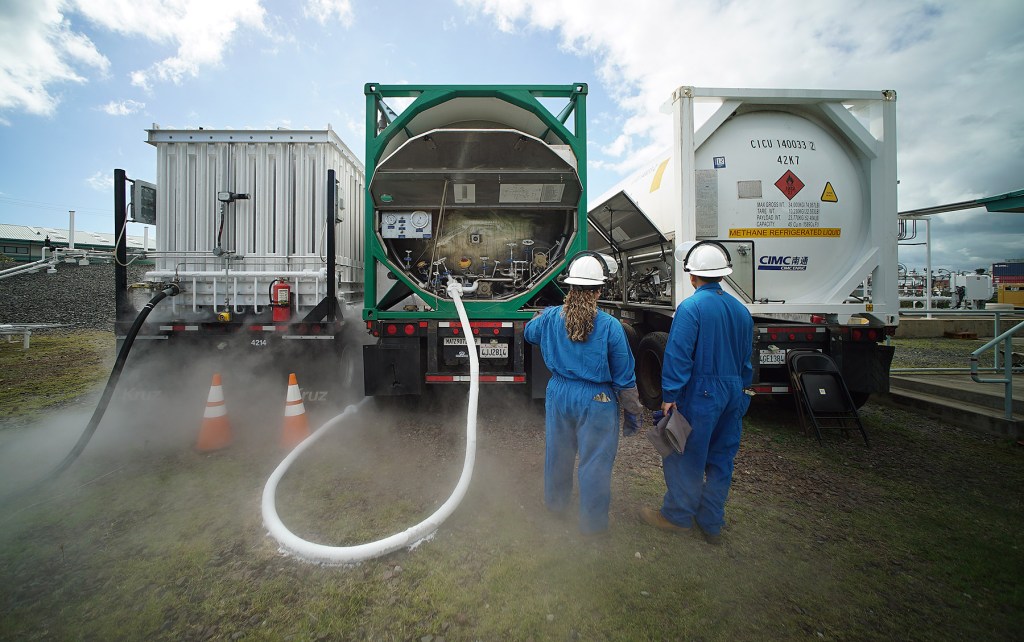
Hawaiʻi officials are considering switching over to liquefied natural gas as a transitional fuel to ensure adequate energy supplies through 2045 when the state aims to meet its clean energy goals.

Naturally, one might assume that the U.S. — as the world’s largest LNG exporter — would supply at least a portion of Hawaiʻi’s needs. But that assumption would be wrong.
A century-old maritime law known as the Jones Act effectively blocks Hawaii from acquiring domestic LNG.
State leaders have seesawed on the LNG question for years. It was opposed by Republican Gov. Linda Lingle who led the state between 2002 and 2010. Her successor, Gov. Neil Abercrombie, pushed for its use, only for Gov. David Ige to block it again.
The current administration under Gov. Josh Green has taken a more pragmatic approach, considering LNG as a potential “bridge” fuel to reduce reliance on oil until 2045.
Under Green’s direction, the Hawaiʻi State Energy Office conducted a feasibility study of alternative fuels Hawaiʻi could use during the energy transition. The result, published in January, found that LNG is the “only near-term fuel with the potential to cost-effectively reduce the State’s greenhouse gas emissions during the renewable energy transition.”
So where would Hawaii’s LNG come from?
According to the report, “Sufficient volumes of LNG can be sourced from Canada, Australia, Asia, Mexico, or the U.S. to meet demand.” But, it notes, there’s a catch: “Domestic imports from U.S. sources are limited by the Jones Act vessel availability.”
“Limited” is an understatement — try impossible. There is not a single LNG tanker in America’s ocean-going Jones Act fleet.
Formally known as Section 27 of the Merchant Marine Act of 1920, the Jones Act restricts shipping competition between U.S. ports by requiring vessels to be U.S. flagged and built and mostly owned and crewed by Americans.
Facts Global Energy estimates that without the Jones Act restrictions, which significantly add to the costs of building and operating vessels that comply with the Jones Act, the U.S. “could provide a secure and cost-effective source of [energy] supply for Hawaiʻi.”
But as Puerto Rico and New England are already well aware, the lack of LNG tankers means Hawaiʻi would not be able to import LNG from U.S. sources even if it wanted to.
Hawaiʻi already feels the effects of the Jones Act on its energy supply. Despite the U.S. being the top oil producer in the world — including the type preferred by Hawaiʻi’s sole refinery — foreign crude accounted for 83.9% of Hawaiʻi’s supply in 2024 through November, while domestic sources made up just 16.1%.
Amend Or Repeal
There are many potential changes to the Jones Act that could benefit Hawaiʻi: a complete waiver; an exemption for the transport of energy products; elimination of the U.S. shipbuilding requirement; or even a full repeal of the law.
Of course, any attempt to change the status quo would face fierce opposition from the powerful maritime lobby, which insists that the law is essential for national security and preserving the American maritime industry.
Just consider how the American Maritime Partnership — the country’s leading Jones Act lobby group — responded when New England governors requested a Jones Act waiver to secure domestic LNG for the winter of 2022 amid concerns over fuel shortages.
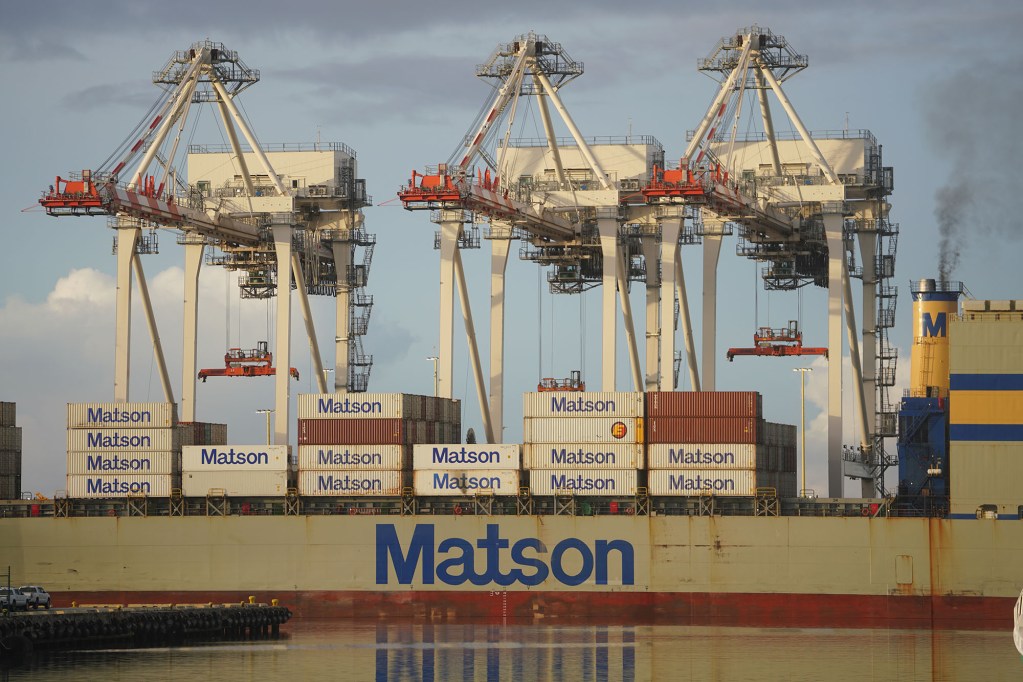
In a sternly worded letter to the governors, the AMP’s then-president, a current Matson executive whose company benefits greatly from the law, scolded them for even suggesting that the inability to secure U.S. LNG due to the Jones Act was a problem.
However, despite the claims of its defenders, the Jones Act clearly is a problem. It has disincentivized domestic fuel sales and increased reliance on foreign fuel sources, which runs counter to the thinking of some government officials that national security includes energy independence.
As for America’s shipbuilding industry, the facts also speak for themselves: Under the Jones Act, the U.S. is down to just four shipyards that build large ocean-going commercial vessels — two of which, ironically, are foreign owned, and all of which use foreign designs and parts.
Meanwhile, the Jones Act fleet has shrunk to just 92 ships compared to 200 in 1980, and America’s merchant marine has dwindled from about 25,000 mariners in 1970 to 11,000, which military officials have stated is inadequate in case of a national security emergency.
To be clear, there is nothing inherently wrong with relying on imports from foreign supplies. In fact, there is a strong argument that greater international commercial interdependence is a strong force for peace. But U.S. policy should not be actively restricting domestic access to domestic resources.
So, unless the Jones Act is revised, Hawaiʻi will join the list of other states and territories that remain cut off from affordable and abundant domestic LNG.
 Sign up for our FREE morning newsletter and face each day more informed.
Community Voices aims to encourage broad discussion on many topics of community interest. It’s kind of a cross between Letters to the Editor and op-eds. This is your space to talk about important issues or interesting people who are making a difference in our world. Column lengths should be no more than 800 words and we need a photo of the author and a bio. We welcome video commentary and other multimedia formats. Send to news@civilbeat.org. The opinions and information expressed in Community Voices are solely those of the authors and not Civil Beat.
Read this next:

Local reporting when you need it most
Support timely, accurate, independent journalism.
Honolulu Civil Beat is a nonprofit organization, and your donation helps us produce local reporting that serves all of Hawaii.
ContributeAbout the Author