Only a few hours left in our summer campaign. Help us raise the last $29,835 by midnight on Friday and your gift will be matched up to $10,000!
Alyssa Salcedo: Lack Of Restrooms Can Make Bus Rides Torturous
The endurance test can be especially tricky for riders of some of Oʻahuʻs longer bus routes.
April 27, 2025 · 6 min read

About the Author

It’s a regular day on TheBus. I get up at 5 a.m. and prepare for my dreaded hour-and-a-half commute to campus.
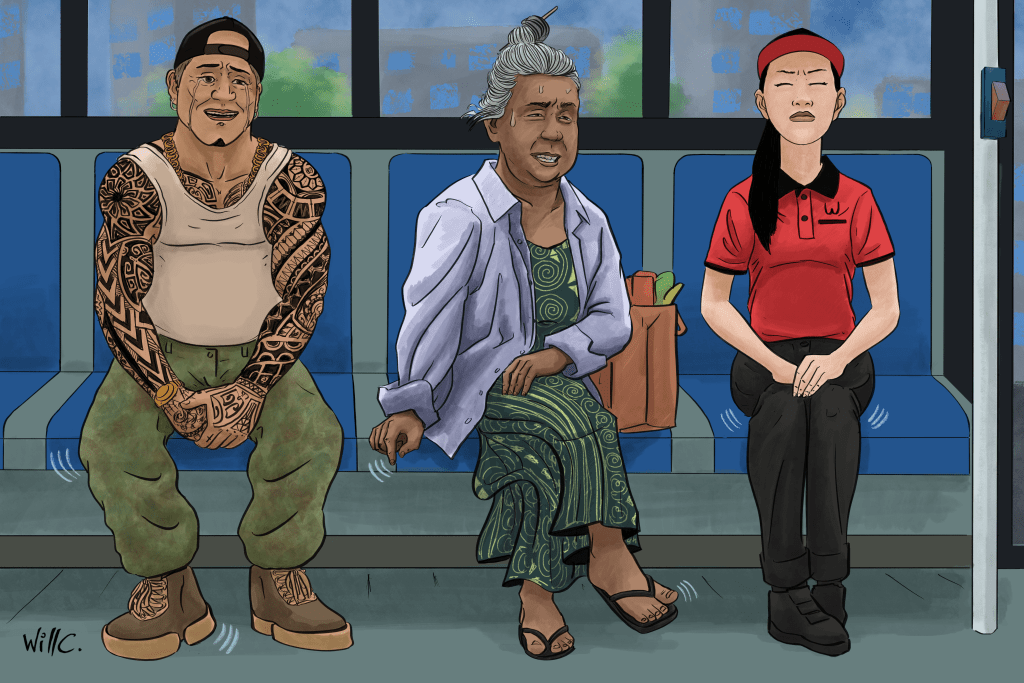
When I sit down in the Express-Downtown bus that I catch Mondays at 6:26 a.m., I feel an ache lodged in my stomach. And so the squirming begins.
This unnecessary endurance test is a (literal) pain in the butt for everyone involved. The name of the game: Don’t miss your chance to not pee your pants.
Get your dirty business done at home. Walk for however many minutes and hope the bus doesn’t ditch. If you feel it in your bones, hold it in until you reach your destination (or a transfer stop). Then locate a nearby private business and ask to use its facilities. Fast food restaurants and tourist-centered areas might work — Target at Ala Moana is my personal go-to.
If you’re lucky enough, you can rely on someone’s generosity to use their restroom.
There are ongoing mental calculations to be made: where to stop, how urgent the problem is, and if you can even afford to be late.

The timing is usually precarious for me. I have two choices: take the 96 that leaves before 6:30 a.m. or the 51 that comes every 40 minutes. Then I transfer onto Route A City Express, which runs from Pearlridge to University of Hawaiʻi Mānoa. With the early morning traffic delays along the A, I occasionally experience last-minute stomachaches from the long lines along University Avenue.
The bus wheels that churn and vibrate under my seat worsen the pain, and I force my body to stand up to avoid squirming in shame in my seat.
My typical plan is to hold it in until Sinclair Circle and make a quick dash for the Campus Center restrooms a five-minute run away. But if circumstances force me to head for an earlier stop to use the closest restroom, and then take the next A, I have to make more calculations as to whether or not I will be late for class.
A Public Health Issue
These small inconveniences can come together to form a larger public health issue.
A research paper by Richard M. Weinmeyer, an assistant professor of law at Loyola University Chicago, connects the dots on how restroom access is a human right. Weinmeyer writes that a lack of clean and accessible public restrooms aggravates diseases, impacts people with vulnerable health conditions and takes a toll on mental health.
It’s even more stressful for Westside commuters who rely on infrequent bus lines like Route C Country Express from Waiʻanae to Ala Moana to get to where they need to be in town.

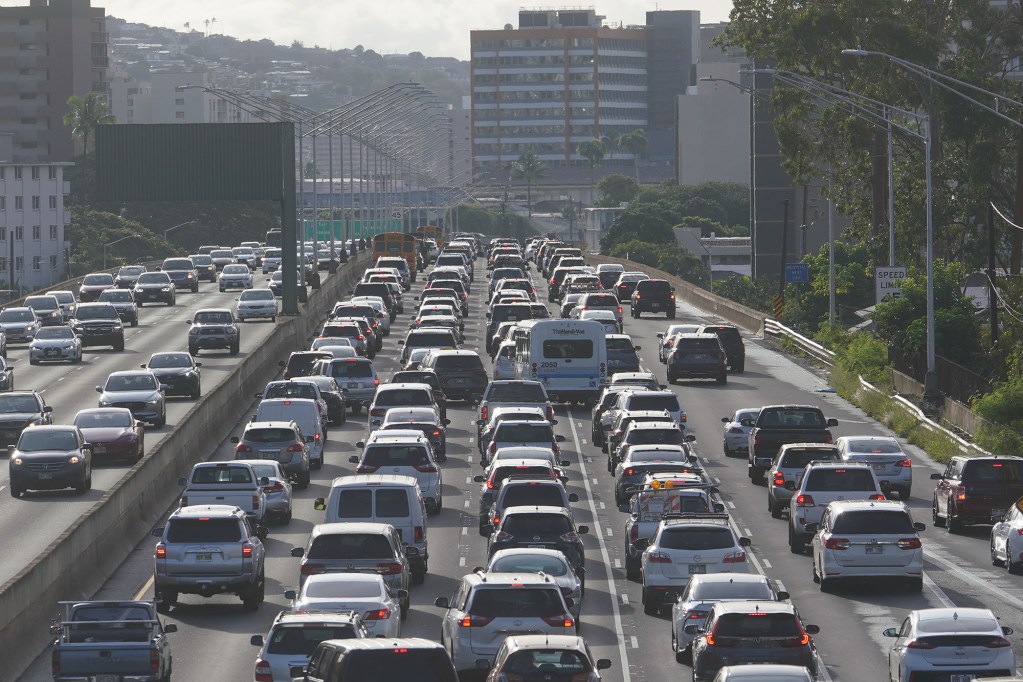
This is the unfortunate reality for Oʻahu Transit Services’s 124,719 weekday riders, the average from January 2025. But we are not alone. Vehicle drivers may also need to use public restrooms when they are stuck on the freeway in heavy traffic.
Itʻs also a logistical nightmare for those who maintain restrooms. Public and private establishments will often restrict access to restrooms for just their patrons — usually locked behind keys, fobs and pin codes. Vandalism and homelessness are often cited as reasons for the restrictions.
If Honolulu wants more people to use its public transportation services, there must be more public restrooms on major routes. These must be sanitary and functional, not something that you’d see in Civil Beat’s Fix It! Series: a mysterious lack of soap or images of destroyed toilet bowls.
Public restrooms are available in all transit centers – Kapolei, Waipahu, Waiʻanae and Kalihi – but only one of them is located in Honolulu: Alapai. But some people are reluctant to use them because of cleanliness issues.
Skyline also has locked restrooms, but rail passengers need to ask station staffers at the platform level to help them get access. An employee will then escort them to the locked restroom and wait for them.
The Department of Transportation Services plans to open two public restrooms at the Middle Street station, the end of the line, once the second leg of the rail opens around October 2025. Supposedly these restrooms will be cleaned hourly.
“If you do have restrooms, you pretty much have to have them attended regularly, and it is just not cost-effective to have a person at every station to attend to the restrooms and keep them all clean,” said J. Roger Morton, director of DTS. “That would be 20 more people all the time. That would take a staff of 50 people in 20 stations.”
Are Other Cities Handling This Better?
Having to admit you need to use a restroom to a stranger can be embarrassing. I did have to beg a janitor to use a building’s restroom; it’s an experience I hope no one has to needlessly go through.
Fortunately, there are toilet plans in store for towngoers. DTS plans to collaborate with the Department of Community Services to install two public restrooms in downtown Honolulu in the near future.
In the meantime, we can look at how other communities on the mainland have approached the issue of providing more public access to restrooms.
New Yorker Theodora Siegel developed a workaround for accessing restrooms via @got2gonyc, an Instagram account filled with crowd-sourced information about New York City restrooms. This includes a map, codes for restrooms at some establishments and cleanliness ratings.
San Francisco has its own set of issues. After controversy over its $1.7 million initial price tag, the Noe Valley public restroom ended up costing $200,000, paving the way for less expensive public restrooms in the near future.
DTS pointed out that Bay Area Rapid Transit recently extended its restroom and attendant programs for two more years. But BART only has four restrooms in the system – all located in stations downtown – to accommodate a 50-station system.
We all must collectively work to take care of our restrooms. That means reporting vandalism, raising awareness of restroom locations and cleaning up after ourselves.
Have you been to places that do well with their public restrooms along public transportation routes? Where are they? How can we use those practices to implement better public restrooms for commuters here? Let us know in the comments or through my email: asalcedo@civilbeat.org.
 Sign up for our FREE morning newsletter and face each day more informed.

Local reporting when you need it most
Support timely, accurate, independent journalism.
Honolulu Civil Beat is a nonprofit organization, and your donation helps us produce local reporting that serves all of Hawaii.
ContributeAbout the Author