Hawaiʻi’s Family Caregivers Are Heroes Who Deserve Support
House Bill 701 would give limited financial support to some through a modest, nonrefundable tax credit.
April 15, 2025 · 2 min read

About the Author
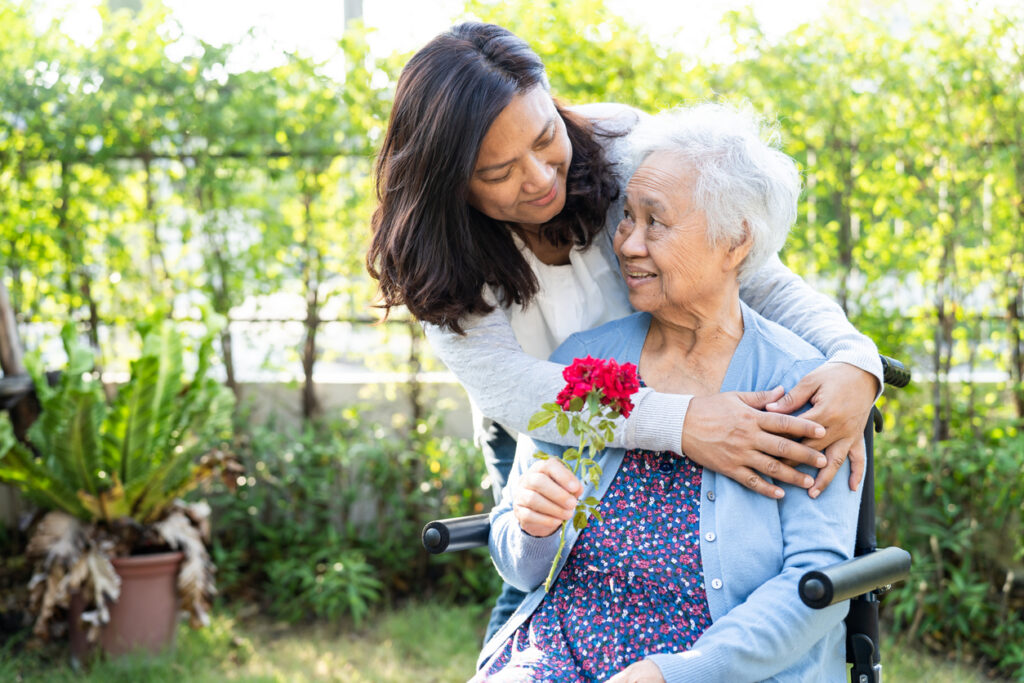
The cost of caregiving keeps going up for family caregivers like Karen. Her mother suffered a stroke and developed vascular dementia.

Her out-of-pocket costs include gas to go to doctor’s appointments, food, diapers, creams, special lotions, medication, a walker, and later a wheelchair.
“It just kept accumulating, you know the costs, as her needs became greater,” she told me.
Family caregivers are heroes. They are selfless. They make sacrifices out of love.
They deserve our support.
A bill in the Legislature, House Bill 701, would give limited financial support to some family caregivers through a modest, nonrefundable tax credit. The bill is heading to conference committee and if it is able to advance, it would send a powerful message to family caregivers that their unpaid work is valuable and is appreciated.
Family caregivers spend an average of more than $7,200 of their own money caring for loved ones. In Hawaiʻi, they contribute nearly 144,000,000 hours of unpaid services worth $2.6 billion if they were paid.
They are the backbone of the long-term care system in Hawaiʻi. Without them, we wouldn’t be able to care for all the kūpuna who need help with daily living. Family caregivers also keep kūpuna and other loved ones out of costly nursing homes, which are supported by state and federal Medicaid tax dollars. Instead, people being cared for can stay at home, where they want to live.
House Bill 701 will only help some of the estimated 154,000 family caregivers in Hawaiʻi. There are limits on income and other qualifications. There may also be a limit placed on the amount of tax credits available in any given year. This will assure that the state can afford the tax credits.
The tax credit will not replace all of the money that caregivers spend on care. But it is a first step.
“We provide a valuable service,” Karen told me. “Anything that can be done to help us caregivers would make our lives a little easier.”
If you want to let lawmakers know that family caregivers deserve support, AARP Hawaiʻi has created a website for you to share your caregiving story with lawmakers and explain to them why they should pass a state family caregiver tax credit.
 Sign up for our FREE morning newsletter and face each day more informed.
Community Voices aims to encourage broad discussion on many topics of community interest. It’s kind of a cross between Letters to the Editor and op-eds. This is your space to talk about important issues or interesting people who are making a difference in our world. Column lengths should be no more than 800 words and we need a photo of the author and a bio. We welcome video commentary and other multimedia formats. Send to news@civilbeat.org. The opinions and information expressed in Community Voices are solely those of the authors and not Civil Beat.
Read this next:

Local reporting when you need it most
Support timely, accurate, independent journalism.
Honolulu Civil Beat is a nonprofit organization, and your donation helps us produce local reporting that serves all of Hawaii.
ContributeAbout the Author