It’s Time To Stop Kicking Cesspools Down The Road
The Hawaiʻi Legislature cannot delegate away its core duty to safeguard water quality.
April 17, 2025 · 4 min read


About the Authors

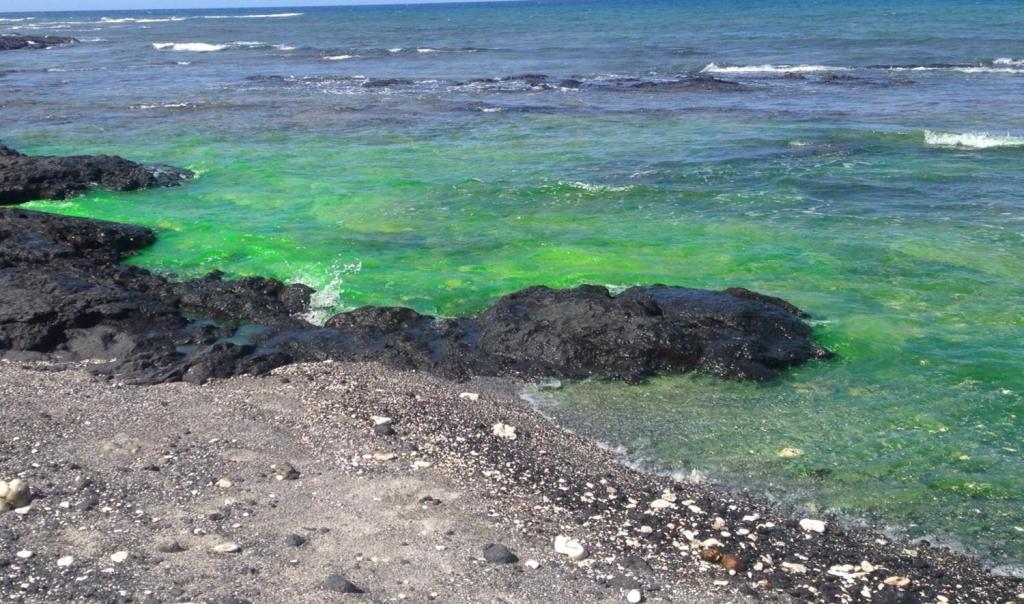
Hawaiʻi’s 83,000 cesspools discharge roughly 50 million gallons of untreated sewage into our groundwater, streams and coastal waters every day. That steady flow of bacteria and nutrients threatens drinking water, fuels algal blooms and accelerates the decline of coral reefs that sustain local culture and tourism.

If we fail to act on proposed legislation, the cost of inaction, from contaminated aquifers to beach closures and lost reef habitat, will far exceed the price of fixing the problem.
Some lawmakers contend that cesspools are only a county problem. They are not. In no uncertain terms, the Hawaiʻi Constitution makes it clear that water protection is a state responsibility, declaring that “the State shall protect, control and regulate the use of Hawaiʻi’s water resources for the benefit of its people.”
Furthermore, the Constitution’s public trust doctrine, reflecting Kānaka Maoli customary law and tradition, protects water resources and places affirmative obligations on the state as trustee to preserve Hawaiʻi’s water quality for present and future generations. The Legislature cannot delegate away its core duty to safeguard water quality.
In 2017 the Legislature acknowledged this reality by requiring every cesspool to be upgraded or replaced by 2050. Yet the Department of Health, which must oversee those conversions, has repeatedly testified that it lacks the staffing and funding to meet that deadline. With a single upgrade costing at least $25,000, the expense is well beyond what many families can afford.
A practical path forward already exists in the form of House Bill 879. This bill would expand the state’s pilot grant program for low- and moderate-income homeowners, which was wildly popular, with its initial $5 million allocation having been fully committed within weeks. It would also raise the per-household cap and replenish its coffers, putting conversions within reach for many households.
It is of equal importance that the Legislature provide the Department of Health the staff and resources it needs to move applications quickly and enforce standards consistently statewide.
Hawaiʻi should also invest in innovation to drive long-term costs down, as proposed in House Bill 736. A modest initiative at the University of Hawaiʻi Water Resources Research Center can vet emerging technologies, such as cluster systems and compact aerobic units, which are better suited to our island topography and rising seas. Certifying cost-effective systems now will provide more affordable alternatives and help speed compliance with the 2050 mandate.
Hawaiʻi’s waters and coral reefs define who we are.
These steps would consume only a tiny fraction of the state budget, and ultimately would save costs for both homeowners and the state, yet they promise outsized returns: cleaner drinking water, healthier reefs, stronger fisheries, and peace of mind for families worried about contaminated wells. They would also demonstrate that the legislature is ready to honor its constitutional kuleana rather than defer it entirely to the counties which lack the means to succeed on their own.
Providing the Department of Health with adequate staffing, expanding homeowner grants to cover the full spectrum of conversion expenses, and investing in targeted research are not luxuries, they are necessities.
Hawaiʻi’s waters and coral reefs define who we are. Protecting them is both a legal obligation and a moral imperative. Our groundwater, oceans, and reefs can’t wait.
The state must act — by funding cesspool conversions and investing in needed solutions to protect our water resources.
 Sign up for our FREE morning newsletter and face each day more informed.
Community Voices aims to encourage broad discussion on many topics of community interest. It’s kind of a cross between Letters to the Editor and op-eds. This is your space to talk about important issues or interesting people who are making a difference in our world. Column lengths should be no more than 800 words and we need a photo of the author and a bio. We welcome video commentary and other multimedia formats. Send to news@civilbeat.org. The opinions and information expressed in Community Voices are solely those of the authors and not Civil Beat.
Read this next:

Local reporting when you need it most
Support timely, accurate, independent journalism.
Honolulu Civil Beat is a nonprofit organization, and your donation helps us produce local reporting that serves all of Hawaii.
ContributeAbout the Authors