Senate Slashes Millions Of Dollars From UH Budget Request
The cuts by Hawaiʻi budget writers come as the University of Hawaiʻi faces major reductions in federal funds as well. UH had been hoping the state would help plug some of those holes.
April 17, 2025 · 5 min read

About the Author

The University of Hawaiʻi needs an additional $37.9 million for programs and services at its 10-campus system for fiscal year 2026, which begins July 1.
The money would be used to pay for a range of things, including nursing programs, debt service for the UH Cancer Center, information security, financial aid counselors and athletic programs.
But, according to an analysis of the state budget posted Friday by UH News, the Senate thinks the university can do just fine with less money in its operating budget — just $5 million total, to be exact. A similar amount is allocated for the next fiscal year.
Kalbert Young, UH’s vice president for budget and finance and its chief financial officer, said the budget proposal from the Senate is unfortunately “par for the course — normal.”
“There always is a very big difference in terms of where the Senate and the House are in terms of budget priorities,” he said Tuesday.
Young, who was the state budget director under Gov. Neil Abercrombie and is no stranger to budget fights, is not sure what UH will ultimately end up with as House Bill 300 is negotiated behind closed doors.
It takes a lot of money to run the university — typically around $595 million a year — and UH has in recent years enjoyed support from many at the Legislature. In fiscal year 2025 (which ends June 30) UH got $3 million more in general funds than it did in the previous fiscal year, for a total of $617 million.
But Young is alarmed at what appears to be a pattern: The Senate always chips away at what the university says it needs to do its work. Several senators, especially Donovan Dela Cruz who leads the Ways and Means Committee, and Donna Kim, chair of the Senate Higher Education Committee, have historically been highly critical of how UH spends its money, even though it has self-governing autonomy.
Senate leadership did not respond to an inquiry about the UH budget.
Young also puts the current state funding request in the context of significant cuts at the federal level under the Trump administration, something that Young’s own boss has recently warned about.
In a mass email to the UH community last week, UH President Wendy Hensel detailed some of the changes UH has made in response to Trump administration policy.
“So far at UH, 44 programs have been terminated, received stop-work orders, or are being phased out, affecting more than 39 employees and approximately $23.5 million in funding,” she wrote. “We expect this number to grow. Campuses will likely need to use reserve funds to meet severance obligations for affected employees, as required by collective bargaining agreements and university policies.”
Hensel did not identify the programs or employees. But she said changes in financial planning are likely due to the economic uncertainty coming from Trump’s tariff policies that could drive up inflation and thus university operating costs.
Hiring restrictions, limits in travel expenditures and reviews of contracts are already underway.
The Senate’s altering of UH budget priorities is also evident in the university’s request for its capital improvement projects budget.
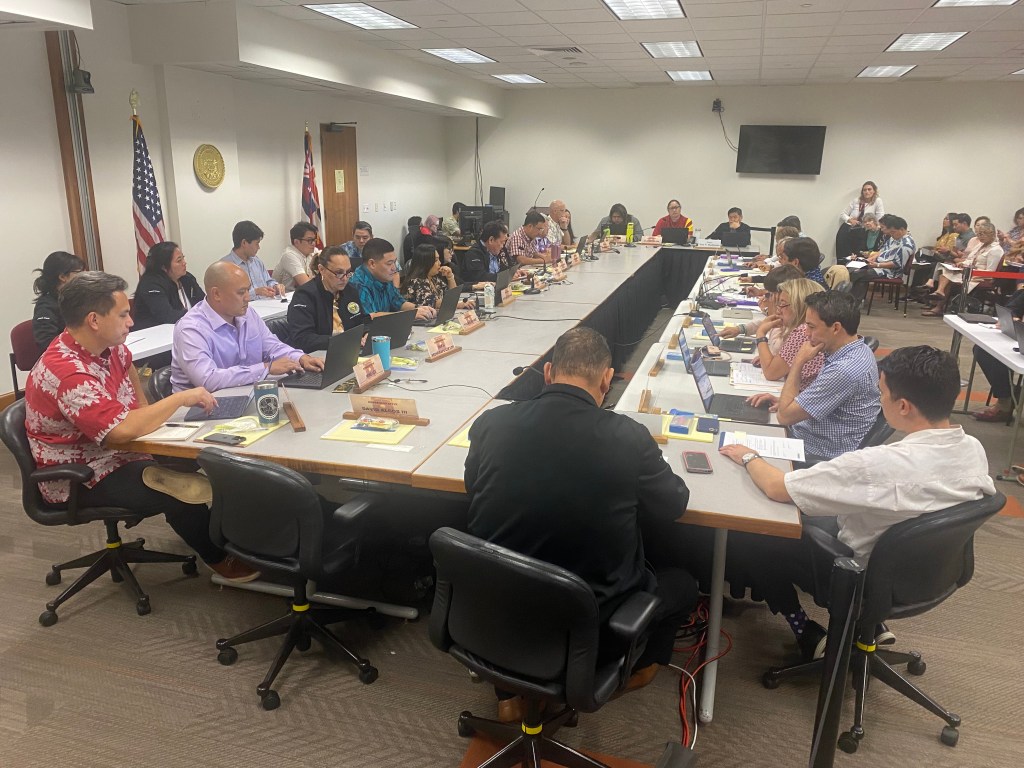
For fiscal year 2026, for example, UH regents asked for $381 million. The House version of the budget, which was drafted before it went to the Senate, trimmed that amount to $229 million.
The Senate’s CIP appropriation increased the figure to $252 million. But, as Young observed, close to half of that amount would be for a single project — $120 million for Kauaʻi Community College student housing.
The leaders of the House and Senate are both from Kauaʻi.
Young did note that Gov. Josh Green and the House have been much more favorable to UH’s budget priorities than the Senate.
While the additional operating budget requests approved by the Green administration and the House were roughly $5 million to $6 million less than what the UH Board of Regents sought, they were still well above the $30 million mark — far more than the $5 million or so allowed by the Senate.
Though concerned, Young is taking the budget uncertainty in stride.
“This is part of the process, and we expect that they’ll work out the differences in conference,” he said Tuesday.
Conference between the House and Senate began Monday and continues through April 25. The Senate Ways and Means Committee and the House Finance Committee are expected to meet publicly early Thursday evening to see if they can hammer out a budget before the three-day weekend begins.
Young said the operating and CIP requests were made before Trump was sworn into office in January. But he said the situation has changed significantly over the past five weeks.
“And every week is worse,” Young said. “So we’re talking about funding for programs, services — in addition to research that the university does — is going away.”
“So while there is no specific budget ask of the state yet to supplant the loss of those federal funds — spoiler alert — be advised: I portend that that day is coming very soon.”
Hensel is scheduled to hold an open forum Monday afternoon at the UH Mānoa Campus Center to provide an update on the impact of federal policy changes and the university’s response.
 Sign up for our FREE morning newsletter and face each day more informed.

Local reporting when you need it most
Support timely, accurate, independent journalism.
Honolulu Civil Beat is a nonprofit organization, and your donation helps us produce local reporting that serves all of Hawaii.
ContributeAbout the Author