The Threat Of Measles In Hawaiʻi Is Real
Our low vaccination rate puts our keiki at risk for widespread illness and death.
April 7, 2025 · 4 min read

About the Authors


As we watch a measles outbreak unfold in west Texas and New Mexico, we need to understand why such an outbreak is occurring as well as understand the implications of a possible outbreak here in Hawaiʻi.

Measles is considered the most contagious disease known. Exposure to one person with measles can quickly result in infection in up to 18 additional people. Furthermore, the measles virus remains for up to two hours in a room, even after an infected person is no longer present, subjecting anyone who comes to that room to the risk of infection.
Unfortunately, there are no established cures for measles. Approximately 1 in 5 children infected with measles requires hospitalization, with 1 in 1,000 children dying of measles.
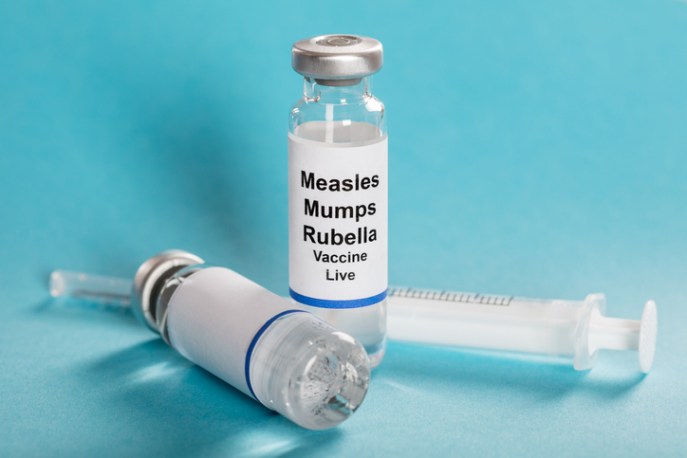
While we lack treatments for measles, we have a remarkably effective vaccine that protects against contracting a measles infection and prevents spread of measles to others. With measles, a 95% vaccination rate is considered the minimum needed to protect a community from measles outbreak.
However, Hawaiʻi’s low vaccination rate puts our keiki at risk for widespread illness and death. In Gaines County, Texas, where the measles outbreak is raging, the vaccination rate is 82%, which undoubtedly contributed to the spread of this outbreak.
‘Ripe For An Outbreak’
Our vaccination rate for kindergarteners in Hawaiʻi is 89%, below the national average of 93%. That number becomes even more alarming when you look at smaller communities, particularly on neighbor islands. According to the Department of Health, many schools on Kauaʻi, Hawaiʻi island and Maui report immunization rates under 75%, making these communities ripe for a widespread outbreak.
Were we to experience an outbreak in a neighbor island community like that currently happening in Texas, we would be at real risk for a devastating impact on our health care system.
There are very few pediatric hospital beds and no pediatric intensive care beds available outside of Oʻahu.
Hawaiʻi has only one air ambulance company to transport patients from neighbor islands to Oʻahu, and only one pediatric critical care transport team. Imagine, then, the strain that a measles outbreak would place on our health care system, exposing many people to measles and tying up our limited medical transport capabilities.
In addition, if the system is overwhelmed transporting measles patients, our neighbor island kupuna who suffer strokes, or heart attacks, or sustain accidents requiring transport to Oʻahu will have nobody to transport them.
This resource strain would almost certainly lead to delays in care and even avoidable deaths, in spite of our best efforts to care for the people of Hawaiʻi.
The good news is we can avoid such a tragic outcome. The MMR vaccine is safe and 97% effective at preventing infection after the two doses recommended by pediatricians.
As a state we need to increase the number of vaccinated children to protect our most vulnerable, especially those too young to vaccinate and those who cannot safely vaccinate due to a medical condition. But we also need to increase the vaccination rate to prevent the inevitable strain on our health care system.
We need to increase the number of vaccinated children to protect our most vulnerable.
The question of how to expand vaccination coverage is complex, as seen by the recent failure of House Bill 1118, a bill that would remove non-medical exemptions for vaccinations, to pass in the state House.
Similar bills in other states have resulted in improved vaccine coverage in those communities.
Unfortunately, the systematic undermining of trusted sources of information (such as the Centers for Disease Control and Prevention), coupled with rampant misinformation in mainstream and social media, makes it difficult for people to make decisions about what’s best for their ʻohana and for the community at large.
However, we know the people of Hawaiʻi can unite in this common cause because we have seen it before; during the Covid pandemic, Hawaiʻi had the lowest Covid death rate in the country, in part because of our willingness to get vaccinated, to mask up and to take care of each other.
It’s time for us to find that spirit again to protect ourselves against an outbreak of vaccine-preventable diseases here in our islands.
 Sign up for our FREE morning newsletter and face each day more informed.
Community Voices aims to encourage broad discussion on many topics of community interest. It’s kind of a cross between Letters to the Editor and op-eds. This is your space to talk about important issues or interesting people who are making a difference in our world. Column lengths should be no more than 800 words and we need a photo of the author and a bio. We welcome video commentary and other multimedia formats. Send to news@civilbeat.org. The opinions and information expressed in Community Voices are solely those of the authors and not Civil Beat.
Read this next:
Local reporting when you need it most
Support timely, accurate, independent journalism.
Honolulu Civil Beat is a nonprofit organization, and your donation helps us produce local reporting that serves all of Hawaii.
ContributeAbout the Authors