Turning The Tide Against Hawaiʻi’s Invasive Species
Stewarding the trees and forests around us is not just for scientists, adventurers or cultural experts. Volunteers are needed now.
April 14, 2025 · 5 min read

About the Author

Oʻahu residents are lucky if they see a native plant or animal species on any given day, while many in Hawai‘i will live a lifetime without seeing a native honeycreeper or tree snail. Invasive species, defined as non-native species that are “harmful to the environment, economy, and/or human health,” are a major reason why Hawai‘i’s native species struggle to survive in their natural range.

On island ecosystems, which boast high endemism rates due to evolving in relative isolation, invasive species are especially destructive. A study by the National Oceanic and Atmospheric Administration estimated that 75% of lower-elevation forests in Hawai‘i are dominated by invasive plant species which inhibit and threaten to replace native ecosystems.
From mauka to makai, invasive species disrupt delicate ecosystems, threaten the existence of native plants and animals, and hurt the people who depend on Hawaiʻi’s natural resources. Aloha Tree Alliance is a nonprofit organization dedicated to restoring and stewarding the Kuli‘ou‘ou watershed.
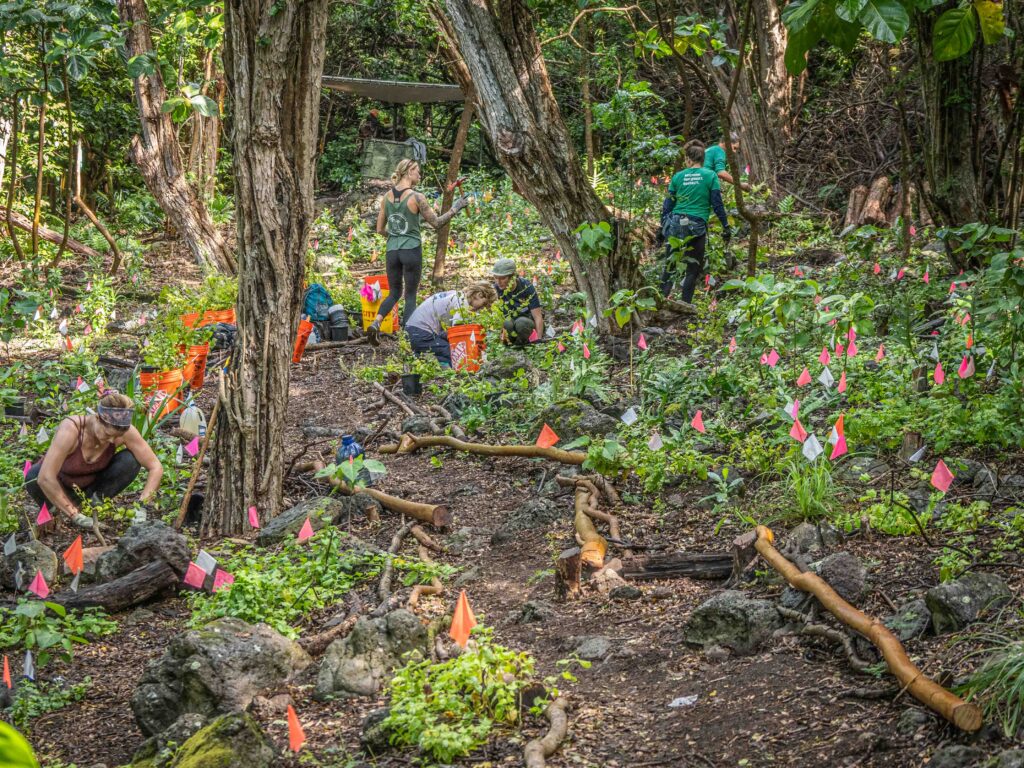
Forest stewardship is essential to tempering the effects of invasive species, as well as receiving the crucial ecosystem services that a healthy native forest provides such as rainwater interception, erosion prevention, and temperature control.
ATA’s restoration project faces the same problem as most of O‘ahu: It is dominated by fast-growing invasive species, while native plants, birds, insects, and snails have been forced to the peaks of the Ko‘olau Mountains.
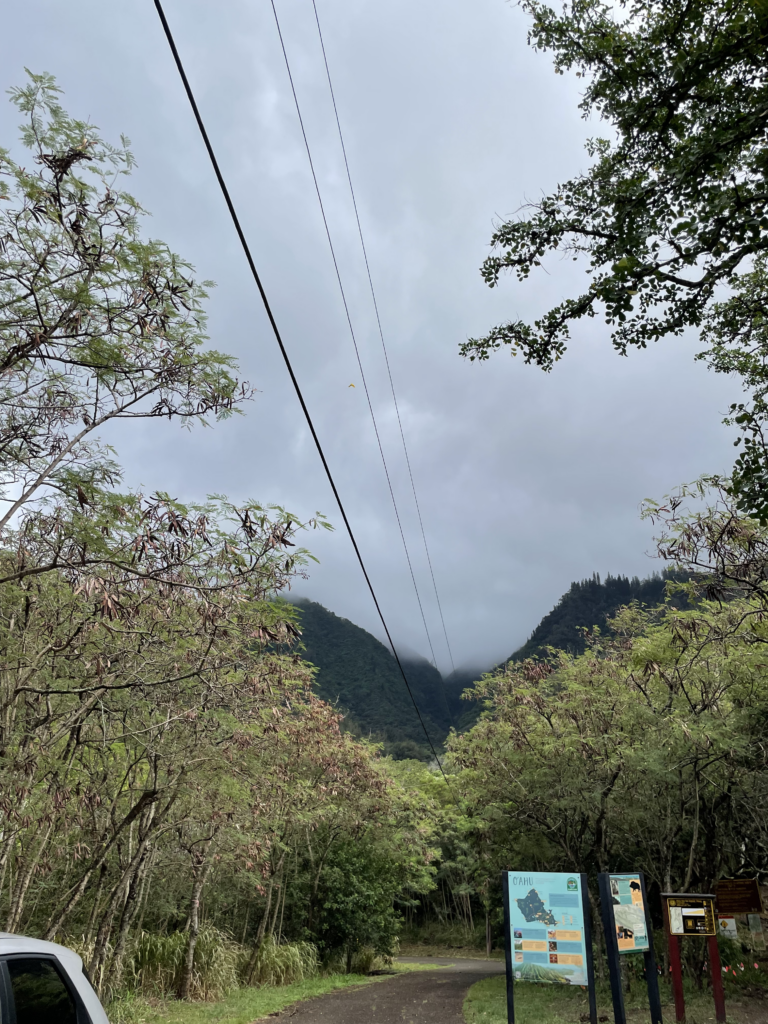
The summit of Kuli‘ou‘ou Valley is no sanctuary either, because invasive coqui frogs (Eleutherodactylus coqui) recently established a population there. These amphibians cause ecological devastation in Hawai‘i by consuming native snails and insects, many of which are already on the brink of extinction.
The coqui frog, with its deafening mating calls, is just one of many invasive animal threats wreaking havoc in Hawai‘i. Little fire ants (Wasmannia auropunctata) infest yards, farms, and nurseries, delivering excruciating stings that kill native birds and blind family pets.
Coconut rhinoceros beetles (Orocytes rhinoceros, or “CRB”) decimate banana and pineapple crops, and destroy graceful palms that beautify and shade Hawai‘i’s beaches. Feral pigs and deer overgraze native forests, causing desertification and habitat loss for native birds.
The effects of invasive species stretch beyond the forest to economic stability and public health. In Hawai‘i, agricultural losses from invasive rats and insects not only impact the livelihoods of farmers, but also the resilience of the entire state.
In an island chain that imports the vast majority of its food, local produce is a critical resource. Communities with invasive species infestations also face numerous health risks — rat, deer, mosquito, and pig populations increase the risk of disease outbreaks, serving as vectors for harmful bacteria, viruses, and parasites.
Invasive species also threaten the culture of Hawai‘i — Kānaka ʻŌiwi rely on native wood for crafts, fruits for sustenance, flowers to create lei, and the ecosystem itself as the foundation of their sacred spaces. Healthy native forests are therefore intertwined with the perpetuation of Hawaiian cultural practices and identity.
From strawberry guava trees (Psidium cattleyanum) which desiccate watersheds and chemically inhibit the growth of native plants, to little fire ants, invasive species can render the Hawaiian forests unrecognizable and inhospitable to all kamaʻāina.
At A Tipping Point
Conservationists say that the state is at a tipping point with these species, which quickly become unmanageable because they lack natural predators and can reproduce constantly in Hawai‘i’s mild climate. Although difficult to eradicate now, they will be impossible to manage given a few more years.
Tipping points are, however, opportunities to act. Control efforts led by government agencies and environmental nonprofits such as ATA are in need of support, whether through volunteering, advocating, or donating. Stewarding the precious trees and forests around us is not a task reserved only for scientists, adventurers, or Hawaiian cultural experts.

Forest health affects anyone who values fresh air, rain, shade, fruit, privacy, or the beauty of nature — that is to say, everyone. Stemming the spread of invasive species can be as simple as testing the backyard for Little Fire Ants with a peanut butter-covered stick or growing native plants. Statewide efforts to monitor and restore our native forests succeed with the help of vigilant communities and passionate volunteers.
Given what’s at stake – Hawai‘i’s biodiversity, economic stability, fresh water, healthy fruit, and cultural identity — there is no better time to take bold, collective action than in 2025, the Year of Our Community Forests. Across the state, community partners are coming together to celebrate and protect the trees in the wao kānaka: where we live, learn, and play. This is our moment to grow a legacy of resilience.
To find classroom activities, volunteer opportunities, tree giveaways and more, click here.
 Sign up for our FREE morning newsletter and face each day more informed.
Community Voices aims to encourage broad discussion on many topics of community interest. It’s kind of a cross between Letters to the Editor and op-eds. This is your space to talk about important issues or interesting people who are making a difference in our world. Column lengths should be no more than 800 words and we need a photo of the author and a bio. We welcome video commentary and other multimedia formats. Send to news@civilbeat.org. The opinions and information expressed in Community Voices are solely those of the authors and not Civil Beat.
Read this next:

Local reporting when you need it most
Support timely, accurate, independent journalism.
Honolulu Civil Beat is a nonprofit organization, and your donation helps us produce local reporting that serves all of Hawaii.
ContributeAbout the Author