Will Kūhiō's Hawaiian Homestead Act Survive The Trump Presidency?
We should not be surprised when the status of Native Hawaiians and their entitlements pop up on his agenda for attention.
April 1, 2025 · 7 min read


About the Author
There is a fearful and legitimate sense that in the next four years of the Trump presidency the Native American status of Hawaiians and all Hawaiian entitlements will be subject to review by the Trump administration and likely considered for termination.

Given the Trump administration’s immediate and in some cases brutal and complete dismantling of major federal agencies and their functions, we should not be surprised when the status of Native Hawaiians and their entitlements pop up on his agenda for attention. I’m predicting probable termination.
So there is no misunderstanding: The Homestead Act and it’s single purpose of managing lands set aside for housing is protected as a condition of statehood. But, over the years, the mere presence of the Homestead Act was like a beacon inspiring a flow of congressionally generated entitlements for health care, education, social services and job training.
But, while triggered and inspired by the Homestead Act, these entitlements are not connected or protected by it. I truly hope I’m wrong about this, but it’s already happening. The Council for Native Hawaiian Advancement has already had several hundred thousand dollars hit the chopping block and they are not alone. As we speak the umbrella is collapsing.
Let’s take a look at what we’re talking about given the history of why the Homestead Act and the trampoline it became in inspiring a long string of entitlements to assist Hawaiians in recovering from the fall of their nation.
Colonizing European Umbrella
The historical period framing the life of Hawaiian Prince Jonah Kūhiō Kalanianaʻole and his politically historical significance was the late 1800s. It was a definitive time for island nations across the Pacific being “discovered” by a wave of European colonizers attempting to globally extend their national sovereignty into the Pacific with the discovery of new lands.
England, France, Spain, Portugal, Russia and Germany deliberately cast a colonizing European umbrella over a number of those Pacific nations, some of whom suffered a compromising of their political and cultural independence. Examples include the overwhelming French influence over Tahiti, the Spanish attempt to take over Guam and the Philippines, and the Russians being allowed to build a fort on the Hawaiian island of Kauaʻi.
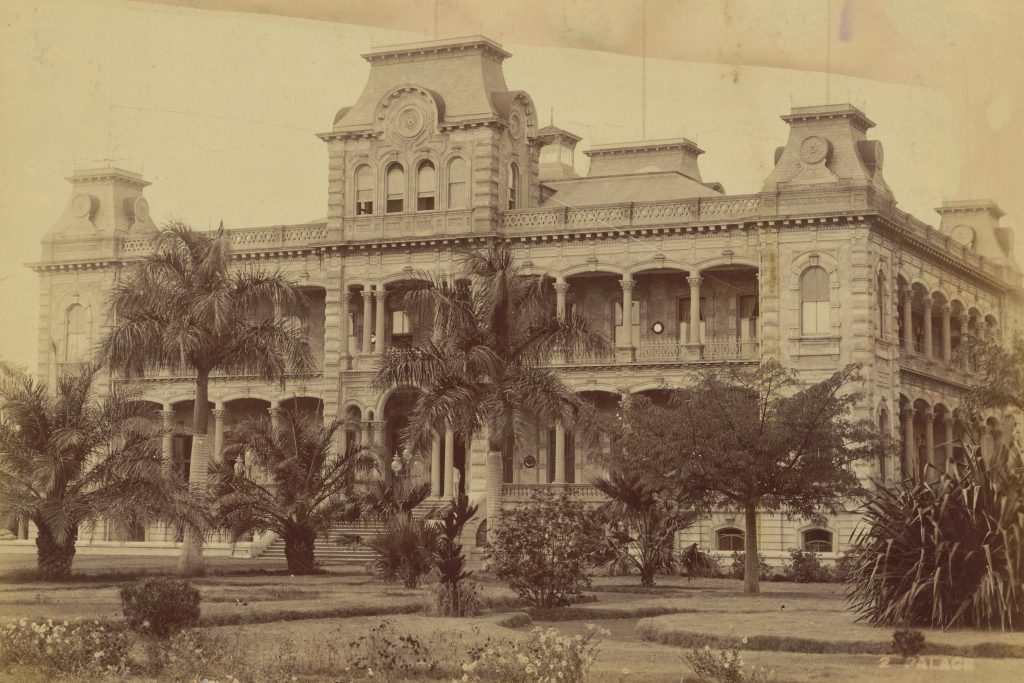
It was during this period that, while the United States had not joined the ranks of the European colonizers, a powerful group of Hawaiʻi-based businessmen, self-labeled the “Committee on Safety,” which included American sugar planters, successfully challenged the rule of Queen Liliʻuokalani. In a coup d’etat they replaced the kingdom’s constitutional monarchy and formed a new government — the Republic of Hawaiʻi.
But the Republic was not intended to be permanent. It was a high-risk holding strategy to buy time while pursuing Hawaiʻi’s eventual annexation to the United States as a U.S. territory.
It’s important to note that the overthrow could not have happened without the intervention of United States Marines and the U.S. minister. The American-led “Committee on Safety” ordered the Queen arrested and imprisoned in her own palace.
The illegality of the conscription of U.S. Marines and U.S. minister in the overthrow was finally acknowledged as an illegal act in 1993 by the Congress in the form of an apology resolution introduced by President Bill Clinton. But, while the formal apology admitted guilt to the illegality of U.S. participation, no corrective action was taken and the illegality of the overthrow remains unreconciled.
In the 132 years since the 1893 overthrow of the Kingdom of Hawaiʻi and its annexation to the United States, Hawaiians have struggled to survive. Every aspect of life as they lived it went into a tailspin. The culture was devastated as Hawaiian language was forbidden in schools, there was a total ban on the hula, their pantheon of gods and religious practices were abandoned as a result of the pivotal battle of Kuamao‘o.
Worst of all, Hawaiians had no immunity to common Western diseases such as measles, smallpox, influenza, tuberculosis and leprosy. From 1778 to 1920 the Hawaiian population devolved from 650,000 to 24,000, a demographic collapse of over 90%. It was devastating.
Since the 1893 overthrow and the annexation, Hawaiians have struggled to survive.
It’s important to note that Hawaiians had no written language. Hawaiian culture and knowledge was preserved orally. All aspects of the culture were documented and transmitted through the centuries in the form of chants, hula, ceremonies and storytelling.
Of the thousands of Hawaiians lost to the pandemic, several hundred of the best and brightest Hawaiian leaders in every discipline passed on. In the absence of any written records, centuries of Native Hawaiian knowledge, history, customs and traditions disappeared with the ranks of Hawaiian leaders who succumbed to the pandemic.
The quality of life, as Hawaiians knew it to be for centuries, took a rapid and deep dive into disenfranchisement and exclusion. Hawaiians were left to completely rebuild the framework of their existence which is still a work in progress with many years to go.
The Rights Of Self-Determination
The U.S. Constitution recognizes Native American tribes as domestic, dependent nations with inherent rights of self-determination. The U.S. government created the trust responsibility that was eventually extended to include Native Alaskans, Inuit, and Aleuts. However, when Hawaiians asked to be considered for inclusion, they were denied, although they meet the same qualifying criteria as all other Native Americans.
It was not lost on Prince Kūhiō that Hawaiians were left out of the principal framework of opportunities for self-governance and federal entitlements, and denied access to the same constitutional protections afforded all other Native Americans.
In 1920 Prince Kūhiō’s Homestead Act was adopted by the U.S. Congress. It singled out ethnic Hawaiians as a special class of people entitled to recognition for the purpose of access to land for homesteading.
I don’t believe that even the prince could have foreseen how the full weight of the Homestead Act would be felt decades later. This act unsuspectingly established a federal pathway to self-determination by providing a strategic shield of congressional protection for his people as Native Hawaiians. It was, and still is, the foundation of congressional recognition that acknowledges and gives standing to Hawaiians as an indigenous people warranting special status.
The Homestead Act opened the gate from which has flowed a genealogy of congressional actions. Over the years more than 300 federal entitlement programs have translated into millions of dollars for health care, education, jobs and business opportunities.
This act of the prince bought Hawaiians the precious time to recover from our trans-generational trauma. It kept us afloat during all the years of struggling just to stand up again.
The Homestead Act gave us a vital opportunity for recovery and survival. Most important, the act paved the way for the restoration of our dignity and honor as a people.
From 1903 until his death in 1922, Prince Kūhiō served as a delegate of the Territory of Hawaiʻi to the U.S. Congress. A true statesman, even though territorial delegates did not have the privilege of a vote, I personally believe he saved Hawaiians from political extinction. He continues to be the only person of royalty to ever serve as a U.S. congressman for a place that was once a Royal Kingdom that still houses the only Royal Palace in America.
Hawaiians were blessed by the unexpected long-term impact of Prince Kūhiō’s Hawaiian Homestead Act that gave Hawaiians a building block from which sprang so many pivotal opportunities for recovery.
Meanwhile, sparks continue to fly for some form of reconciliation and opportunity for Hawaiians to exercise self-determination.
 Sign up for our FREE morning newsletter and face each day more informed.
Community Voices aims to encourage broad discussion on many topics of community interest. It’s kind of a cross between Letters to the Editor and op-eds. This is your space to talk about important issues or interesting people who are making a difference in our world. Column lengths should be no more than 800 words and we need a photo of the author and a bio. We welcome video commentary and other multimedia formats. Send to news@civilbeat.org. The opinions and information expressed in Community Voices are solely those of the authors and not Civil Beat.

Local reporting when you need it most
Support timely, accurate, independent journalism.
Honolulu Civil Beat is a nonprofit organization, and your donation helps us produce local reporting that serves all of Hawaii.
ContributeAbout the Author