At 15 And Counting, The (Civil) Beat Goes On
Reflections of a journalist as he begins his sweet 16th year at Hawaiʻiʻs independent online news source.
May 4, 2025 · 6 min read


About the Author

Honolulu Civil Beat started publishing 15 years ago today, and Iʻve been here as a reporter and editor from the start — actually a month before the launch.
I’ve told the story of Civil Beat’s origins before, including just five years ago on our 10th anniversary. So, no need to retread that familiar ground.
I write this piece in a more reflective mood than the celebratory state I was in five years ago, because the state of American journalism has never seemed so dire.
The world and Civil Beat’s work has changed since 2020. That was the first year of the pandemic, Black Lives Matter and rampant inflation, all coming down during an historic presidential election.
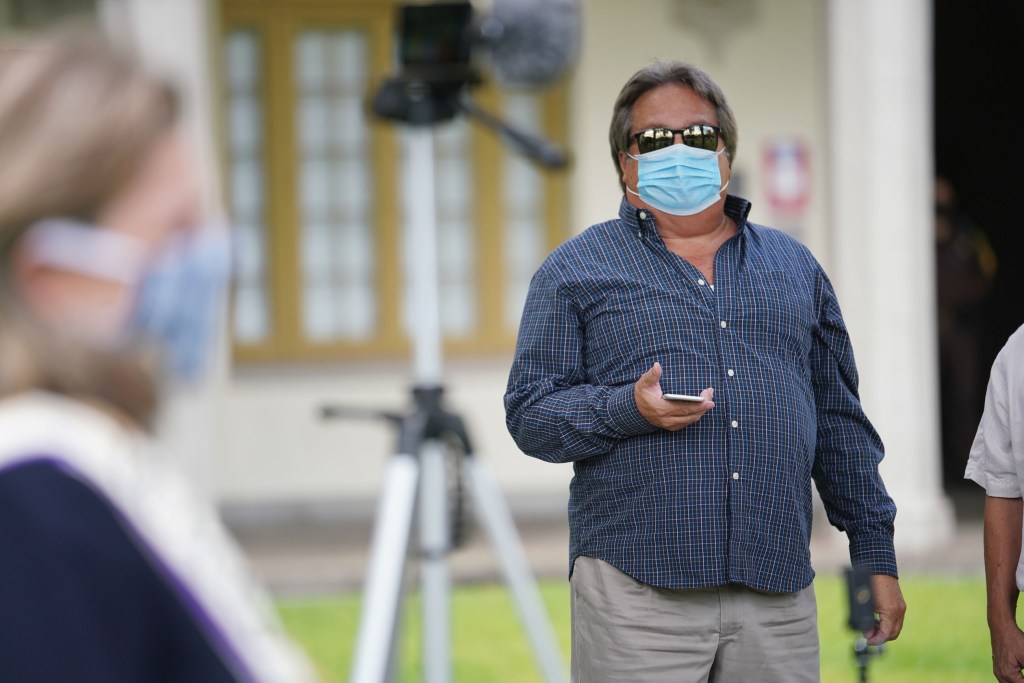
What came next was the Jan. 6 U.S. Capitol insurrection, a second Trump impeachment, the Russian invasion of Ukraine, the Israel-Gaza war, another historic presidential election and our current uncertain and anxious times — tariffs, DOGE, immigration, executive orders, lawsuits and so much more.
Something shifted tectonically five years ago, and I am proud that my colleagues were on top of it. The last five years saw major stories on high-profile political corruption cases, the Red Hill environmental disaster and the Maui wildfires.
Indeed, stories we ran in May 2020 alone pointed the way to topics that would lead our coverage through the present day: climate change, waste and recycling, the costs of rail, water issues, pay raises, open meeting laws, voting at home, leaky fuel tanks and raising the hotel tax.
In May 2024, we were named a finalist for a Pulitzer Prize in breaking news for coverage of the Maui fires. A year later, Hawaiʻi remains very much impacted by and involved with national events. It makes me want to state the obvious: We need independent journalism, now more than ever.
A Seminal Moment
Since Inauguration Day, the Trump administration’s policies have directly impacted the islands and demand greater local reporting.
No one knows what’s next, but Civil Beat is responding — look to recent stories on an Immigration Customs and Enforcement crackdown on the Big Island, Hawaiʻi being sued by the U.S. Justice Department for taking on Big Oil, and Trump opening a huge protected swath of the Pacific to commercial fishing.
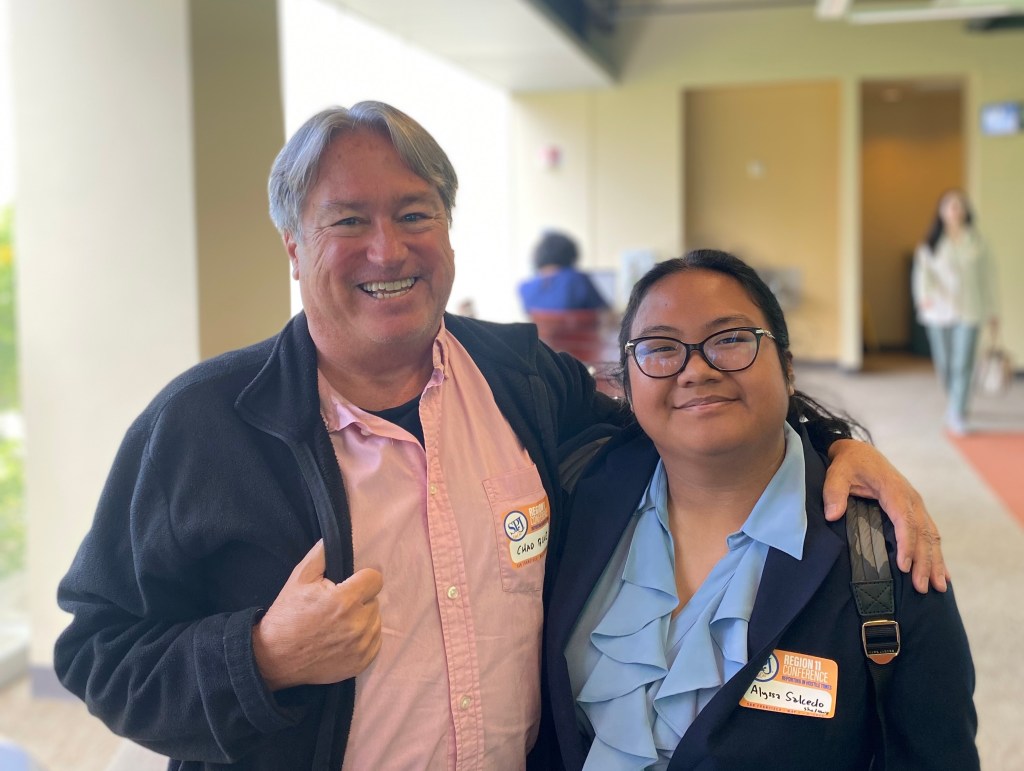
The state of the media was also very much on my mind as I attended a Society of Professional Journalists conference in San Francisco this weekend, from where I am filing this article. The theme was “Reporting In Hostile Times,” and it drew members from SPJ chapters in Hawaiʻi, Arizona, California, Nevada, Guam and the Northern Mariana Islands.
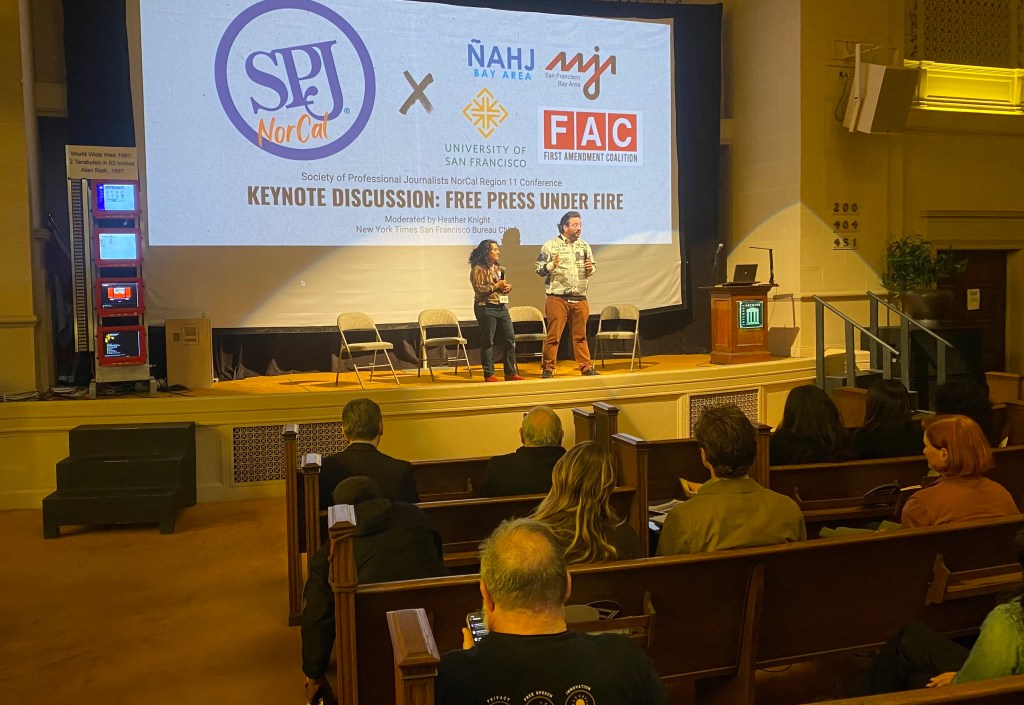
“Journalists today face unprecedented challenges — press freedom is under attack, misinformation is rampant, and the media industry is evolving at a rapid pace,” said the promotion for the conference.
That is an understatement, based on just the last 100 days and counting. It’s a fair question to wonder whether journalism can survive, let alone thrive.
Meanwhile, worries grow that robots are trying to steal the few good media jobs that remain. Artificial intelligence was a major topic at the conference, as it has been for several years now at all journalism conferences. Some hail its potential for innovative, expanded coverage while others cast warnings, especially regarding ethics and accuracy.

Here are a few SPJ conference takeaways that chime with Civil Beat’s mission, both hopeful and otherwise:
Nonprofit news websites: Trump’s threats to nonprofit organizations, including news organizations such as PBS and NPR, are chilling. Some donors are holding back on giving because of fear of retribution. Others are evaluating more carefully whether they are getting the biggest bang for their bucks.
Takeaway: Don’t turn news audiences into commodities. They are people. It takes time to build trust and build communities. Do these things and philanthropy will follow.
Artificial intelligence: As a member of the original generation of CB journalists, I have approached AI with trepidation. My anxiety was eased somewhat at the SPJ conference — although it was unnerving how many Google driverless ride-hailing cars I saw on the streets of San Francisco.
Takeaway: AI is already being used to scrape data in order to track state governments for trends in legislation, to see how lawmakers vote and to analyze election results. (Civil Beat already does this, albeit with spreadsheets and databases and, in my case, a pen and yellow pad.) AI is a tremendous time-saver, but AI makes many mistakes and human judgment is essential to fact-checking.
Freedom of the Press. The words “existential,” “seminal,” “unprecedented” and “uncertain” were used a lot at the conference. Trump, as he does with everything, dominated the discourse.
Will the landmark 1964 U.S. Supreme Court decision in New York Times Co. v. Sullivan that requires public officials to show actual malice on the part of the press in libel cases survive?
Will the 1971 Pentagon Papers case that defended the First Amendment right of a free press against prior restraint survive?
Takeaway: Optimism lives on, the courts are our greatest hope to preserve the Constitution, but journalists cannot back down.
One of the keynote speakers, Thomas Peele, covered Trump back in the president’s Atlantic City casino days. He is a Pulitzer Prize-winning investigative journalist and co-chair of SPJ NorCal’s Freedom of Information Committee.
Peele’s advice to journalists: Work harder. Knock on more doors, make more phone calls, go to more public meetings. Don’t rely on instant messages, online meetings, press releases and spokespersons.
Back home in Hawaiʻi, the homeless are still with us, housing is still unaffordable for most, gas, electricity and food costs are still exorbitant and homes are still falling into the sea. Lack of transparency and accountability in local governance remain. And corruption will never disappear.
And so The Beat goes on.
 Sign up for our FREE morning newsletter and face each day more informed.

Local reporting when you need it most
Support timely, accurate, independent journalism.
Honolulu Civil Beat is a nonprofit organization, and your donation helps us produce local reporting that serves all of Hawaii.
ContributeAbout the Author