Hawaiʻi’s ‘Exceptional Tree’ Program Now 50 Years Strong
But there are also significant threats currently facing the program.
May 18, 2025 · 4 min read

About the Author

Saturday marked the 50th anniversary of Hawaiʻi’s Exceptional Tree Program.

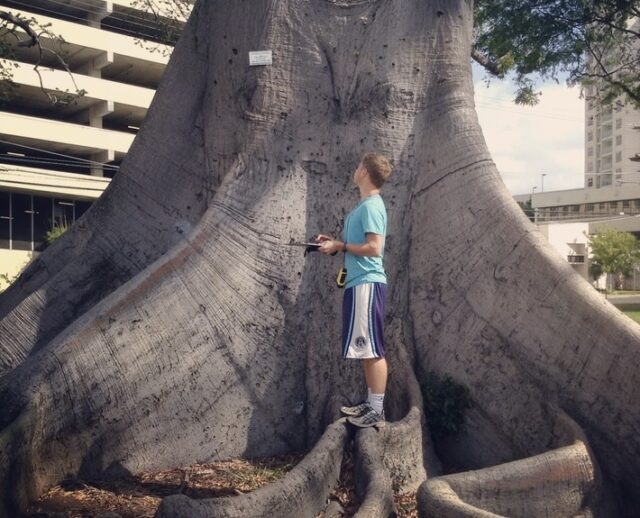
This program identifies, protects and celebrates Hawaiʻi’s most iconic tree specimens that comprise one or more of the following seven selection criteria: historic/cultural value, age, size, rarity, endemic status, location significance and/or aesthetic value. Exceptional trees can be represented by a single specimen or a grove and can be found on both private and public property.
Hawaii’s Exceptional Tree Program began in 1975 when the Legislature passed Act 105 to protect Hawaiʻi’s most valued trees from being removed due to development. The legislation requires Hawaiʻi’s four counties to produce ordinances that identify and protect exceptional trees within their geographic area.
To date, there are over 1,400 of these trees across the state, many of which are in large groves. A map of these exceptional trees has been produced by The Outdoor Circle and includes information such as tree height, diameter, health, approximate age, and ecosystem services.
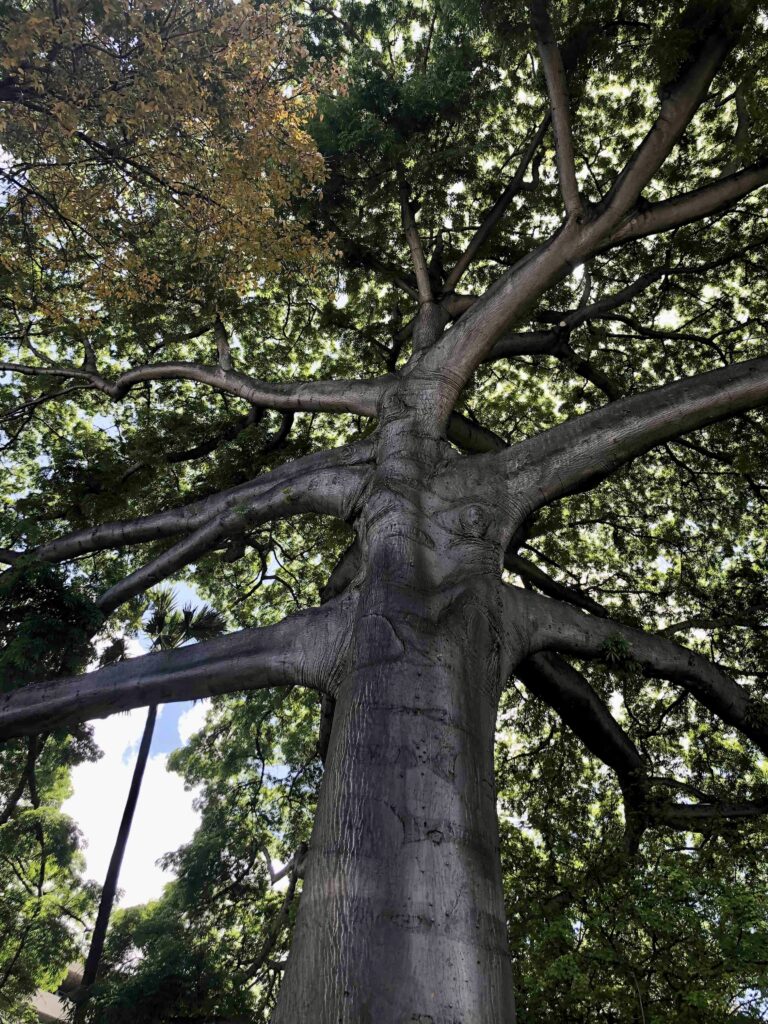
Exceptional trees can be nominated by any individual, although nominations for trees on private property must include the signature of the property owner. Completed nomination forms are sent to each county’s Arborist Advisory Committee to be reviewed.
Any trees that are recommended for exceptional status by the AAC are then referred to the respective city or county council for consideration during an ordinance review process. If the council agrees that these trees comprise exceptional traits, they will be officially registered as an exceptional tree.
An incentive exists to help offset some of the costs of owning an exceptional tree. This is seen in the form of a $3,000 state income tax deduction that can be claimed once every three years per exceptional tree on private property. This deduction can only be claimed if necessary maintenance was conducted on an exceptional tree by a certified arborist approved by the respective county.
A significant benefit of designating a tree as exceptional is the legal protection afforded to them. An exceptional tree cannot be removed unless it poses an immediate threat to public safety or no longer comprises the selection criteria that was used to nominate it.
It is important to note that the designation of an exceptional tree on private property will remain even if a new owner purchases the property, allowing the many benefits an exceptional tree provides to the surrounding community to be enjoyed for generations to come.
Age And Apathy
However, there are two significant threats currently facing this program.
First, many of the existing exceptional trees were already old when the program began 50 years ago and are starting to be lost due to old age.
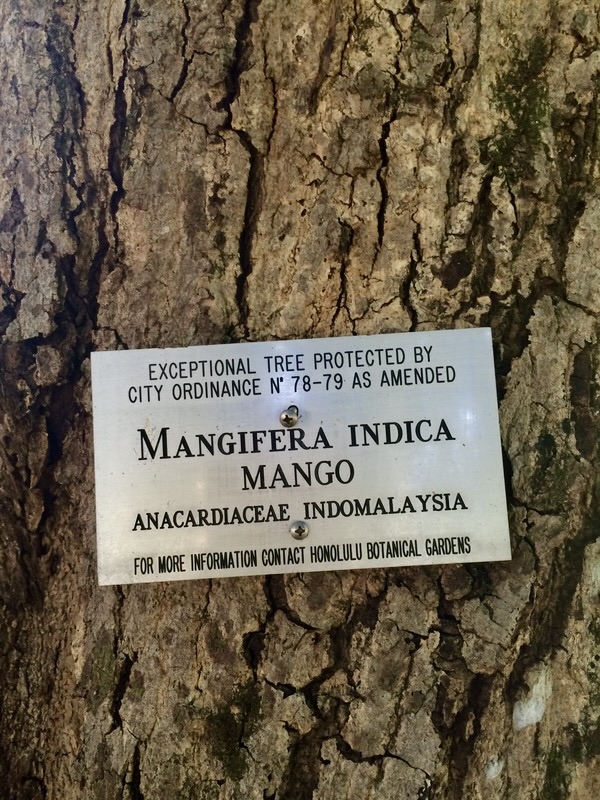
Second, there have been relatively few new exceptional tree nominations submitted to the AACs throughout the state. This means that Hawaiʻi is losing many of its iconic tree specimens while at the same time lacking a pipeline of new exceptional tree nominees to replace them.
There are many trees throughout the state that have the potential to achieve exceptional status, they just need to be nominated. To help with this process, The Outdoor Circle also provides a step-by-step process on how to nominate an exceptional tree, including providing the nomination forms for all four counties.
To celebrate the 50th anniversary of Hawaiʻi’s Exceptional Tree Program, in addition to raising awareness about its existence and how it functions, Foster Botanical Garden will be hosting an event May 31 from 9:30 a.m. to noon.
Admission to the garden will be free during this event, providing an opportunity for visitors to learn about Hawaiʻi’s Exceptional Tree Program, while also seeing 19 of these exceptional trees at the same time.
This is a collaborative event involving the City and County of Honolulu’s Arborist Advisory Committee, Division of Urban Forestry, and The Outdoor Circle.
To learn more about exceptional trees please visit The Outdoor Circle’s website or contact them if you have any questions about the nomination process.
How fitting that this anniversary coincides with 2025, the Year of Our Community Forests. Community partners are celebrating the importance of trees in the wao kanaka: the trees and forests where we live, learn and play.
To find classroom activities, volunteer opportunities, tree giveaways and more, click here.

 Sign up for our FREE morning newsletter and face each day more informed.
Community Voices aims to encourage broad discussion on many topics of community interest. It’s kind of a cross between Letters to the Editor and op-eds. This is your space to talk about important issues or interesting people who are making a difference in our world. Column lengths should be no more than 800 words and we need a photo of the author and a bio. We welcome video commentary and other multimedia formats. Send to news@civilbeat.org. The opinions and information expressed in Community Voices are solely those of the authors and not Civil Beat.
Read this next:

Local reporting when you need it most
Support timely, accurate, independent journalism.
Honolulu Civil Beat is a nonprofit organization, and your donation helps us produce local reporting that serves all of Hawaii.
ContributeAbout the Author