Kirstin Downey: This Is One Agency Trump Has No Business Cutting
The Consumer Financial Protection Bureau doesn’t even get taxpayer money. And it has a solid history of helping the people who really need it.
May 2, 2025 · 10 min read


About the Author

The Consumer Financial Protection Bureau, an effective and useful government agency that works on behalf of ordinary Americans, is under ferocious attack in Washington and is on the verge of destruction.
The agency, which was created in the wake of the 2008 mortgage meltdown and ensuing economic crisis, has helped to level the playing field for American consumers at a time of rapid technological change and as human customer service representatives who can actually solve problems have been allowed to vanish.

Over its 14-year existence, the CFPB has weighed in on a wide array of problems, from predatory payday lending, to abusive car loans to service members, to confusing mortgage terms, and, more recently, to helping fend off the proliferation of junk fees.
This is an agency that is near and dear to my heart.
But today it is on the ropes. In February, Russell Vought, President Donald Trump’s director of the Office of Management and Budget and a long-time critic of the CFPB, ordered the agency’s employees to stop working. About 1,200 of the agency’s 1,700 employees were reportedly targeted for removal.
Trump acolyte and budget-cutter-in-chief Elon Musk shares this animus for the agency: “CFPB RIP” he tweeted on Feb. 7.
On March 4, Trump trumpeted his actions against the agency, where he said “unelected bureaucrats” were running amok.
Erie Meyer, formerly chief technologist for the CFPB, said that some 1,500 employees were told they had lost their jobs in a reduction in force, but that they were then returned to work under a court order, though many are sitting home on administrative leave. The CFPB has been turned into a “ghost town,” she said.
“People are extremely disturbed,” she said in an interview. “These are people with direct experience on why people need them so badly.”
The cuts at the agency may not just be temporary. The House Financial Services Committee voted Wednesday along party lines to slash the CFPB’s budget by more than 60%, claiming they are taking that action to reduce the federal deficit.
Officials in Hawaii have jumped into the legal fight to defend the CFPB. Anne Lopez, Hawaii’s attorney general, has joined an amicus brief filed in a Maryland lawsuit that highlights the damage being done to Hawaii’s consumers because of the “sudden withdrawal” of the CFPB’s oversight over financial institutions. The lead plaintiff in the lawsuit is the city of Baltimore.
Almost 6,000 Hawaii residents have turned to the CFPB for help resolving problems with financial institutions.
Another large pending lawsuit against the White House actions has been filed by the National Treasury Employees Union on behalf of CFPB workers.
Trump promised many stringent actions during his presidential campaign but he never said he intended to attack the CFPB. In fact, he instead criticized the hefty interest rates charged on credit cards, saying he planned to impose limits on how high those rates could be. If he had any intention of trying to make good on that pledge, he would need the CFPB to administer the program.
But laissez-faire Republicans, who generally chafe at government regulation of all kinds, have long fostered a particular hatred for the CFPB. Now they appear to be taking advantage of the fog of war and continuing chaos inside the presidential administration to gut the agency, saying they are doing it to save money for taxpayers amid the heated debate over federal budget and tax legislation.

But the CFPB costs taxpayers nothing. It is funded as a separate arm of the Federal Reserve, an independent agency which gets its money from interest paid on government securities and from fees it charges the banking industry.
Much of the partisan acrimony over these issues goes back to the Obama administration’s failure to prosecute bankers who had engaged in criminal activity by knowingly placing homeowners in financial peril through the creation of new and toxic mortgage products that homebuyers didn’t really understand.
Instead of putting wrong-doers in jail, as the Republican George H. W. Bush administration had done following the savings and loan crisis in the 1980s, the Obama administration swept the situation under the rug and even distributed vast sums of bail-out money that ended up as bonuses in the pockets of bank executives. Instead of punishing people who had caused harm, many were rewarded.
The consolation prize for American taxpayers was the creation of this new agency, the CFPB, in 2010, as part of the Dodd-Frank Wall Street Reform and Consumer Protection Act. It was the brainchild of Elizabeth Warren, now a U.S. senator but then a Harvard law professor who had established a name for herself as an expert on bankruptcy law and the burdens faced by struggling people who used credit cards for economic survival. Its genesis was the widespread recognition that the many government agencies that regulate lenders had failed to watch out for consumers, leading to the economic collapse, because, one by one, they had all fallen victim to regulatory capture or bureaucratic sloth.
From the beginning, the agency’s creation, which occurred with only minimal Republican support, was opposed by the banking industry, which objected to the new scrutiny it was receiving. More recently, as tech companies have increasingly moved into financial services, introducing new app-based banking systems that make it easier to do transactions but also pose new risks for consumers, tech leaders joined the chorus of opponents.
I was an eyewitness to much of this as it happened. As a business reporter at the Washington Post, I first heard reports in 2005 about the dangers of toxic new mortgages that seemed almost certain to land in foreclosure for hapless homeowners who had been steered into them instead of more traditional mortgages. This happened because of a voracious appetite for these loans on the secondary market, where they were sold to institutional investors, and because politicians in both parties were looking for ways to show their policies were boosting the economy and increasing the ranks of homeownership.
At a banking conference in 2006, I heard bankers casually discussing the fact that the first of the bad loans would come due in June 2007 and mass delinquencies and foreclosures would begin. (Later banking industry executives testified they had no foreknowledge of impending disaster; that was the same implausible refrain from banking regulators themselves.)
In 2006 and 2007, we published many news stories about the emerging problems, highlighting the dangers to homeowners and lenders. But the magnitude of the ensuing economic collapse, a debacle that spread worldwide, caught most people by surprise.
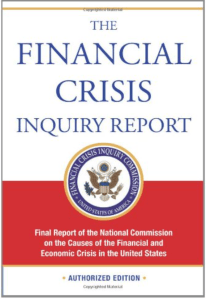
Then, after I left the Washington Post, I became involved in these issues again when I was asked to serve as an investigator for the Financial Crisis Inquiry Commission, also known as the Angelides Commission, where we conducted hundreds of interviews with people who had participated in the events that led to the disaster. I helped organize field hearings in Florida, Nevada and California, where real estate developers, appraisers, mortgage lenders and financially devastated homeowners facing foreclosure and bankruptcy frankly described what had happened and what they had seen and experienced.
In Washington, however, political leaders in both parties had decided not to air their dirty laundry. They opted not to peer inside the myriad cardboard boxes heaped in the warehouses of bankrupt lenders containing mortgage forms filled with patently fraudulent statements.
The CFPB was created as a way to try to prevent this kind of thing from happening again. The new agency pulled together units of other regulatory agencies that had been asleep at the switch and centralized the power to do a better job.
I became editor of FTC:Watch, and indeed, watched with interest because part of the Federal Trade Commission’s mission is consumer protection, and we recognized that the FTC could have done more to highlight the emerging problems but did not.
So, as often happens in Washington, another agency had been created to do what the primary agency should have done. We launched a parallel news product, CFPB:Watch, which kept a close eye on the CFPB as it came into existence.
We reported on the agency as it took on myriad important issues: the growth of predatory pay-day lending; service members cheated on costly loans for cars that turned out to be lemons; inadequate mortgage disclosures that allowed uninformed homebuyers to stumble unknowingly into risky loan terms; hefty medical debt and the sky-high burden on student loans.
Today, record-high consumer debt and duplicitous conduct by online financial services firms remain high on the bureau’s agenda. Here in Hawaii, the CFPB exposed the problem of fees being imposed by software companies on public school lunches.
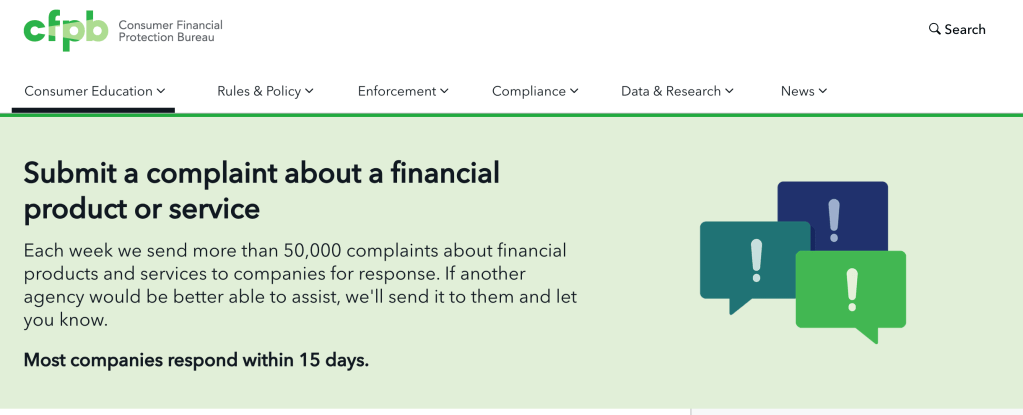
Most recently, the agency cracked down on the proliferation of junk fees, charges that merchants impose unexpectedly on transactions, including tickets for events, hotel fees and even health care.
The CFPB has also done things that have attracted legitimate criticism. The agency’s expenses climbed sharply in the four years of the Biden administration, according to the Congressional Research Service. Bankers and credit unions have complained agency officials have acted capriciously in pursuing administrative actions against firms, sometimes on flimsy pretexts, and sometimes seeking to extract large settlements.
At a hearing last month before the House Financial Services Committee, a parade of lawyers and bankers said the agency had failed to define the legal standards for establishing abusive practices, coordinated poorly with other regulators and imposed a heavy burden on firms in terms of requiring vast numbers of documents.
Across the board, however, even the most heated critics at the congressional hearing called for reform of the agency, such as creating a new bipartisan management system, improving checks and balances for companies accused of misconduct, appropriating money for the CFPB rather than taking money from the Federal Reserve and requiring the agency to consider the costs it was imposing when establishing new regulations. None called for the elimination or radical dismemberment of the agency, but rather more aggressive and effective oversight.
Several Democrats, including Rep. Bill Foster of Illinois acknowledged that critics “make some valid points about CFPB policies that could be discussed.”
But the actions taken by the Trump administration make those congressional deliberations moot, he said.
“We are rearranging deck chairs on the Lusitania after they torpedoed it,” Foster said, referring to a World War I incident where a British ocean liner was sunk by a German submarine.
 Sign up for our FREE morning newsletter and face each day more informed.

Local reporting when you need it most
Support timely, accurate, independent journalism.
Honolulu Civil Beat is a nonprofit organization, and your donation helps us produce local reporting that serves all of Hawaii.
ContributeAbout the Author