Don’t Sunset Hawaiʻi’s Solar Tax Credit While We Still Need It
Gov. Green should veto House Bill 796, which would weaken market confidence.
June 3, 2025 · 4 min read

About the Author

Hawaiʻi families and small businesses are burdened with some of the highest electricity costs in the country.

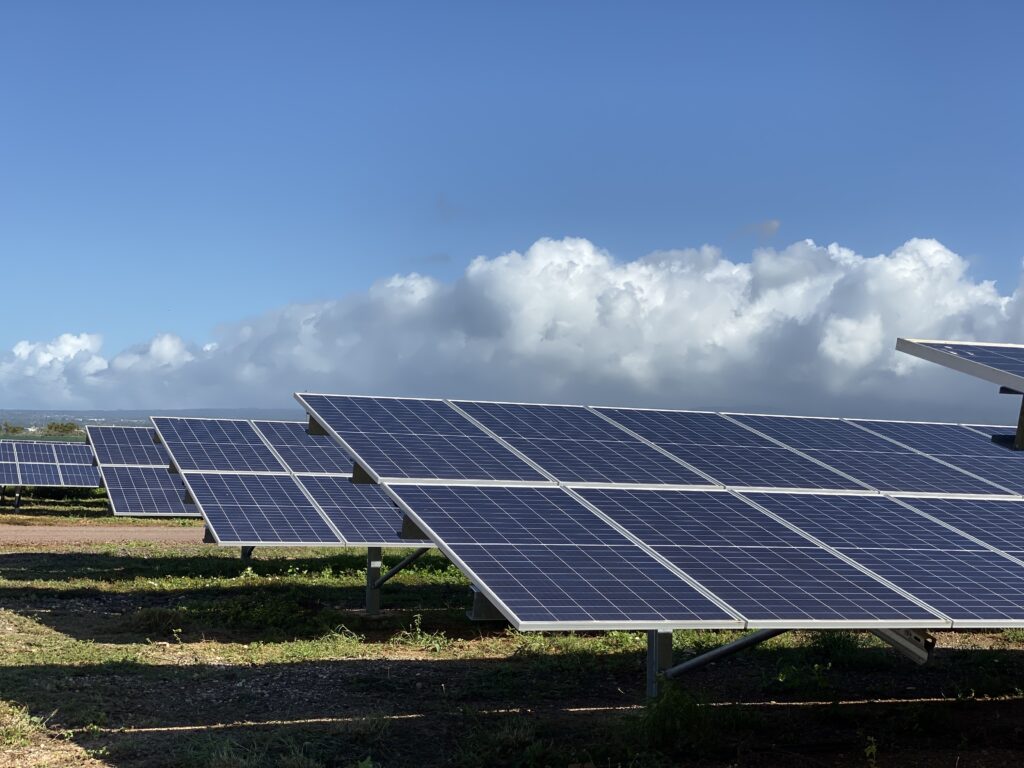
Climate change is accelerating, and our island grids are increasingly vulnerable to extreme weather and aging infrastructure. Rooftop solar and battery storage have become essential solutions — lowering costs, improving reliability, and giving local communities more control over their energy future.
That progress is now at risk, both nationally and here at home.
In Hawaiʻi, House Bill 796 recently passed the Legislature and now sits on Gov. Josh Green’s desk. This bill would prematurely phase down or sunset Hawaiʻi’s Renewable Energy Technologies Income Tax Credit, known as the RETITC, a foundational policy that has made solar and storage affordable for tens of thousands of families and small businesses.
In Washington, federal solar investment tax credits are under threat as part of the budget reconciliation package moving through Congress. At the same time, new tariffs up-and-down the solar supply chain are increasing costs and stalling projects. The economic ripple effects are already being felt in Hawaiʻi’s clean energy sector.
Now is not the time for Hawaiʻi to compound that uncertainty by sunsetting local solar tax credits. Unfortunately, that’s exactly what HB 796 would do.
The bill’s vague language either initiates a three-year phase-down starting in 2026 or eliminates the credit entirely in five years. Either interpretation injects confusion, undermines investment, and weakens market confidence.
Undeniable Benefits
More than 100,000 homes and businesses across the islands have gone solar with the help of the RETITC. For many, especially working families and small-business owners, it was the only way to afford clean energy.
And the economic benefits have been undeniable. Hawaiʻi’s solar industry supports over 2,400 local jobs and has driven more than $4.9 billion in private investment across the state.
These are good-paying, local jobs that can’t be outsourced — from installers and electricians to engineers and sales professionals. Ending the RETITC puts that workforce — and the families and businesses they serve — at risk.
What’s more, the solar tax credit is not merely a cost outlay — it’s an investment. By leveraging private and federal capital, the RETITC generates a positive return for the state through increased consumer spending and business investment, income and excise tax revenues, job creation, and long-term energy savings for residents. It strengthens our energy security and shields our economy from oil price volatility.
Hawaiʻi is recognized globally as a pioneer in distributed energy resources, from early adoption of net energy metering to innovative grid service programs like Battery Bonus and the evolving Bring-Your-Own-Device. Our leadership has shaped national models and proven that a bottom-up, community-based transition is possible. Sunsetting the RETITC would send a troubling signal to investors and other states looking to Hawaii as a proving ground for clean energy innovation and equity.
House Bill 796 threatens to reverse gains in energy equity.
It also directly contradicts Gov. Green’s own Executive Order No. 25-01, which directs state agencies to accelerate renewable energy deployment, particularly rooftop solar and energy storage for low- and moderate-income or frontline communities. You can’t call for acceleration while taking away a key engine that drives it. We should be stepping up to meet the challenge and fill the gaps caused by federal policy changes.
Worse still, it threatens to reverse gains in energy equity. In recent years, the RETITC has begun to reach low- and moderate-income households through programs like GEMS and BYOD+. These families, most affected by energy insecurity and high utility bills, are finally able to participate in the clean energy economy. We should be expanding access, not pulling the ladder up.
Gov. Green has consistently championed climate action, energy affordability, and resilience. We urge him to use that leadership now to veto HB 796.
The RETITC is working. It’s cutting costs, creating jobs, building resilience, and showing the world what a people-powered energy transition looks like.
Let’s not retreat from progress — especially when our communities and climate need it most.
 Sign up for our FREE morning newsletter and face each day more informed.
Community Voices aims to encourage broad discussion on many topics of community interest. It’s kind of a cross between Letters to the Editor and op-eds. This is your space to talk about important issues or interesting people who are making a difference in our world. Column lengths should be no more than 800 words and we need a photo of the author and a bio. We welcome video commentary and other multimedia formats. Send to news@civilbeat.org. The opinions and information expressed in Community Voices are solely those of the authors and not Civil Beat.
Read this next:

Local reporting when you need it most
Support timely, accurate, independent journalism.
Honolulu Civil Beat is a nonprofit organization, and your donation helps us produce local reporting that serves all of Hawaii.
ContributeAbout the Author