Hawaiʻi’s Shared Responsibility To Care For Coral Reefs
They have declined drastically due to pollution, overuse and other human impacts.
June 23, 2025 · 3 min read


About the Authors


June is a global celebration of oceans — the heart of our blue planet, starting with World Ocean Day and extending through Oceans Month. In Hawaiʻi, June also marks the start of hurricane season and the hope that no hurricanes approach our shores.

But hope is not enough. We also must be prepared.
Thanks to Hawaiʻi’s groundbreaking coral reef insurance policy and the formation of the Hawaiʻi Emergency Reef Restoration Network, marine stewards are now prepared to respond swiftly to reef damage along Hawaiʻi’s coasts.
Coral reefs are the life blood of Hawaiʻi. Corals are ancestors, the first organism described in Kumulipo, the Hawaiian creation chant. They sustain us with food, recreation, cultural and spiritual practice.
They also drive our economy, contributing more than $2 billion annually in flood protection and reef-related tourism.
Yet Hawaiʻi’s coral reefs are in crisis.
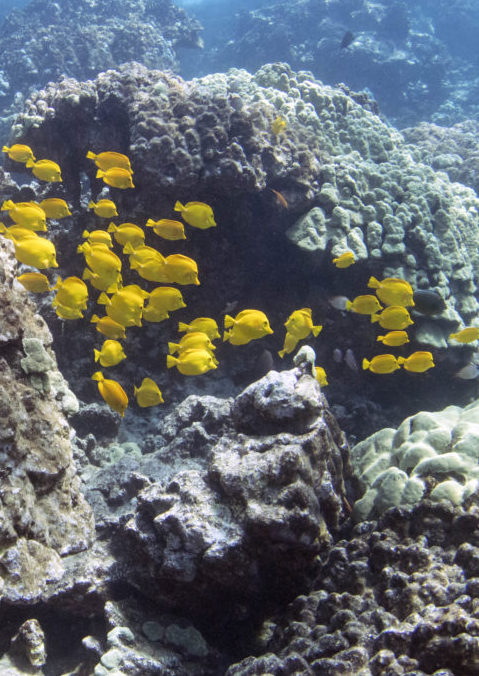
In recent decades, they have drastically declined due to pollution, overuse, and other human impacts. During the 2015 marine heatwave, Hawaiʻi lost about 30% of our live coral in just a few months. Increasing storm intensity and large swells are now compounding the damage.
Storms aren’t new. They damage reefs and they always have. But the living protection reefs provide to Hawaiʻi’s shores hinges on their natural ability to heal and grow back.
How To Recover
Unfortunately, corals are now experiencing more damage than they can recover from on their own. This is where the HERR Network brings hope.
The HERR network enables rapid response with local teams trained in damage assessment and coral reattachment techniques. This preparedness is essential because once they break off the reef, corals typically have only a handful of weeks to survive.
The HERR Network’s readiness ensures that this critical window for survival isn’t missed. Already, teams have reattached hundreds of large coral pieces, some the size of basketballs, at sites like Kewalo Basin on Oʻahu, and Kealakekua Bay and Makako Bay on Hawai‘i Island.
Hawai‘i’s mature corals have been growing for centuries.
Coral reefs are the life blood of Hawaiʻi.
It is our kuleana to care for them to help ensure they survive into the future. After all, their survival is our survival. Looking ahead, initiatives like the HERR Network will be essential to sustain and protect reefs as they face increasing threats of marine heatwaves, storms, and swells.
By investing in disaster preparedness now, our reefs and communities will have the best chance of recovery in times of crisis.
HERR Network members include the Hawaiʻi Division of Aquatic Resources, the NOAA Restoration Center, NOAA Coral Reef Conservation Program; Arizona State University, Hoʻomalu Ke Kai, Kauaʻi Ocean Awareness, Kuleana Coral Restoration, the Maui Nui Marine Resource Council, the Maui Ocean Center, Maui Ocean Center Marine Institute, The Nature Conservancy Hawaiʻi and Palmyra, and the UH Coral Resilience Lab.
 Sign up for our FREE morning newsletter and face each day more informed.
Community Voices aims to encourage broad discussion on many topics of community interest. It’s kind of a cross between Letters to the Editor and op-eds. This is your space to talk about important issues or interesting people who are making a difference in our world. Column lengths should be no more than 800 words and we need a photo of the author and a bio. We welcome video commentary and other multimedia formats. Send to news@civilbeat.org. The opinions and information expressed in Community Voices are solely those of the authors and not Civil Beat.
Read this next:

Local reporting when you need it most
Support timely, accurate, independent journalism.
Honolulu Civil Beat is a nonprofit organization, and your donation helps us produce local reporting that serves all of Hawaii.
ContributeAbout the Authors