Neal Milner: How To Interrupt Violence — And Avoid Building More Prisons
There are two traditional philosophies for reducing violent crime, and they’re both wrong.
June 26, 2025 · 7 min read


About the Author

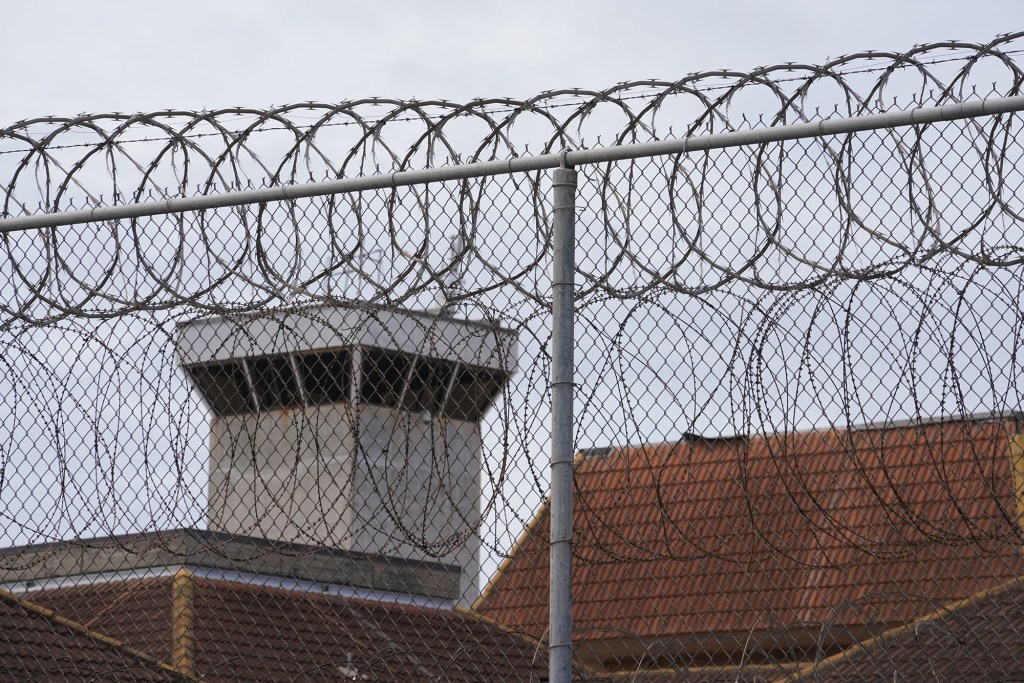
The state is about to commit $30 million to plan for a new Oʻahu prison.
It shouldn’t.

Before doling out this money, prison planners need to take a deep breath, do a reality check, and make sure they are not going down the conventional criminal justice path.
That path leads nowhere useful. Yet this same old, same old tends to become part of prison building just as it does crimefighting itself. And that’s why the planners should hold back the money for now.
Invite Jens Ludwig to come out from Chicago and talk story instead.
Ludwig is the director of the University of Chicago’s Crime Lab. His new book, “Unforgiving Places: The Unexpected Origins of American Gun Violence,” should change the way we think about violent crime.
There are two threads of conventional thinking about crime and criminals, and a good chance you share one or the other. Both are entrenched, each conflicts with the other, and both are wrong. Ludwig shows why.
One view stresses character: Criminals are inherently bad people. They need to be punished. Bad seeds. Lock ‘em up! That view is very prison-focused.
The other emphasizes the root causes of crime. To reduce crime, improve the awful social and economic environments criminals come from. As the gang members tell Officer Krupke in “West Side Story,” criminals are depraved on account of they’re deprived.
That view is less about locking people up and more about making life better so they will do better.
Representatives of these views argue with each other all the time. One reason why it has taken so long to move forward on an Oʻahu prison is that it is so hard to develop a plan acceptable to both sides.

Ludwig shows that both sides are wrong. They offer familiarly passionate responses with little effect. Prison planning typically is driven and buffeted by these conventional beliefs.
Ludwig also shows how well other ways of reducing criminal violence that are not shackled by conventional beliefs have worked.
These other methods are pragmatic, simple and straightforward. They are also counterintuitive. I’ll bet you 10 Starbucks gift cards that these remedies aren’t anywhere close to what you believe.
Ludwig shows that as high as 80% of violent crimes, including murders, are not planned. They are “expressive,” erupting from circumstances that make it hard if not impossible to step away and get a grip.
Domestic disputes, arguments in restaurants, road rage, encounters on the street, kids talking shit to one another on a playground or at a party.
Another Way To Think About It
This “moment” when things could go either way lasts about 10 minutes.
Unplanned, intense anger, assuming the worst from the other side — and bam! Another body on the street and another person in in handcuffs.
Here’s the big change in orientation: Quit focusing on the usual big issues like gun control and the root causes of crime. Certainly, in the short run and likely even in the long run, gun control isn’t going to happen. Gun violence is guns plus violence. Focus on the violence.
Making people less deprived? Good for social justice, but again, that’s so long term. Besides, studies show that getting people out of poverty, vital as it is, does not reduce the violent crime rate.
Talk about pouring cold water on passionate ideas. That’s why Ludwig’s alternatives are so important. It offers another way to think about and reduce violence.
And in quiet but effective ways they are already working in places all over the U.S. The alternatives focus on what Ludwig calls “the moment” — the 10 minutes of a sudden eruption of conflict that determines whether people are going to get hurt or die, or whether everyone will walk away.
Ludwig calls this process violence interruption.
One way is to interrupt the moment at the scene. Keeping the anger and passion from mushrooming into violence. The other is to teach people how to control the feelings that lead to acting violently.
Here’s what works and why. It’s about neighborhoods.
When it comes to violence, the nature of a neighborhood matters. Generally, rich neighborhoods are safer than poor ones, but among poor neighborhoods there is a huge difference in murder rates.
Cleaning up, beautifying and maintaining vacant lots significantly reduces crime because it brings more people onto the streets. The same is true with better streetlights.
Why the differences? Ludwig compares two adjoining South Side of Chicago neighborhoods near his home, South Shore and Grand Crossing. They match in all the usual ways you would associate with crime: low income, minority, gritty.
Grand Crossing has more violence because there is less informal social control there — fewer people with eyes on the street, fewer willing to interrupt during those 10 minutes that could go either way, and fewer willing to call the police to help out.
That’s why small, specific targeted changes matter. Cleaning up, beautifying and maintaining vacant lots significantly reduces crime because it brings more people onto the streets. The same is true with better streetlights.
Increasing the number of cops seems to matter not because they are fighting crime in the law-and-order sense but because a good police officer is a good street mediator.
Having street-smart trained violence interrupters (often ex-cons) is effective. So are courses that teach young people ways to recognize these moments early enough to take a breath and back away.
None of this offers a blueprint for building a new prison. But it counters the belief that there is a broad, definitive way to reduce violent crime. That affects how we think about prisons.
Getting It Right In Waiʻanae
Do neighborhoods in Hawaii differ the way those two Chicago neighborhoods do?
The way the media and the public react to a violent crime in Waiʻanae is a good example of conventional crime thinking at work. It’s the same thing over and over. We learn of the anger and despair. People there clamor for more cops. Politicians step in promising to do something. There’s talk both of economic deprivations and bad seeds.
“Unforgiving Places” gives me a hollow feeling about these Waiʻanae responses because the usual response to violent crime there never seem to get to the guts of the place.
What kinds of informal social control are present? Are there violence interrupters? What’s missing? Are there the same pockets of difference regarding violent crime there that are present in those two Chicago neighborhoods?

The same holds true for all neighborhoods in Hawaiʻi.
This is nowhere close to a blueprint for a new Hawaiʻi prison. It suggests, though, that feasible ways to reduce violence exist. That could reduce the prison’s size.
It certainly shows that prisons should teach violence interruption courses.
Most of all, though, considering Ludwig’s ideas is a necessary exercise in overcoming conventional thinking.
If you are totally sure that you know what to do to reduce violence, you are probably totally wrong.
Violence interrupters, whether they are on the streets trying to cool people down or in a City Council meeting arguing for more streetlights, aren’t thinking about those big ideas. They’re just doing the job.
That’s why Ludwig should come to Hawaiʻi, because it takes more than a book to convince people that what they believe about crime and punishment is wrong. He would act as an interrupter not of violence but of conventional beliefs about violence.
 Sign up for our FREE morning newsletter and face each day more informed.

Local reporting when you need it most
Support timely, accurate, independent journalism.
Honolulu Civil Beat is a nonprofit organization, and your donation helps us produce local reporting that serves all of Hawaii.
ContributeAbout the Author