The Hidden Struggle Of Getting To School in Hawai’i
Bus route disruptions can have a major impact on our children’s education.
June 2, 2025 · 3 min read

About the Author

In Hawai‘i, we often talk about how to help our keiki succeed in school — more support, better resources, stronger ties to culture and community. But one thing that doesn’t always get enough attention? Just getting to school in the first place.

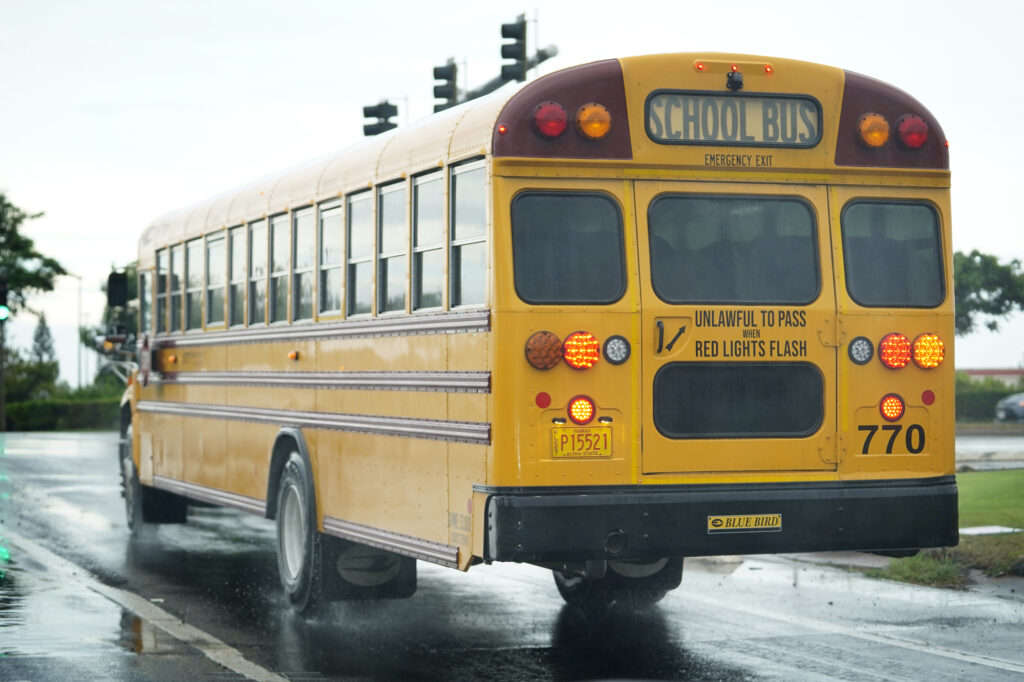
Right now, transportation is a real challenge for many families across the islands. Over the past year, there have been major disruptions to school bus routes — some delayed, some canceled and some never fully restored. For households that rely on these buses, especially those with limited access to a car or public transit, this creates a ripple effect that shows up in missed days, chronic tardiness and added stress on both students and caregivers.
Attendance may seem like a small detail, but it plays a big role in a child’s education. Missing school — even just a few days here and there — adds up fast. It impacts learning, friendships, mental health and even long-term graduation rates. And for many students across Hawai‘i, transportation is one of the biggest reasons they aren’t in class consistently.
This is especially tough for ALICE families — those who are Asset Limited, Income Constrained, yet Employed. These are the working families who are doing their best, often juggling multiple jobs or responsibilities, but still struggling to meet basic needs. When the school bus doesn’t come or isn’t available, these families often don’t have a backup plan. Public transit may not align with school schedules, and not everyone has the flexibility to take time off work to drive their child across town.
But as always, our community shows up. I’ve heard stories of neighbors coordinating rides, parents walking clusters of students to school as a group, and aunties and uncles stepping in where they can. These grassroots solutions — like carpool networks and walking to school buses — are beautiful examples of how we care for one another. Still, they shouldn’t be the only safety net our families can count on.

The good news? The Hawai‘i Department of Education is starting to plan transportation services for the upcoming school year. That gives us a window to speak up, share what’s not working, and advocate for changes that reflect the real needs of our communities. Hiring more bus drivers, increasing pay to keep routes consistent, redesigning routes with family input, and ensuring better communication when disruptions happen — these are all possible steps forward.
If we want our keiki to thrive, we need to remove barriers to attendance. Reliable school transportation isn’t a luxury — it’s a basic part of an equitable education system. Every child deserves a fair shot at learning, no matter their zip code, family income or mode of transportation.
It might sound simple, but getting to class is the foundation of everything else. When we make that first step more accessible, we create space for students to show up fully — not just physically, but emotionally and academically too.
So here’s the call to action: Let’s listen to families. Let’s support solutions that center community voices. And let’s make sure that getting to school isn’t the hardest part of the day for any child in Hawai‘i.
 Sign up for our FREE morning newsletter and face each day more informed.
Community Voices aims to encourage broad discussion on many topics of community interest. It’s kind of a cross between Letters to the Editor and op-eds. This is your space to talk about important issues or interesting people who are making a difference in our world. Column lengths should be no more than 800 words and we need a photo of the author and a bio. We welcome video commentary and other multimedia formats. Send to news@civilbeat.org. The opinions and information expressed in Community Voices are solely those of the authors and not Civil Beat.
Read this next:

Local reporting when you need it most
Support timely, accurate, independent journalism.
Honolulu Civil Beat is a nonprofit organization, and your donation helps us produce local reporting that serves all of Hawaii.
ContributeAbout the Author