Blue State Blues: One-Party Control? In Hawaiʻi It’s More Like No-Party Control
Running as a Democrat or Republican says more about political calculation than party allegiance or ideology.
July 6, 2025 · 8 min read


About the Author

Election results tell us Hawaiʻi has been a blue state since, well, before it was even a state.
The “Democratic Revolution” occurred in 1954, when labor leaders and returning Japanese-American war veterans overthrew the ruling oligarchy of Republican sugar planters. Democrats took control of Hawaiʻi’s territorial Senate and House five years prior to statehood.
The House has been blue from the start, and Democrats have controlled the Senate since 1963.
A rare Republican occasionally breaks through to hold statewide office, although it hasn’t happened since Gov. Linda Lingle’s second term ended 15 years ago. As recently as 2017, the balance of power in the Senate was 25-0 Dems.
As the decades of Democratic control have unfolded, Hawaiʻi has not been immune to the maladies that typically accrue in the absence of a viable opposition party: plummeting voter turnout, corruption and political malaise.
The Hawaiʻi Republican Party faded from relevance a long time ago. But so, one could argue, did the Democrats’ state party organization.

Sure, there are still “Ds” on the ballot next to the names of almost all the winning candidates. But that says more about political calculation than party allegiance or political beliefs.
In most legislative districts, candidates identify as Democrats to increase their chances of winning, be they progressive, moderate or conservative. Others may choose to run as Republicans to get an easier ride past the primary and onto the general election ballot, again regardless of political persuasion.
Nobody seems to pay any attention to the platform of the state party they are hitching themselves to.
Considering that the majority of Democratic legislators function as pawns, can you really say that the Democratic Party is in charge?
Even for the winners, party labels matter little during legislators’ first few years at the State Capitol. Newcomer Democrats are treated the same as all the Republicans — they are there to be seen and not heard.
So what does it mean to be a Democrat or a Republican in Hawaiʻi?
Not much.
Considering the partisanship gripping national politics, the blurring of party lines could be seen as one more blessed advantage of living in the islands. But not if it robs us of our political passion or hope for change.
Because the fact is that evolving into a no-party state has left all the political power in the hands of a few entitled legislative leaders who wield it with impunity.

The Parties Aren’t Where It’s At
It’s not that elected officials thumb their noses at their state party organizations. They just pretty much ignore them.
Party activists tend to occupy the fringes of the political spectrum, thus coming up with platforms and resolutions that their candidates may not even read, much less run on. The Democratic Party version calls for reforms such as comprehensive public campaign finance that the Legislature keeps rejecting. The Republican platform calls for withdrawing from the United Nations and a return to voting at the polls instead of by mail.
While the GOP state party works hard on the challenging task of recruiting candidates to run as Republicans in Hawaiʻi, new Democratic candidates seem more likely to be recruited by current officeholders or the special interests that support them, such as the carpenters union.
The parties offer training to help candidates navigate the requirements of the Campaign Spending Commission, but they don’t have much money so they can’t command attention with the promise of significant contributions.

The state Democratic Party’s Central Committee tried to throw its weight around in 2012 when it threatened to sue to prevent Laura Thielen from running for the state Senate as a Democrat. The committee ultimately backed down and looked kind of silly when Thielen won the District 25 seat and turned out to be more progressive than plenty of her Democratic colleagues.
The whole affair served to solidify the notion that in Hawaiʻi, there’s really no stopping anybody from running for the Legislature or statewide office as a Democrat no matter what the state party says.
There is one reason to try to stay in the good graces of the Democratic and Republican central committees: When a state or federal officeholder leaves office early, the affected committee picks three people from which the governor can then choose his or her replacement. Most recently this resulted in the selection of Republican Joe Gedeon to succeed the late Rep. Gene Ward in District 18.
Beyond that, it’s all about keeping the approval of Senate and House leaders if you want to advance yourself — and your issues — in the Hawaiʻi Legislature.
Only Democrats need apply, it’s true. But considering that the majority of Democratic legislators function as pawns, can you really say that the Democratic Party is in charge?
The true power is much more closely guarded than that.

Can Independence Day Ever Come To Hawaiʻi?
“Let The Sunshine In.”
Civil Beat has been flying that banner for two and a half years now in response to a series of public bribery scandals and a resulting push for reform of state and local government.
You’ll find 463 articles in our “Let The Sunshine In” archives, so there’s no need here for a detailed recounting of how those reform proposals have fared. The one-word answer: poorly.
The Legislature still operates under a cloak of darkness, with leaders squashing reform proposals at the 11th hour of each ridiculously rushed session even after versions of them have passed both chambers, sometimes unanimously.
Nothing illustrates this cynical pattern better than the fate last session of a measure whose sponsors had the audacity to actually target the pay-to-play culture in state government. It was powered by irrefutable evidence from a Civil Beat/New York Times report that donations from people tied to state contractors and grantees accounted for nearly 20% of all campaign contributions since 2006.
Different versions of House Bill 371 unanimously passed both chambers, but it was killed by legislative leaders who offered no public explanation during the conference committee period supposedly intended to hash out differences in the Senate and House versions.
Clearly there is nothing even as democratic as one-party control driving the Legislature these days. It’s all about raw, special interest-fueled power exercised by the privileged few behind closed doors.
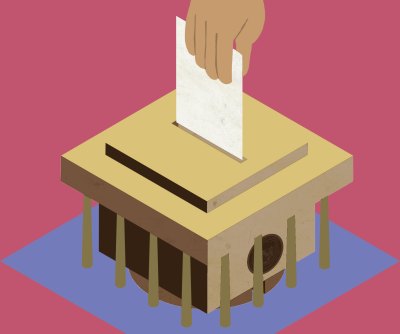
This weekend we’re honoring our nation’s revolutionary origin and the ability of its people to set a new course for their leaders. Thankfully, we now have the means of accomplishing this peacefully. It’s called voting.
Every state House seat and about half the Senate seats will be on the ballot next year. We’ll be asking all candidates what they’ll do to reform the Legislature, and we’ll be asking incumbents what they’ve already done.
The top-down, secretive style of leadership at the Legislature will only last until a majority of lawmakers are willing to change it by electing new leaders and adopting new rules. Some reformers have already been elected, but voters must provide reinforcements.
Expanded public financing of campaigns would also help in the quest to elect new blood and overcome the advantage of incumbency. That happens to be another proposal that was passed by both chambers but derailed by the leadership in April.
And for lasting change, we should reform the election system itself to recognize political reality in Hawaiʻi. In the absence of two viable political parties, we need primaries in which the top two vote-getters advance to the general election regardless of party affiliation. Then the races of consequence will occur in the November general election when more people vote than in the August primary.
These are just some of the ways we can change the political calculus so that oppressive leadership inspires people to vote instead of convincing them to give up.
 Sign up for our FREE morning newsletter and face each day more informed.
Read this next:

Local reporting when you need it most
Support timely, accurate, independent journalism.
Honolulu Civil Beat is a nonprofit organization, and your donation helps us produce local reporting that serves all of Hawaii.
ContributeAbout the Author