Neal Milner: Sometimes, Preserving A Neighborhood Is Exactly The Wrong Call
There are good reasons to oppose a North Shore tramway, but not all projects deserve automatic rejection.
July 17, 2025 · 6 min read

About the Author

“We don’t want it here. It doesn’t belong in our neighborhood.”
Neighborhood preservation claims are overhyped and overused. It’s as if preservation is automatically more important than anything else. It’s not.

More often than not, the claim is inaccurate, simplistic and selfish. Claiming a threat does not make it so.
I’ll show this by looking at the story of two aerial trams, one that’s proposed for the North Shore and is getting heavy resistance, as it should be because this is what true fragility and encroachment look like.
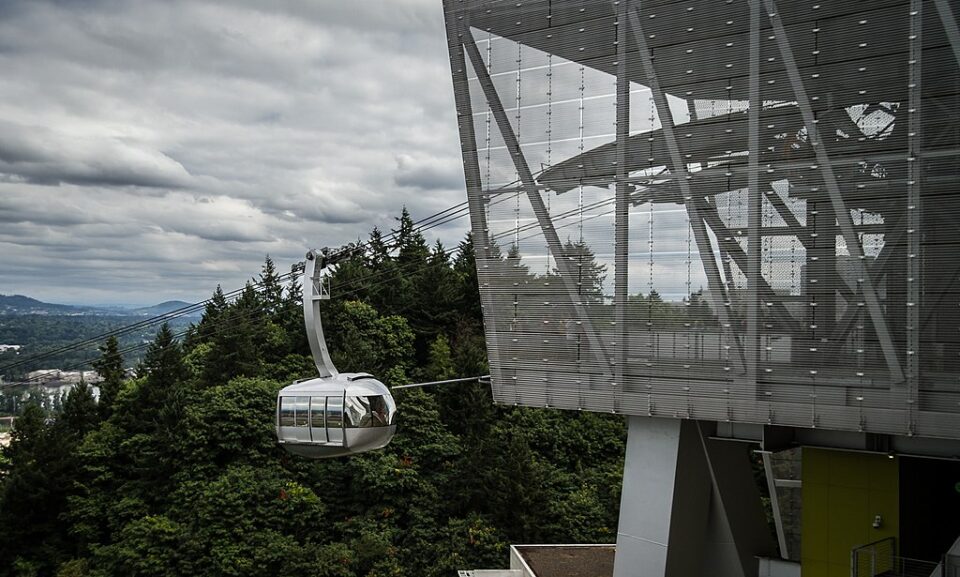
The second tram now operates in Portland, Oregon, which shows how different things are when preservation is not an issue.
Kalama Valley falls in between, where reality is stretched by residents to make their community seem threatened by change.
Riding a sky tram feels like floating. Far above the ground you get a unique perspective — a shortcut, entry and eye candy all at the same time. Free and unencumbered space open to anyone.
That’s liberating. Unless all this freedom and convenience is in a place the tram has no business being.
In that case, the tramway is an incursion and invasion, breaking barriers that shouldn’t be broken and insidiously trampling on a way of life.
Like the proposal for the North Shore.
‘We Don’t Need Any More Tourist Attractions’
Three weeks ago, there was a public hearing about a developer’s plans to build an aerial tram along the slopes of Mount Kaʻala from Waialua to Haleʻiwa on land designated as agricultural.
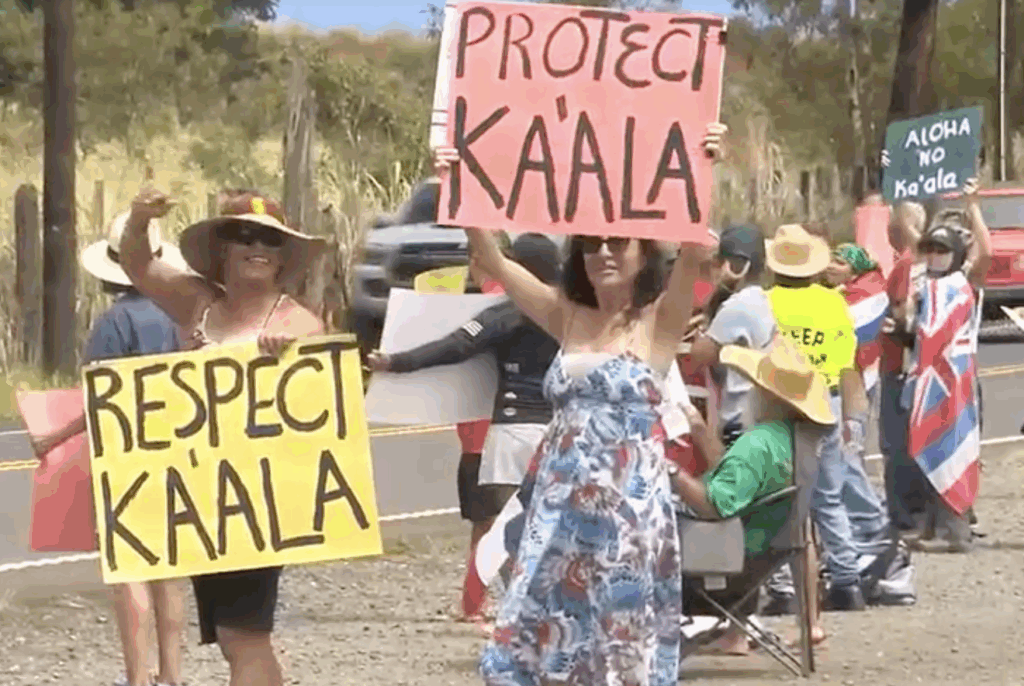
The project has faced strong community resistance that is likely to get even stronger. Traffic is the opponents’ most straightforward objection.
“We cannot handle that much traffic … we’re already overrun as it is,” Kathleen Pahinui, the North Shore’s neighborhood board chair, told Hawaiʻi News Now.
As former state senator Gil Riviere of Waialua put it, “putting a tourist attraction on this bend in the road, on this steep, dangerous road, is a bad idea.”
It’s not just ordinary traffic. It’s tourist traffic, an even more undesirable influx for a place overrun already. The heart of the objections, though, is about tradition. Mount Kaʻala is sacred space that the tram would violate.
“It is our kuleana to mālama that space,” said Melvin “Moki” Labra. “We don’t need any more tourist attractions.”
The resistance evokes memories of what the North Shore used to be, more of a small town surrounded by agriculture. The land the tram would be on may look vacant, but it is filled with aspirations and memories of what the area should be again.
Not a tourist attraction artificially dressed up as agriculture — a theme park really. Rather, a site of real crops and authentic jobs.
Doing A Tram Right
The Oregon Health & Science University had a problem. Its campus sits on a steep and awkward hill. Portland’s largest employer had nowhere to expand its facilities and parking.
The south waterfront land below afforded a tremendous opportunity for the medical center to develop office and research space.
There is nothing sacred here, no struggle to keep the land as it was before. The south waterfront land had been industrially polluted by companies that left and were not interested in coming back.
The waterfront was about conversion, not preservation; about erasing memories, not maintaining them.
Changes are possible, particularly when claims of tradition and preservation take a back seat.
The waterfront tram is part of a growing, diverse gathering place. It’s a few steps from a new bridge built exclusively for buses, streetcars and pedestrians.
The person who led the early neighborhood opposition to the tram was not interested in gathering places. His neighborhood saw the tram as an incursion.
He’s changed his mind. The benefit, he now says, is “the mix of people that go up and down from the old neighborhood to the new neighborhood, that’s good to see. It’s livelier in that way because you’ve got that connection.”
Portland’s success doesn’t make it better than Honolulu. So many things worked in its favor that you could say the city got lucky and that the tram process was a one-off.
But it’s a reminder that under the right circumstances such changes are possible, particularly when claims of tradition and preservation take a back seat.
When Opposition Is Automatic
Hawaiʻi’s preservation claims are hardly ever as strong as the North Shore’s tram opposition.
Here the common reaction to projects like new housing is, “How can we keep this from happening?” Preservation above all else. The best way to stop a housing development is to claim, with much emotion, that it will change the fabric of your neighborhood.
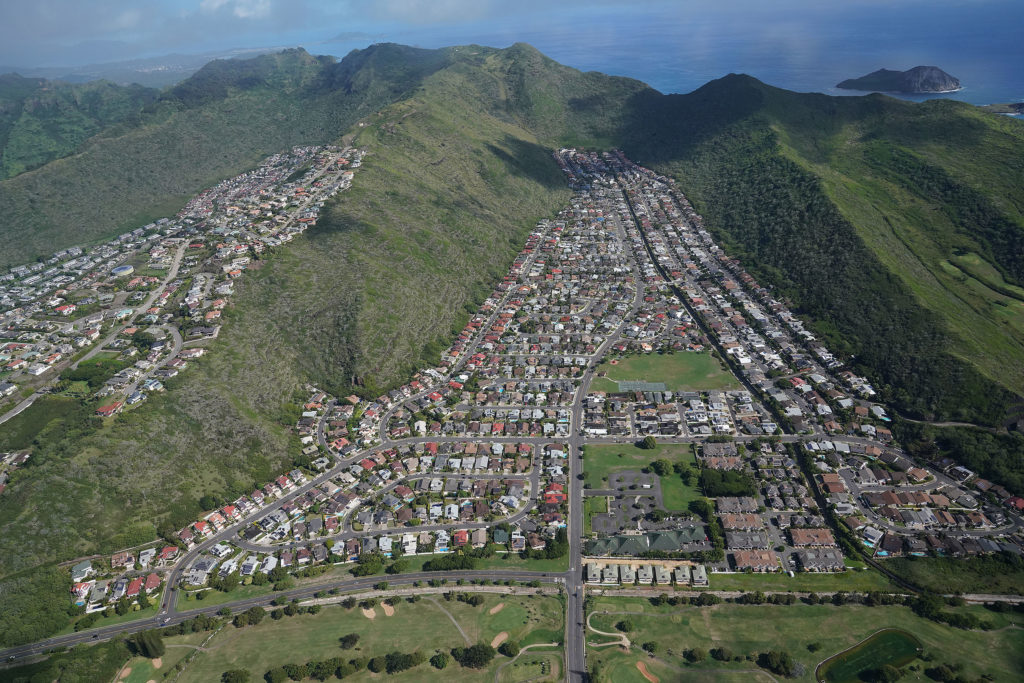
A few years ago, there was a public hearing about a proposal to build a seniors living place on a vacant lot in Kalama Valley.
People at the meeting were suspicious from the start. They complained about the possible traffic and noise, as if Hawaiʻi Kai Drive was a twisty, dangerous North Shore road lined with roadside traffic death memorials rather than a four-lane straight shot.
It shouldn’t surprise you that the Kalama project disappeared without a trace.
People at the meeting were concerned about the noise, particularly from emergency vehicles with their sirens.
One woman who seemingly wanted to comfort her neighbors volunteered: sure there would be first responders, but their siren would probably only be on while going to the facility, because there was a good chance the patient would be dead anyway.
Kalama as a fragile, threatened community. Old folks as impingements — intruders upsetting neighborhood preservation.
It shouldn’t surprise you that the Kalama project disappeared without a trace.
For a while now, there has been a plan to build a footbridge over the Ala Wai Canal from Waikīkī to McCully. There has been a lot of opposition regarding the design and cost. Point taken.
The most troubling bridge opposition, though, comes from those who say they don’t want those people over there to come over here. The canal should act as a moat rather than a connector.
Just once I would like to hear of a Hawaiʻi project greeted with a consensus of optimism and excitement. Portland was lucky because the pieces so easily fell into place.
Here, we can’t rely on all that. We have to work at it, starting with critically examining any preservation claims rather than accepting them as automatic deal-breakers.
When was the last time you heard someone here say we need more gathering places for diverse people to mingle?
 Sign up for our FREE morning newsletter and face each day more informed.
Read this next:

Local reporting when you need it most
Support timely, accurate, independent journalism.
Honolulu Civil Beat is a nonprofit organization, and your donation helps us produce local reporting that serves all of Hawaii.
ContributeAbout the Author