The Sunshine Blog: Police Pizzazz? Thank The Mayor
Short takes, outtakes, our takes and other stuff you should know about public information, government accountability and ethical leadership in Hawai‘i.
July 6, 2025 · 9 min read


About the Author

Internal affairs: Say what you will about Mayor Rick Blangiardi stepping into the middle of the Honolulu Police Commission‘s business but from where The Blog sits it’s clear he’s ignited some sort of fire under the six commissioners (all of whom he appointed, by the way). And that is a good thing because the commissioners have a big job ahead: picking a new top cop to lead one of the largest police agencies in the country.
The Blog watched last week’s meeting with interest and has a number of things to report. First, a surprise! Longtime commissioner Carrie Okinaga is no longer on the panel (she’s already been removed from the commission’s website) having abruptly submitted her resignation months before her term would have expired on Dec. 31. In a letter to Blangiardi she said she wanted to give him the chance to appoint a new commissioner who will be fully engaged in the police chief hiring process and then be around “to support the next chief.”
That makes two openings on the seven-member panel that Blangiardi needs to fill, and pretty quickly too if they are going to have any say in who gets the chief’s job. Commissioner Doug Chin’s term ended in 2024 but he’s sticking around until a replacement is found. The mayor’s latest attempt to get a new commissioner on board didn’t go so well.
No word yet on when new nominees might surface. They still have to get the official green light from the City Council and The Blog sees nothing about it on this week’s meeting agenda.

Still, there may be no rush needed. The Police Commission spent much of Wednesday’s session talking to officials with the city’s human resources department and procurement office to try to get a better idea of how they want to move forward with the selection process. Should they try to do it on their own (The Blog sensed a big reluctance on that one) or turn it over to a headhunter who specializes in law enforcement hires?
The commission went into executive session to talk more about that dilemma so hopefully we’ll hear more about it at the next meeting in a couple of weeks. And then settle in for what last time around was a very lengthy process, like nearly a year.
Meanwhile, soon-to-be interim chief Rade Vanic has wasted no time reshuffling the top command staff and presented his new organizational chart to the commission even while Chief Joe Logan sat silently at the table. Logan is not officially leaving for another few weeks but it’s obvious Vanic has taken charge, telling the commission he has been visiting the various HPD districts to let them know things are finally going to get done. Ouch.
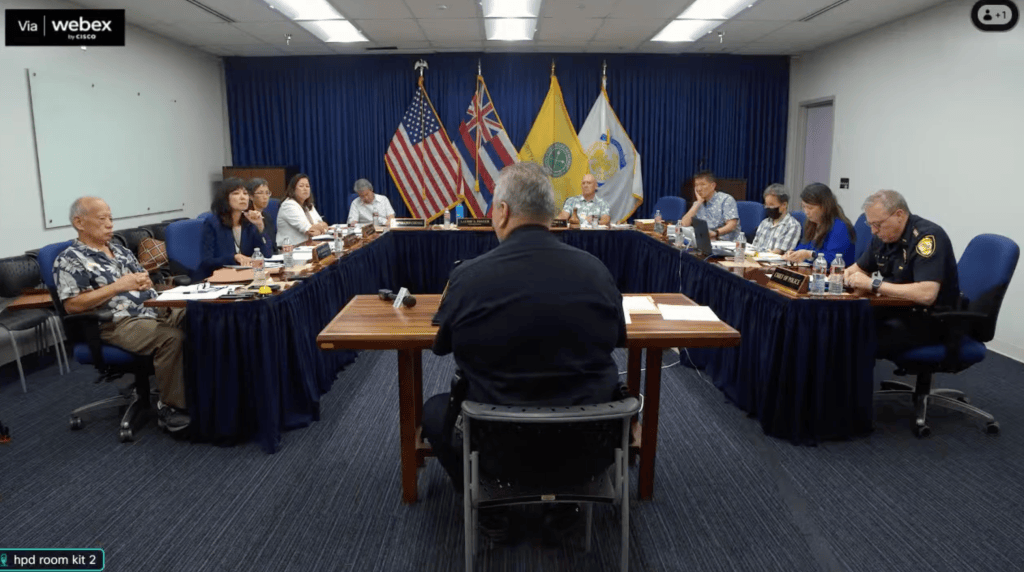
“Is morale great? I’m going to say no,” Vanic told the panel. “Is morale bad? I’m going to say definitely not. Can we do better? Of course.”
Vanic noted that the reassignments of deputy and assistant chiefs were to provide consistency and new energy that the rank-and-file could count on. But The Blog has to wonder how consistent things will be if the commission picks a new chief in a few months who isn’t Vanic.
And, in another welcome sign of Blangiardi’s fingers in the HPD pie, the department has finally beefed up its communications team with a much-needed professionalism that is already showing. Reporters are getting their calls returned quickly and the department offered a media briefing Saturday on the very recent spate of shootings on the Westside.
Claudette Springer, formerly of the state Department of Health, started Tuesday as the new director of communications. She made a surprise appearance at the commission’s meeting Wednesday to introduce herself. And although she kept her remarks casual she mentioned she’d been in public relations for many years and that her father retired from HPD as a captain. “Crisis communication is something I’ve been trained in,” she noted.
The plan is for Springer to lead a five-person team, most of whom are in place, which will be focusing in large part on social media posting.
Vanic also announced to the commissioners that the department has finally settled on a uniformed spokesperson to be essentially the face of the department. He is Maj. Paul Okamoto, who you can see in this HPD Facebook video explaining how the new fireworks laws change things.
Okamoto has been with HPD more than 25 years, Vanic said, and he’s also going to continue his role as the department’s legislative liaison.
The Blog hears Springer and her team, although reporting on the new organizational chart to a deputy chief, will be working closely with the mayor’s crack comms staff who have already had a big hand in bringing about the much-improved media and community relations efforts at the police department.
Final cut: Gov. Josh Green had until Wednesday to announce what bills he would veto out of the more than 300 passed in the 2025 Legislature. He ended up making his decisions early, announcing on the eve of the long July 4 weekend that he would veto just eight measures.
They include one regulating the use of electric bicycles and another ending tax credits for the film and solar industries. But Green ended up approving a bill that lets law enforcement seize property in investigations so long as the property owner has been charged with a crime. That still didn’t go as far as his attorney general and other law enforcement officials wanted, which was to veto the bill and leave in place the current situation that allows them to seize property before someone’s even been charged, let alone convicted.
The governor also signed off on a measure that would reduce pension benefits for future Hawaiʻi judges. Senate Bill 935 was not on his original intent-to-veto list in June, but he added it later. In a press release Thursday Green said he’d had “thoughtful discussion” on the bill with the Legislature, which supported it (particularly Senate Ways and Means Chair Donovan Dela Cruz who made quite the argument for leaving the bill alone in his weekly newsletter), and Hawaiʻi Supreme Court Chief Justice Mark Recktenwald, who did not.
Following Green’s veto announcement, House Speaker Nadine Nakamura and Senate President Ron Kouchi said there will be no veto-override session this week.
Life of the party: Third parties in Hawaiʻi’s political universe have a rocky road to get members elected, let alone on the ballot. Unlike the Dems and GOP, they have to petition the Hawaiʻi Office of Elections every 10 years to appear on ballots — and only so long as they continue to regularly field candidates.
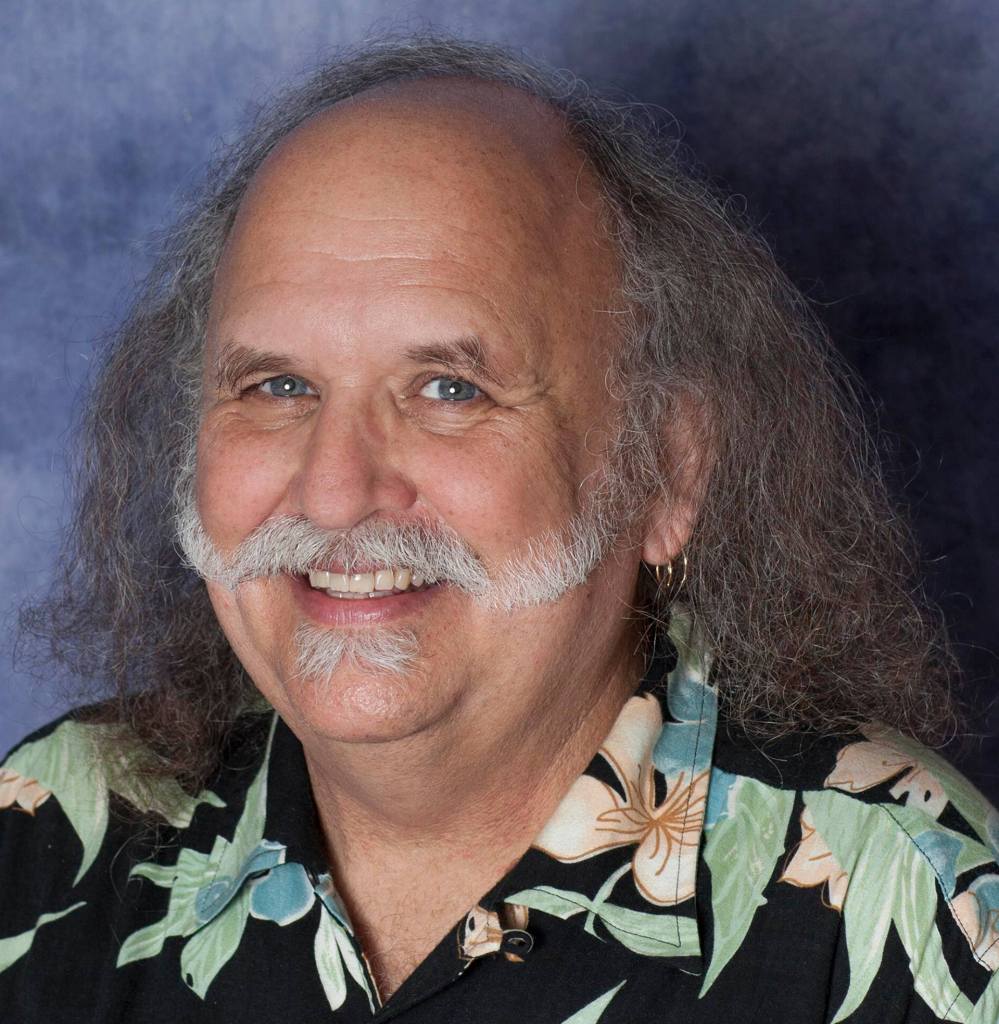
That includes the Green Party of Hawaiʻi, which is collecting signatures so that it can field candidates for the 2026 ballot. That was a priority for the Greens last month at a statewide convention held over Zoom. It has until Feb. 19 to collect 861 signatures from registered voters, and Green delegate Nick Nikhilananda says they are halfway there.
(The figure is based on one-tenth of 1% of total registered voters in the 2024 general election, as the state requires.)
Nikhilananda, who lives on Maui, says the Greens first appeared on the Hawaiʻi’s ballot in 1992 and have been there ever since. The party platform is focused on ecology, grassroots democracy, peace and social-economic justice. Progressive policies include public financing of elections, cannabis legalization, tax reform, “truly affordable housing plus many others,” all of which have been blocked at the Legislature in recent years.
People are hungry for change, argued Nikhilananda, pointing to New York City where a socialist won the Democratic mayoral primary last month. That was made possible through another Green Party goal: ranked choice voting — something that Hawaiʻi enacted in 2022 but only for special federal and county council elections.
A spokesman for the Office of Elections, meantime, tells The Blog that two other third parties, the Aloha Aina Party of Hawaii and the Ohana Unity Party, are seeking to gain ballot access, too. The Libertarian Party of Hawaiʻi is good to go until the 2030 election, when it will have to re-petition for ballot access.
In praise of immigration: Honolulu City Council member Tyler Dos Santos-Tam traveled to São Miguel, Azores, Portugal, late last month to attend the Sister Cities Summit. The trip was paid for by
the Luso-American Development Foundation, which, according to a city resolution on the trip, promotes the development of Portugal, the Portuguese and Portuguese-descendant communities through “close cooperation” with the U.S.

The gift of travel and expenses, valued at $3,310, is on the agenda for City Council approval this week (even though he’s already done it). The first Portuguese immigrants to the islands arrived in 1878 — 2028 will mark the 150th anniversary — with the first ship arriving from the Azores in 1880.
“Altogether, there are almost 16,000 Portuguese immigrants to Hawaiʻi, of whom slightly more than half were from the Azores,” according to the resolution.
Dos Santos-Tam shared with The Blog a memo about his trip. Other attendees at the three-day summit included Kauaʻi Mayor Derek Kawakami (São Miguel is a sister city to the County of Kauaʻi) and Marcelo Rebelo de Sousa, the president of Portugal.
And speaking of travel and gifts, the City Council is also expected to accept a $3,100 gift of travel, lodging, registration fees and related expenses for Councilwomen Andria Tupola and Esther Kiaʻāina to attend the 2025 AAPI LEAD Summit in Atlanta in late July.
AAPI LEAD promotes the participation of Asian Americans and Pacific Islanders in the democratic process. (LEAD stands for Leadership, Education, Advocacy and Development.) The summit, according to the reso, will provide leadership training, mentorship, best practice sharing “and unparalleled networking opportunities.”
 Sign up for our FREE morning newsletter and face each day more informed.

Local reporting when you need it most
Support timely, accurate, independent journalism.
Honolulu Civil Beat is a nonprofit organization, and your donation helps us produce local reporting that serves all of Hawaii.
ContributeAbout the Author