Will Bailey: It Was Never About The Fence
In celebration of Independence Day, a reflection on our country’s foundational document and what it should mean to us today.
July 6, 2025 · 5 min read

About the Author

There’s a story they used to tell out in the country — about an old man and a fence.
The man had built it in his youth, straight as a rifle shot, to mark the edge of his land. Over time, a river that once lapped against it began to shift. Slowly at first, then all at once. Floods, seasons, decades. The fence stayed put. The river wandered.
When the man got old, his children and grandchildren asked if they should move the fence to match the new flow. He said no.
“Leave it. It’s always been there. It’s how we know what’s ours.”
So they did. Long after the man passed, the fence still stood — sun-bleached, leaning, a line no longer dividing anything at all. The land had changed, but the marker hadn’t.
And in honoring its memory, they forgot its purpose.
That’s how some of us treat the Constitution.
Not as a living promise, but as a fixed object. A relic. A symbol we point to, even when it no longer touches the problems we face. We say, “It’s always been this way,” even when the country has drifted — when the river of life has carved new banks entirely.
But the truth is, the Constitution was never meant to be a perfect fence.
It was meant to move with us.
Founders In The Flesh
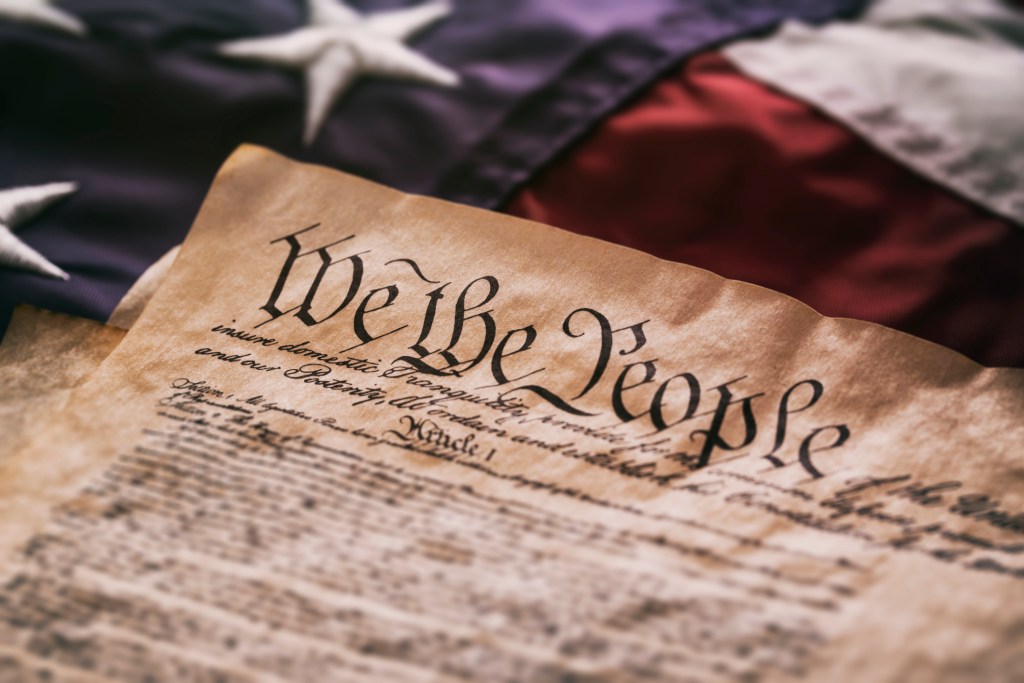
It’s easy to think of the Constitution as scripture. Neat lettering. Parchment. Phrases like “We the People” that sound eternal.
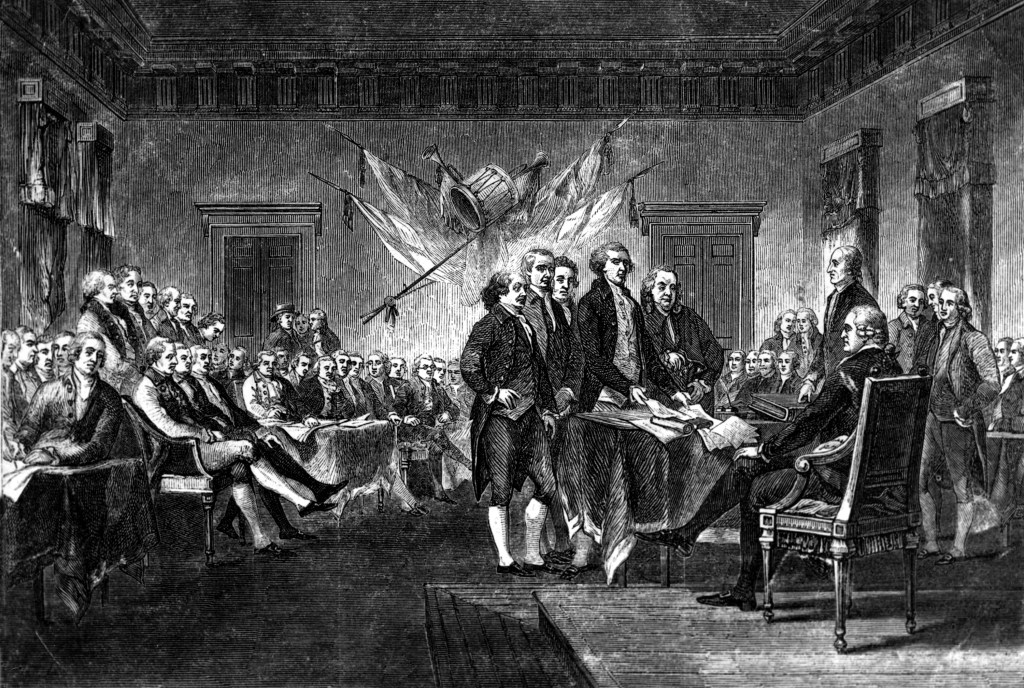
But the men who wrote it were human — brilliant, contradictory, improvising.
James Madison, often called the “Father of the Constitution,” feared giving too much power to the public. But he also championed the Bill of Rights, which protects individual freedoms.
Alexander Hamilton wanted a strong federal government. Thomas Jefferson wanted states’ rights. Benjamin Franklin tried to hold the room together with humor and compromise.
They didn’t agree on everything. They didn’t trust each other fully. And they definitely didn’t expect the document to last unchanged for over two centuries.
It was built to be amended. It was born out of debate. It was designed to grow with the country.
So when people say, “We have to stick to the founders’ original intent,” maybe the most honest answer is: which one?
Because they didn’t leave us a finished product. They left us a framework.
That’s not betrayal. That’s the assignment.
The Danger Of Freezing The Story
Somewhere along the line, the Constitution stopped being a guide and started being a shrine.
We see this in legal decisions that ignore lived reality. In political arguments that cherry pick one sentence and forget the rest.
In 2022, the Dobbs decision overturned Roe v. Wade by appealing to “history and tradition” — not to public health, medical judgment or the rights of women in the present. That’s not constitutional fidelity. That’s historical cosplay.
Literalism turns a living document into a dead one. It trades wisdom for rigidity. It forgets that even the founders were learning as they went.
We use their words to stop new ones from being written.
It’s not that the document is broken. It’s that we’ve forgotten how to read it with the heart it was written with.
The Folk Heroes Who Keep It Alive
If you want to know what keeps a republic going, don’t look at marble monuments or gilded courtrooms.
Look at the poll worker who shows up every election.
Look at the teacher helping students decode rights and responsibilities.
Look at the journalist refusing to look away.
Look at the neighbor who brings a folding chair to a town hall and actually listens.
Look at the court interpreter who helps someone find their voice.
Look at the community organizer walking door to door, still hopeful.
They’re not quoted in textbooks. But they’re the ones making the Constitution real — page by page, step by step.
These aren’t grand gestures.
They’re small, steady ones. And that’s what democracy actually is.
The River Was Always The Point
The old man’s fence stayed in place. The river didn’t.
We don’t honor the Constitution by trapping it in the past.
We honor it by asking, again and again, what it was meant to protect.
We update it not to erase its legacy, but to carry it forward.
We amend it not to rebel, but to belong.
The river moves. That’s the nature of it.
And if we’re brave enough to move with it — not away from the Constitution, but deeper into its purpose — then maybe we’re not just preserving democracy.
Maybe we’re finally living it.
Read the U.S. Constitution:
 Sign up for our FREE morning newsletter and face each day more informed.
Read this next:

Local reporting when you need it most
Support timely, accurate, independent journalism.
Honolulu Civil Beat is a nonprofit organization, and your donation helps us produce local reporting that serves all of Hawaii.
ContributeAbout the Author