A Targeted Campaign To Register More Voters Comes To Hawaiʻi
The CEO of a national nonprofit says he’s hoping to get more Hawaiʻi voices heard in elections, especially people of color, unmarried women and young adults.
August 31, 2025 · 12 min read

About the Author

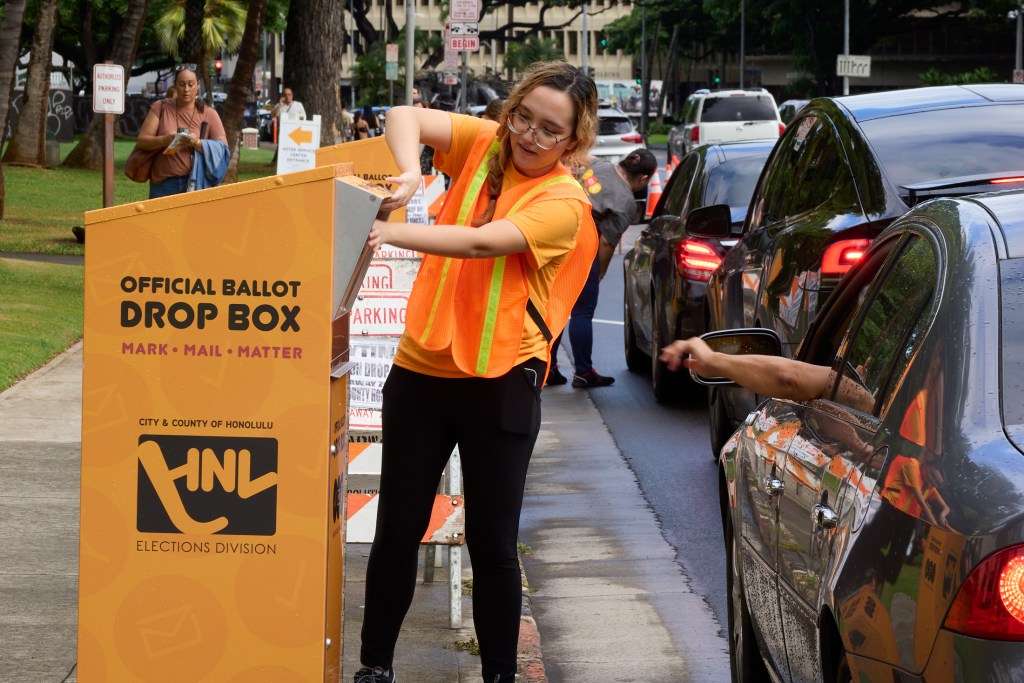
Mail balloting and convenient voter registration are under fire these days, both nationally and in the islands.
President Donald Trump recently announced a campaign to get everyone back to voting at the polls on Election Day. Heʻs also pushing to require documentary proof of U.S. citizenship (such as a birth certificate or passport) when registering to vote in federal elections.
A subcommittee of the Hawaiʻi Elections Commission is calling for a return to voting at the polls — on paper ballots that would be hand-counted.
So you could say the Voter Participation Center is swimming upstream.

“We’re living in the time when a lot of folks are looking for any reason under the sun to keep people from voting,” says Tom Lopach, CEO of the national nonprofit organization that reaches out to certain people who are eligible but unregistered to encourage them to become voters.
The center has been doing this work since 2003, but has just entered the Hawaiʻi electoral pool for the first time as part of an effort to go national with its voter registration campaign.
About 17,000 Hawaiʻi residents received postcards in the last few days featuring a QR code they can click on to become registered voters.
The Voter Participation Center targets underrepresented segments of the electorate, Lopach said, including young adults, people of color and unmarried women who are not yet registered.
Nationally, it hopes to reach 4.7 million people ahead of the 2026 election. That sounds ambitious, but this is an organization that brought in almost $5 million in contributions during the last election cycle.
In an interview that was edited for length and clarity, Civil Beat talked to Lopach about the campaign and its expansion to Hawaiʻi.

What is your organizationʻs motivation, nationally and in Hawaiʻi?
We are helping to register to vote and turn out to vote people from underrepresented communities, and when we say that we’re talking about people of color, young people and unmarried women.
In Hawaiʻi, specifically, when we look at these communities that we provide services to, 36% are unregistered, versus 14% of people outside of the communities we serve.
Nationally, 72 million Americans are eligible to vote, but are unregistered. And of that 72 million, 51 million are people of color, young people or unmarried women, or 71%, so the reason we focus our work on these three communities is because we know they are deeply underrepresented in the electorate.
This is the first time that your organization has ventured into Hawaiʻi. Why now?
We’ve been doing this work for 22 years, and this is the first time we’re doing it nationally. The reason we’re doing it now is because it’s pretty clear that there are many people whose voices aren’t heard in elections, and our government operates better at every level when all of the voices are heard.
So we’re sending 17,000 postcards to people in Hawaiʻi who are eligible to vote but not yet registered to vote.
Those postcards will have a QR code on them, and when people zap that QR code, it takes them directly to the state’s Office of Elections, where they can register to vote online.
When were the cards sent?
I believe they should have reached people’s homes Wednesday or Thursday.
How do you identify who gets these postcards?
There is no list of unregistered voters in the United States, so we have to go out to commercial data vendors and get lists of people who live at different addresses. Once we have those lists, we remove people who are already registered to vote. And then we look at the remaining addresses and the individuals, and we determine, are they living in geographies or neighborhoods that are high for people of color or a high propensity for young people to live there? And we will send them postcards.
Another thing that we do is get data of people who just turned 18, and send them postcards that say, “Happy Birthday, you just turned 18, now you are eligible to vote.”
And the third program we run is for movers. As you know, people need to be registered to vote at their current address, and we’re living in the time when a lot of folks are looking for any reason under the sun to keep people from voting. So we want to make sure that people who just moved have the opportunity to register at their new address. So we go out and get the national change of address database from the U.S. Postal Service and send folks who just moved QR codes to register at the new address.
What’s interesting is, when you look at the data on people who are moving, the communities we serve tend to move twice as often as folks outside of the populations we serve. So it really is incumbent on us to help them register.
With people of color in particular, 11% of people of color are not found in commercial data sets. So if we go out to a commercial data vendor, we won’t necessarily find everyone we’re looking for. So we also ask simply for addresses. Give us all of the addresses you have in Hawaiʻi, and then we remove people that are already registered to vote. And then we will look at the remainder of addresses, and for those remaining addresses, if some are in neighborhoods with high people of color density, we’ll send a postcard.
What about for unmarried women?
Unmarried women, we will use commercial data to find addresses and named individuals that look like there is a woman living at a residence without a spouse.
And unmarried women are less likely to be registered to vote than married women?
That is true, and it’s an interesting thing. The way our organization started after the 2000 election, our founder (Page Gardner) had done a lot of work with data, and she noticed at that point that married women registered to vote and turned out to vote at a higher rate than unmarried women.
So in 2003 we were founded as Women’s Voices, Women Vote, and at that time we were only focused on unmarried women.
I just carry an archetype in my head of a single mom, two kids, working one or two jobs, and when she gets home, she’s putting food on the table, she’s helping the kids with their homework, and she’s thinking about maybe watching an hour of mindless television. What she isn’t thinking about is, am I registered to vote?”
As time went on, it became clear that people of color and young people were also underrepresented in the electorate, and so we expanded our mission and changed the name of the organization to focus on more people than just unmarried women.
With unmarried women, I just carry an archetype in my head of a single mom, two kids, working one or two jobs, and when she gets home, she’s putting food on the table, she’s helping the kids with their homework, and she’s thinking about maybe watching an hour of mindless television. What she isn’t thinking about is, am I registered to vote? We just moved to this apartment six months ago, am I registered at this address? When is the primary election? When is the general election? Can I vote by mail?
None of these are things that she has the bandwidth to think about when all she’s trying to do is feed, clothe and house her kids. And so if we can send messages either to her smartphone or to her mailbox that help her to register to vote and understand the process of voting, we can really make a difference.
Your organization identifies itself as nonpartisan, but clearly you are going after a target audience that would tend to lean progressive. So what makes you nonpartisan?
We don’t use party ID in anything that we do, and it’s interesting you asked that question. After the 2024 election, one thing that has become increasingly clear is some of the old assumptions about who votes for whom are less operable.
I always like to say that elections should be a contest of ideas, not a contest about who gets to vote, and what we do is try to make sure everyone who’s eligible from underrepresented communities has a chance to be part of our election.
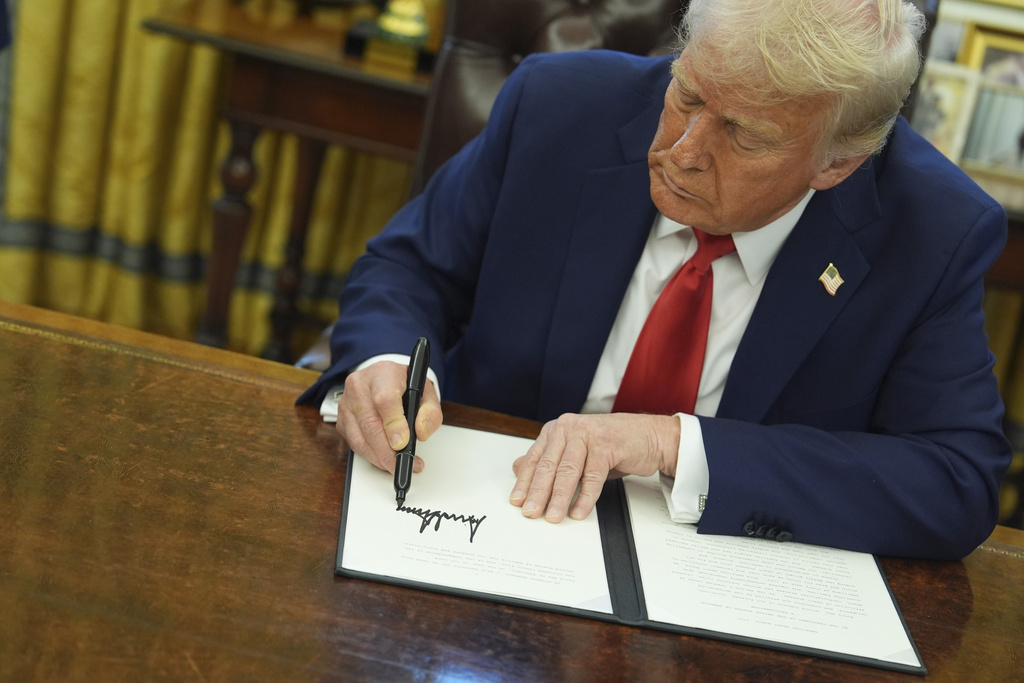
President Trump is calling for an end to mail balloting and a return to voting at the polls. How do you feel about that?
I think that is limiting to too many eligible Americans. There is no evidence of fraud in mail balloting, and when we think about registering to vote and turning out to vote, we need to think about all Americans and their situations.
Some folks live with disabilities that make it harder to leave the house and mail-in balloting is pretty important to them. Lots of folks are in the armed services and have been voting by mail for decades. For over a century, that’s how members of the armed services have voted. Still others work jobs that have hours without flexibility, and so having the ability to vote by mail can enable you to still participate in the election in your society while making it to work so you can pay your rent and buy your groceries.
We ought to be looking for ways to make voting more accessible to eligible Americans, and not looking at ways to limit voting to fewer and fewer people.
This is clearly a time of great political partisanship in the country. Has the Trump administration made any move to revoke your nonpartisan status?
Not to my knowledge.
But would it surprise you?
I’ll tell you again, we believe the work that we do is to help ensure that elections get to be a contest of ideas and not a contest about who gets to vote. And frankly, it’s an honor to do the work of helping register to vote, and turn out to vote, folks who are eligible Americans from underrepresented communities and whose voices should be heard in our elections.
I think an argument that eligible Americans shouldn’t be voting is a rather scary and dangerous argument, and not something we would want to be a part of.
One other thing about the nonpartisan status. Last September in New York, a congresswoman announced she was asking the IRS to investigate the Voter Participation Center for what she said might be a violation of federal tax rules for tax-exempt charitable organizations, saying that you seem to be a partisan organization. Have you heard from the IRS?
No. What she was basing it on is when we place digital advertisements on Meta properties, you have to use various indicators or things that people like or don’t like to target the populations you are reaching. And again, we aim to register and turn out people of color, young people and unmarried women.
And so we used a myriad of different likes. One of the things we used as an identifier of people being young was following college football. If college football was your thing, we target you with registration ads.
“I wonder if some people look at young people and people of color through a partisan lens only, and that’s one of the reasons that those accusations were made.”
She picked a couple of topics and decided to make them partisan, but they were decidedly nonpartisan. And so as I think you said a few moments ago, we’re living in very partisan times. I think there are some folks out there who will try to turn any issue into a partisan issue, and I find that incredibly worrisome, especially at a moment when many of the communities we serve are looking at voting in new ways.
And so I wonder if some people look at young people and people of color through a partisan lens only, and that’s one of the reasons that those accusations were made.
Regarding digital ads, I take it that’s another means of trying to reach the same audience?
That’s right. We use digital and direct mail, those are the two methods of outreach that we engage in.
In both our direct mail and digital programs, we try to reach the communities we’ve discussed, but you reach them with different targeting in the mail than you would on digital. With digital, for example, if you’re talking about streaming radio or streaming television, we will figure out what streaming radio programs or streaming television programs are popular with the communities we serve.
If you’re thinking about typical social media that is not a streaming radio or TV, we will try and figure out ways to target using those social media with the information we’re able to obtain for targeting to broadly reach the communities we aim to serve.
Nothing’s perfect, but we sure use as much data as we can to reach the right communities.
I don’t know if you are into surfing, but you may go to your mailbox and somebody will send you a surfing catalog because they’ve figured out and modeled that you may be into surfing — or cooking or something. Data people are pretty darn good at figuring out who are good targets for different things.
 Sign up for our FREE morning newsletter and face each day more informed.

Local reporting when you need it most
Support timely, accurate, independent journalism.
Honolulu Civil Beat is a nonprofit organization, and your donation helps us produce local reporting that serves all of Hawaii.
ContributeAbout the Author