Hawaiʻi’s Legislative Committees Shouldn’t Be A One-Person Show
It sends a message that the people’s voice doesn’t matter unless it aligns with a legislative chair’s priorities.
August 27, 2025 · 5 min read


About the Author

Every year, Hawaiʻi citizens submit testimony on bills they care about at the Legislature. Too often, those voices are silenced before they’re even heard.

In our Legislature, one person — the committee chair — has the power to decide whether bills live or die.
In the 2025 legislative session, there were several bills addressing legislative term limits pending a hearing — five in the House and one in the Senate. All of them were referred to the judiciary and finance committees. None of these bills were scheduled for a hearing.
Term-limit measures have been introduced every year as far back as the online archives go in 2007, and there have been zero opportunities for the public to submit testimony on the subject.
All of these bills would require constitutional amendments, meaning that if passed, instead of being made into a law, they would be a question on the ballots of every Hawaiʻi voter in 2026.
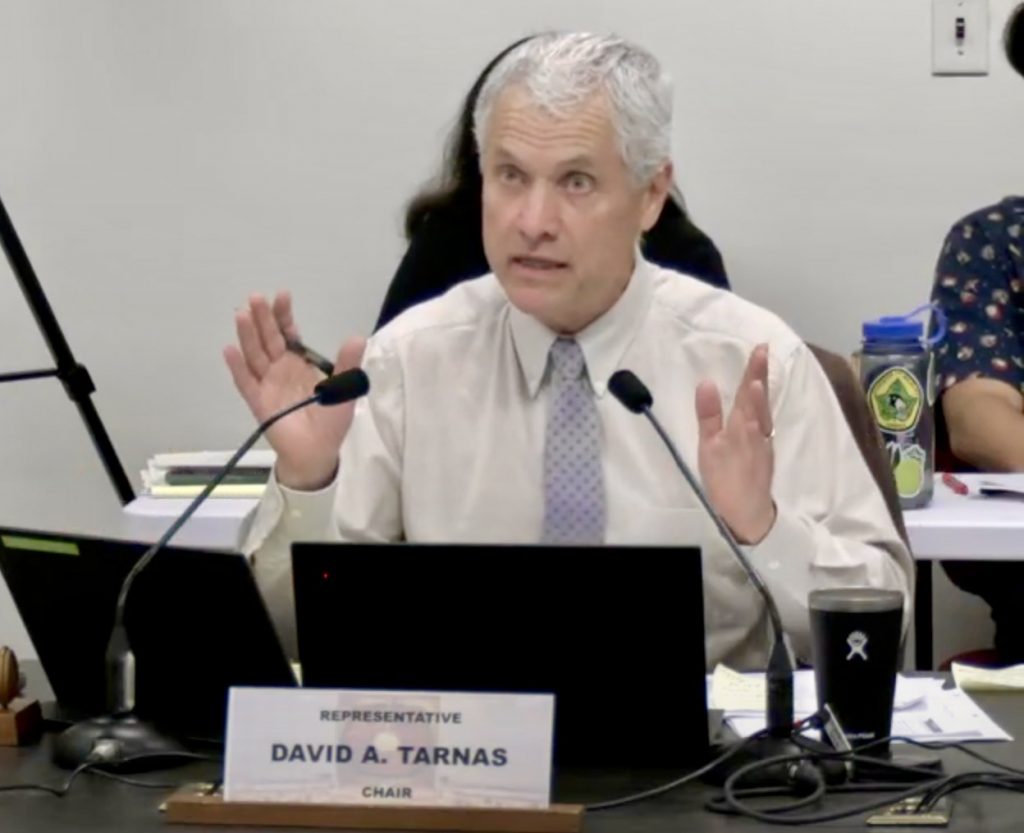
House Judiciary and Hawaiian Affairs Committee Chair David Tarnas has publicly stated that he doesn’t support term limits and, as chair of the committee, he has sole jurisdiction on what bills are heard in that committee. He chose not to hear any of the term-limit bills that were referred to JHA, even though four members of the committee helped introduced legislation this year for term limits: Rep. Mahina Poepoe (the vice chair), Rep. Della Au Belatti, Rep. Diamond Garcia and Rep. Garner Shimizu
Chair Tarnas believes an election is a term limit. He unseated an incumbent in 2018 the second time he ran against Cindy Evans in House District 7. He hasn’t had a competitive primary since.
The majority of the committee has the authority to request that the chair schedule and hear any bills referred to the committee, but this is rare. If it’s not the chair’s priority, it doesn’t have a good chance at making it out of committee.
A recent analysis of the 2025 House session shows just how stark the imbalance is. In nearly every committee, bills introduced by the chair were significantly more likely to be heard than those from other members:
- Human Services: Bills sponsored by Chair Lisa Marten were 3.7 times more likely to be heard than other committee members, the largest disparity observed.
- Education: Chair Justin Woodson’s bills were 2.7 times more likely than non-member bills.
- Judiciary and Hawaiian Affairs: Bills sponsored by Tarnas were two times more likely to be heard than those introduced by committee members. Even the vice-chair wasn’t able to get her partial-public funding bill on the schedule for consideration.
- Housing: Bills introduced by Chair Luke Evslin were 1.6 times more likely to be heard than those introduced by committee members.
- Finance: 53% of the bills were referred to finance. Bills that were introduced by the former chair, Kyle Yamashita, were 1.3 times more likely to be heard than those introduced by non-members. Many bills with no financial impact get routed through the finance committee.
The sheer amount of bills that are referred to finance make it impossible to hear all of them, even if the committee wanted to. The new finance chair, Chris Todd, has pledged to fix this in 2026.
And it’s not just about chairs versus members. Freshman lawmakers saw their bills heard at less than half the rate of their more senior colleagues. Bills introduced solely by Republican members were six times less likely to receive a hearing. Nearly half of all bills never made it out of their first committee assignments.
This isn’t a deliberative process. It’s a gatekeeping process.
When only the chair decides if a bill is heard, the process may be influenced by personal preference, political pressure, or retaliation. The public and even other committee members may never know why a bill was set aside.
Deferrals are similar. The chair can choose to delay a bill indefinitely without a recorded vote, which effectively kills it and avoids accountability. This allows controversial or sensitive measures to be buried quietly instead of debated openly.
This isn’t a deliberative process. It’s a gatekeeping process.
Legislative committees by definition are supposed to discuss and decide together. The decision to hear or defer a bill should be made by the whole committee, not just the chair. This would allow for transparency, accountability and fairness.
The votes to hear, advance, or defer a bill would be public and on record. Lawmakers could no longer hide behind the chair’s discretion and would have to explain why they supported or opposed a hearing.
Every member’s voice would count equally in deciding the committee’s agenda. Many groups, from city and county councils to nonprofit boards, already require a majority vote to set the agenda and postpone decisions. Hawaiʻi’s Legislature should meet at least this basic democratic standard.
A simple rule change could fix this. Require a public committee vote on whether to hear every bill referred to the committee. This could be done in batches: the chair announces the slate of bills they recommend for hearing or deferral, and any member can request a separate vote on a specific bill.
This change would put decisions back in the hands of the full committee, restore transparency, and give every lawmaker’s constituents a fair voice. Hawaiʻi’s people deserve more than a one-person show.
 Sign up for our FREE morning newsletter and face each day more informed.
Community Voices aims to encourage broad discussion on many topics of community interest. It’s kind of a cross between Letters to the Editor and op-eds. This is your space to talk about important issues or interesting people who are making a difference in our world. Column lengths should be no more than 800 words and we need a photo of the author and a bio. We welcome video commentary and other multimedia formats. Send to news@civilbeat.org. The opinions and information expressed in Community Voices are solely those of the authors and not Civil Beat.

Local reporting when you need it most
Support timely, accurate, independent journalism.
Honolulu Civil Beat is a nonprofit organization, and your donation helps us produce local reporting that serves all of Hawaii.
ContributeAbout the Author