Neal Milner: 3 Big Public Projects That Should Make You Mad
How these beleaguered projects are being handled speaks directly to the transparency and trustworthiness of state officials.
August 28, 2025 · 7 min read

About the Author

Three for three: A trio of big government projects, the stadium, the rail and school air conditioning, are all delayed again.
The stadium postponement is understandable, kind-of sort-of, compared to the other two.
There are basically two questions about a delay. The most obvious, the one that gets all of the attention, is “why?”
But there is also “how?” How was the delay announced? How did the public find out? How candid or evasive are the bearers of the bad news?
Bad answers to the “why” question frustrate people. Bad answers to the “how” questions, though, really piss people off. They linger and add to cynicism that’s chronic already.
As they should. Because the “how” questions are about the basics: transparency, accessibility and trustworthiness of political leaders who may weasel, fabricate or bury their heads in the sands of ignorance or rosy optimism.
That’s accountability. When it comes to the relationship between leaders and the public, it doesn’t get more basic than that.
With these three delays, it’s the “how” that makes the difference.
The stadium delay should make you at least a tiny bit happy. The rail announcement about closing Nimitz Highway should make you angry. The school air conditioning clown car disaster will make you weep.
Stadium Announcement Could Be Worse
A quick history of Aloha Stadium: broken from the start; suddenly closed without notice in 2020 but still undemolished; promises as empty as its seats.
And recently an announcement that the new one will be finished in 2029 instead of 2028. Oy, another delay. But here is the good part: At least public officials and the developer announced the delay at a public meeting and with plausible reasons.
Sure, they were artificially upbeat, glossing over the fact that the proposed new stadium, already tiny, would be even tinier.
At least they told us straight out, came clean and owned up. They were not faceless.
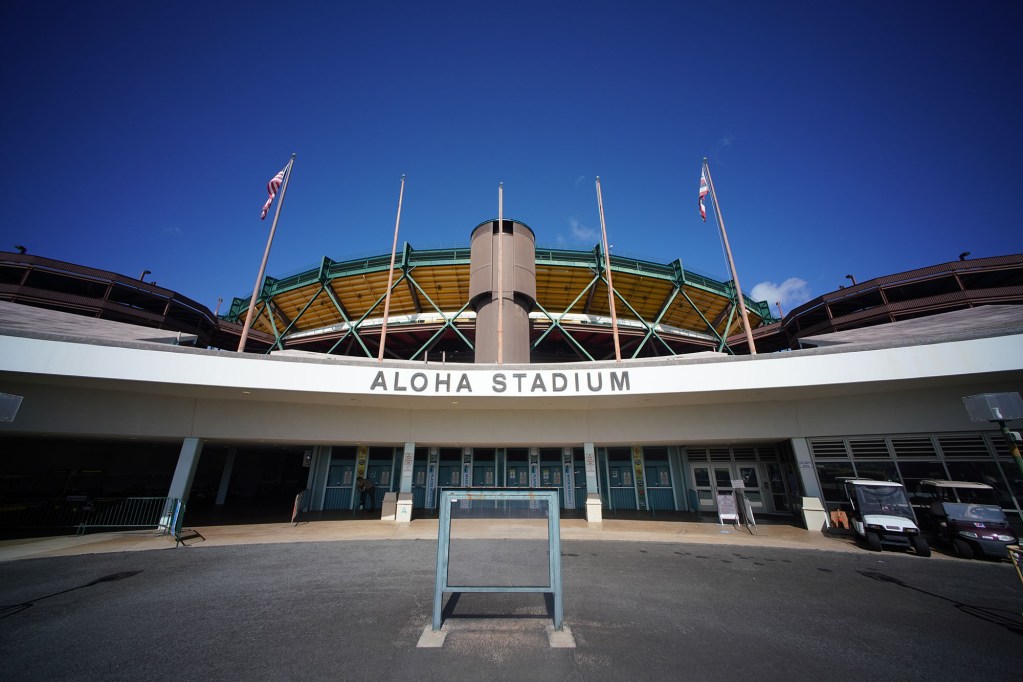
Remember the weird, sudden, here-today-gone-tomorrow way state officials announced that Aloha Stadium was closing for good?
The recent announcement was disappointing, but at least it was transparent and timely, two things that citizens should expect from government but often never get.
Sure, that’s a low bar, but it’s better than no bar. So based on the way big projects are too often handled here, this deserves a C-minus.
Too generous? You think the curve is too easy? Well, take a look at the next two klunkers.
Rail And Road Closures
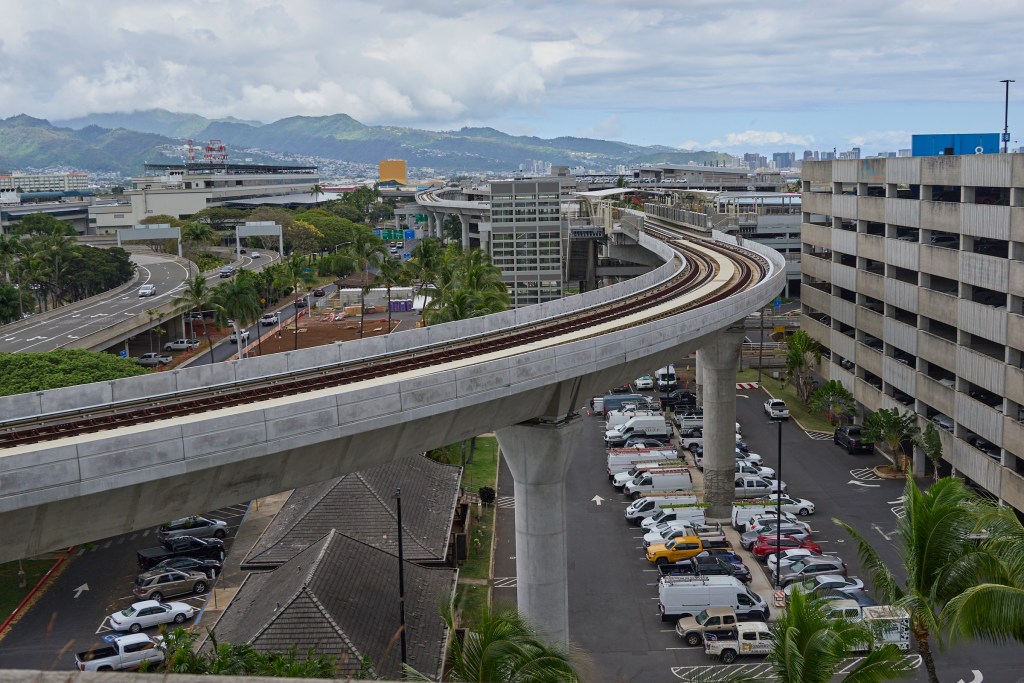
Recently, Honolulu officials, out of the blue, love-bombed us with the information that starting in a very few days, the Nimitz Highway through and past downtown would have significant lane closures for, oh, about six years, which is the same length of time it took to build the 2,000-mile transcontinental railroad.
Surprise! It’s like some anonymous source in Alaska found the Nimitz plan in a printer attached to the secret Trump instructions for making nice-nice to Vladimir Putin.
The non-announcement process involved a few super-secret presentations to a few businesspeople early in the week, a public announcement a couple of days later, and road closures by the following Monday.
Nimitz users have to be ready to rock and roll — or whatever you call the herky-jerky late-for-worky movements getting them around.
This misstep is about social science, not rocket science. The only equipment needed to do the announcement well is a mouth, a brain and a heart.
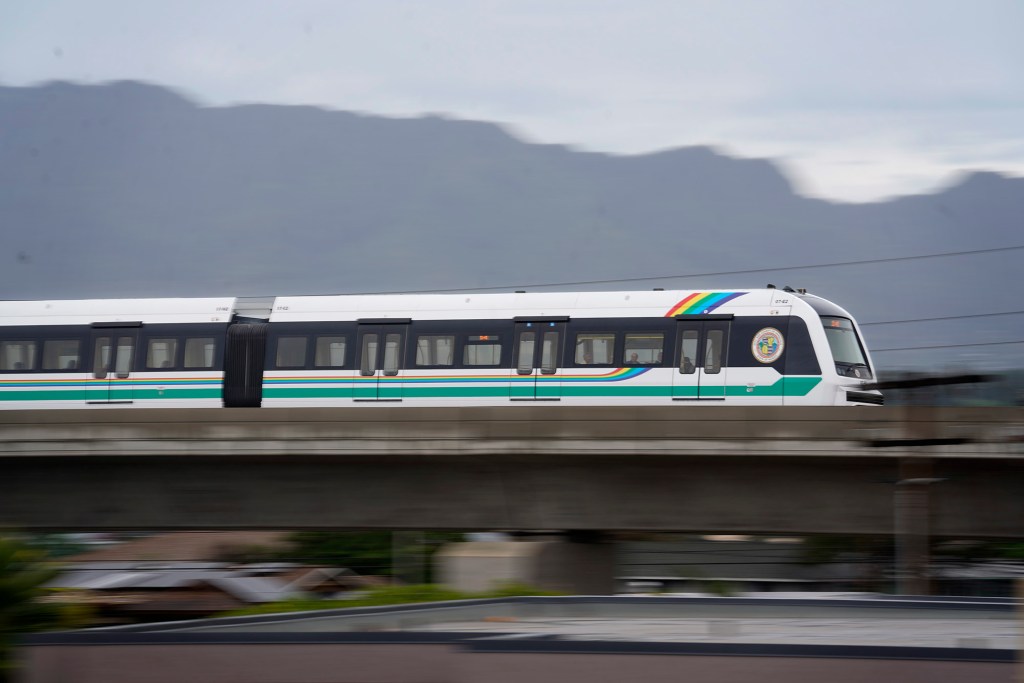
The Honolulu Authority for Rapid Transportation’s bungled Nimitz announcement is a trust-busting step backward that’s as large as the empty-Skyline distance from Salt Lake to East Kapolei, and their explanations for this were as weak and scattered as the train’s ridership.
“I was going to tell you on time, but the dog ate my talking points.”
Grade: F
School Air Conditioning: Worse Than Failure
Speaking of canines, the stadium announcement and even HART’s Nimitz misstep are a walk in the park compared to the school air conditioning humiliation.
That plan failed at every level. I’d include “from beginning to end” except that there is no end in sight and the data monitoring progress doesn’t exist.
The project is floating in a timeless, toxic miasma of incompetence.
Bad air conditioner choices, improper equipment, unrealistic expectations, failure to set priorities that would give schools that needed it most the first crack, and worse than useless “information” about how things were going.
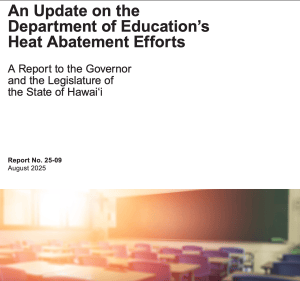
The State Auditor’s Office recently issued an excellent report about this.
Now, auditor’s reports are pretty straightlaced, just the facts, no emotion. Even so, in its air conditioning report a “Holy Toledo! can you believe this?” tone shines through because the air conditioning mess is that awful.
Were there announcements about delays? Are you kidding? The public was kept in the dark. Even officials, including those in charge were kept in the dark. Even the state school superintendent was kept in the dark. The report indicates that he didn’t try hard to see the light.
The public never had any idea how bad things were going. That’s bad enough. But what’s even worse is that the big-shots involved — governor, legislators and Department of Education honchos — either did not know what was happening or decided not to report it.
The auditor could not get good information on progress because the DOE was not collecting it.
As bad as lying is, in this case cluelessness was worse.
Grade: worse than F. Ungradeable because so unbelievable. All parties mandated to attend summer sessions in non-air-conditioned schools. And they have to show their work.
The Lessons Learned?
Enough with the bad news. Here are some things to learn from all this. Each goes beyond these three cases themselves.
First, It’s time we recognize that DOE is not capable of carrying out major projects. Air conditioning is another example of repeated failures — failure to spend money allocated to it, noncompliance with local food in schools policy, etc. There should have been no reason to believe DOE could pull this off.
Second, It’s not just about individual negligence in one state agency. It’s about a flawed process. That’s why the state’s oversight policies need to get more thorough and proactive. An auditor’s report comes after the fact, after the damage is done.
You can’t trust public officials to give timely information about bad news.
That means better information and better day-to-day supervision is needed. It also means that the Legislature needs to know more about how its policies are implemented from day to day.
Start with the idea that if no evidence is available or being reported, the project is probably off the rails.
Third, you can’t trust public officials to give timely information about bad news.
The media has to take more responsibility for digging out the nuts and bolts, often concealed hard stuff.
Studies show that where there are “newspaper deserts,” places that no longer have local papers, local politicians get away with more because once the papers leave, no one pays close attention.
Honolulu is not a news desert, at least not yet, but the same principle applies. The local media, including social media, needs to work harder to fill the information vacuum.
It’s a tall order, but there really is no other option.
 Sign up for our FREE morning newsletter and face each day more informed.

Local reporting when you need it most
Support timely, accurate, independent journalism.
Honolulu Civil Beat is a nonprofit organization, and your donation helps us produce local reporting that serves all of Hawaii.
ContributeAbout the Author