Neal Milner: Kapolei Deserves A Spot On Hawaiʻi's Cultural Playlist
The experience of moving to a relatively new community isn’t typical to the islands. But there it is just off H-1.
August 14, 2025 · 8 min read

About the Author

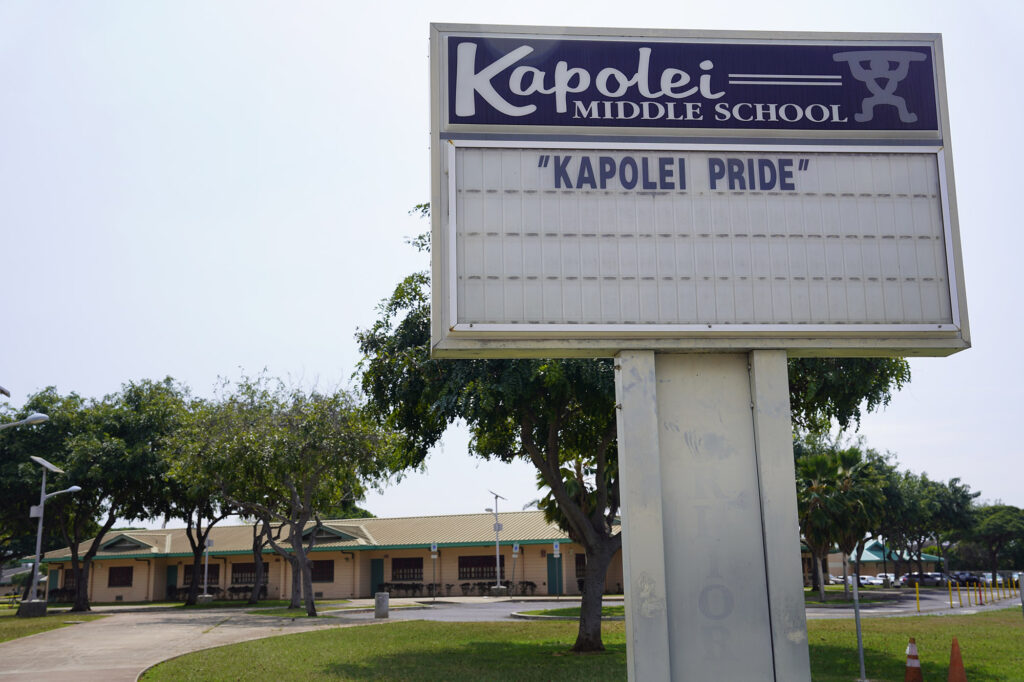
When Kapolei began to be developed in the late-1970s, it was officially designated as Oʻahu’s second city. “Oʻahu’s different city” is more accurate.
Head to ʻEwa along H-1 and things look pretty much the same as they did 50 years ago. Crowded, nothing much to look at, maybe packed with lots of growing-up memories, but pretty dull and monotonous. It’s easy to keep your eyes on the road.
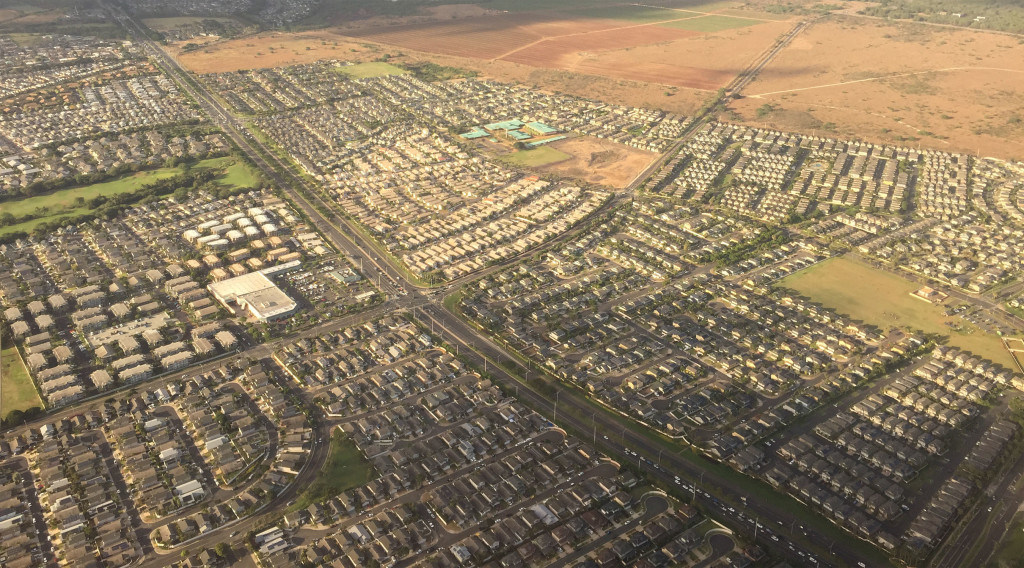
Until you take one of the Kapolei exits and suddenly enter a totally different visual world. Wide streets and a huge amount of housing all built after 1977, shopping center after shopping center, a new university campus, three hotels.
It’s spread out and spacious, unlike those neighborhoods you drove through on the way.

Ideas showcases stories, opinion and analysis about Hawaiʻi, from the state’s sharpest thinkers, to stretch our collective thinking about a problem or an issue. Email news@civilbeat.org to submit an idea or an essay.
Visions of newness versus memories of the past. People moving to a place built on the cane fields of ʻEwa Plantation, the essence of old Hawaiʻi.
But here’s the essence of new Hawaiʻi. A friend of mine, a Kamehameha Schools and University of Hawaiʻi graduate, was one of the first people to move into Kapolei’s first new subdivision. Not long after, she planned an outdoor birthday party for her son.
To her surprise, smoke from a nearby cane field burn was so strong that it drove them back inside. She had never thought about the cane fields.
This Place Needs Songs And Stories
That’s a big story masquerading as a little one. My friend didn’t anticipate the smoke because she was a newbie to the area. All her neighbors were newbies both to the place and to each other.
That’s why there should be songs and stories about today’s Kapolei, because it’s up to the wonderful musicians and playwrights here to tell them.
A sense of place is such an anchor, and theater and music are powerful ways to create it. That’s true generally, but really true in Hawaiʻi.
Because Kapolei does not fit into that typical way we think of sense of place, we ignore it.

Instead, Kapolei is someplace “out there,” absent from our thoughts and imagination when we think about local culture or Hawaiian culture or any other way you think about Hawaiʻi.
The common way people think about the culture here is old-fashioned and overly nostalgic because it leaves Kapolei out of the picture.
Hawaiʻi has such a strong attachment to place. All those songs, “Waikīkī,” “Waimānalo Blues,” “Home in the Islands,” “Honolulu City Lights.” Sacred waterfalls, mountains — listening to Hawaiian music is like listening to a directory of place names.
This music was so much a part of the Hawaiian cultural renaissance that began just before I moved here in the early ’70s.
Those songs are about yearning and returning, not cane fields burning.
Do people feel this kind of poetic angst when they move away from their Kapolei home or the strong emotional connection when they return? Who knows? There are no plays or songs to tell us.
There’s nothing like that about Kapolei. “Kapolei Blues?” “Ko Olina City Lights?” Those titles sound like a Frank De Lima parody because no musical artist has tried to establish a there, there.
The same with theater.
“Plays about life in Hawaiʻi. Plays by Hawaiʻi’s playwrights. Plays for Hawaiʻi’s people.”
That’s the motto of Kumu Kahua Theatre, which began in the 1970s and flourishes today, the biggest theatrical force in the Hawaiʻi cultural renaissance.
Playwrights like Ed Sakamoto, Victoria Kneubuhl, Alani Apio, and Lee Cataluna brought local and Hawaiian culture out of the shadows.
That’s what renaissance means — revival, retrieval and recognition.
Those are very different writers, but at their heart, one way or another, Kumu plays are about remembering, preserving, bringing back into consciousness the traditions that needed rescuing. The pain of transitioning from a Hawaiian to a Western way of life.
Sakamoto, who wrote the play “ʻAʻala Park,” grew up near there.
“I love his stories,” the actor Dann Seki said. “I love the way his words fit my mouth. His characters talk like I talk. His characters think like I think.”
Do people feel this kind of poetic angst when they move away from their Kapolei home or the strong emotional connection when they return? Who knows? There are no plays or songs to tell us.
Kapolei has a rich and important history that there’s a good chance you know nothing about — “Cultural Kapolei,” as one writer put it. But that interesting book is about ancient Hawaiian culture. The author Shad Kane says the book is about preservation.
Culture Is An Accumulation Of Small Things
Today’s Kapolei is not about preservation. It’s about moving to a new place, not returning. And to a place that lacks old neighborhoods or any of those sense-of-place anchors so much a part of Hawaiʻi. It’s about creating something out of empty space.
It’s about people moving away from their families, not all the way to Las Vegas where grandma and grandpa only see the kids a few times a year, but far enough so that they can’t so easily rely on the grandparents for everyday child care.
It’s a place where my friend’s birthday became a surprise party because she was still learning that in this new place, things taken for granted (what is easier to plan than a birthday part in Hawaiʻi?) would have to change.
It may be only an hour commute to town to check on her parents, but it used to take less than a minute from upstairs to downstairs when she and her family lived with them.
And what about worship? Do you continue to go to the old neighborhood church or Buddhist temple with old friends, neighbors and families, find a new one around you, or quit going altogether?
These things, like the interrupted birthday party, are different in small ways, but culture develops as an accumulation of small things.
There is an Ed Sakamoto Kumu play called “Aloha Las Vegas.”
“Aloha Kapolei”? Zilch.
Playwrights and musicians might look on that birthday party as a way to look at ordinary life generally. That’s what August Wilson, “theater’s poet of Black America” did with his plays set in Pittsburgh and what Thornton Wilder did with a small fictional New Hampshire community in “Our Town,” which some have called the greatest American play ever written.
That’s what many Kumu Kahua plays do. Ed Sakamoto’s play “Mānoa Valley” is about much more than Mānoa Valley.

At the same time, I think that beliefs about culture here, really about what Hawaiʻi is like, are fancied up and cleaned up — too much wishful thinking and too much fluff.
“Preserving the culture” is not always the best idea, especially if that leads to telling a cleansed and simplistic story. At the very least you shouldn’t erase a place from your thinking because it doesn’t fit.
Paradise does not mean perfection. It’s important to remember the bad stuff as well as the good stuff, the stuff you find weird and the stuff that’s become so much of your way of thinking that you give it no thought.
That’s Kapolei, with its Department of Hawaiian Home Lands headquarters and Prince Kūhiō Day parade in the middle of suburban cul-de-sacs, the gigantic traffic jams on H-1 past where you yourself never venture; and mega-retail that makes Ala Moana feel like the little house on the prairie.
Maybe the new Don Quijote store in Kapolei doesn’t seem as local as the one in town.
But that newbie is sure a better place to shop for local foods.
 Sign up for our FREE morning newsletter and face each day more informed.

Local reporting when you need it most
Support timely, accurate, independent journalism.
Honolulu Civil Beat is a nonprofit organization, and your donation helps us produce local reporting that serves all of Hawaii.
ContributeAbout the Author