The Promise Of Social Security Must Continue
Congress should step up before millions of Americans are left with less than they’ve earned.
August 14, 2025 · 3 min read

About the Author

Social Security, which is 90 years old on this date, is arguably the most successful and popular government initiatives ever enacted.

It’s a financial lifeline for 296,605 Hawaiʻi residents who receive Social Security and use the money for housing, groceries, gas and other necessities of living. The payments lift 49,000 Hawaiʻi kūpuna out of poverty.
Linda, a retired nurse in Hawaiʻi, told us Social Security is 75% of her income. “I don’t know how I would survive (without Social Security).”
Social Security will face challenges in the years ahead, but it’s incumbent on us and elected officials to ensure Social Security continues to work for the 67 million Americans across the country who rely on it.
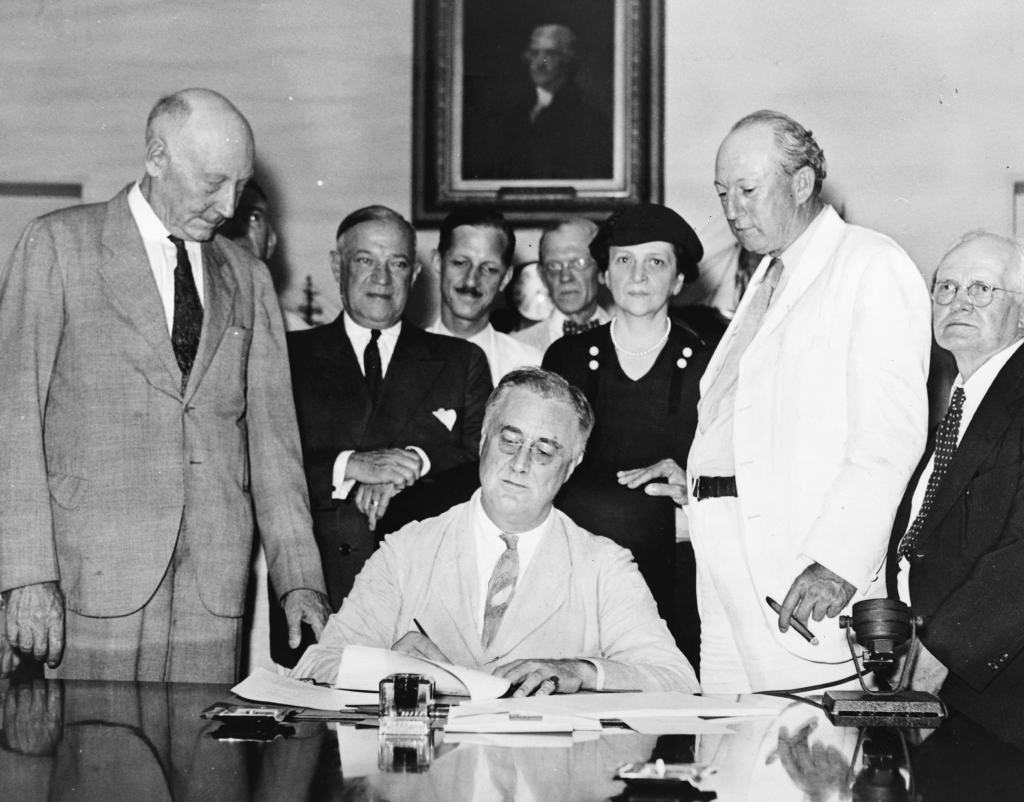
President Franklin D. Roosevelt signed the Social Security Act into law on August 14, 1935, and workers began paying into it with the promise that they would get Social Security when they need it. The program helps kūpuna live and retire with dignity; offers crucial support to those with disabilities; and serves as a financial lifeline for families navigating the loss of a loved one.
By paying Social Security taxes, workers have earned the right to its benefits.

Social Security is a pay-as-you-go system. As long as workers pay into Social Security, payments will be made. Social Security will not run out of money. But it does face funding challenges.
During the decades after World War II, workers paid more into the Social Security than was paid out. That additional money is known as the Social Security surplus.
Those post-World War II workers are now retiring. The most recent Social Security Trustees’ Report finds that the surplus will run out in 2035, resulting in about a 20% cut in benefits. To prevent that shortfall, Congress must once again step up — as it did when it reformed the program in 1983 — before millions of Americans are left with less than they’ve earned.
Customer service is another area where Social Security is facing challenges. Administrative chaos at the Social Security Administration this year has contributed to a customer service crisis.
The SSA has struggled with call wait times, hold times, customer service resolutions and staffing issues. Many Americans who need access to the program face hours on the phone or in line at their local offices.
he new Social Security commissioner would be well served by re-committing the Social Security Administration to providing timely, efficient and effective customer service. SSA needs to be clear when communicating any possible changes, and what effects that lower staffing levels will have.
And Congress needs to provide oversight to ensure that customer service is prioritized at an agency that has struggled to serve Americans everywhere.
As Social Security celebrates its 90th year, it’s our responsibility and that of those we elect to strengthen and protect Social Security and help it age in the healthiest way. The promise of Social Security must always be there for kūpuna, our children and generations to come.
 Sign up for our FREE morning newsletter and face each day more informed.
Community Voices aims to encourage broad discussion on many topics of community interest. It’s kind of a cross between Letters to the Editor and op-eds. This is your space to talk about important issues or interesting people who are making a difference in our world. Column lengths should be no more than 800 words and we need a photo of the author and a bio. We welcome video commentary and other multimedia formats. Send to news@civilbeat.org. The opinions and information expressed in Community Voices are solely those of the authors and not Civil Beat.

Local reporting when you need it most
Support timely, accurate, independent journalism.
Honolulu Civil Beat is a nonprofit organization, and your donation helps us produce local reporting that serves all of Hawaii.
ContributeAbout the Author