A Well-Informed Citizenry Benefits Everyone
Yet, the Trump administration is undoing a century of hard work in education at the DOE and UH.
September 29, 2025 · 5 min read


About the Author

Public schools help to create a stable and more equitable society for all of us. We must rally around public education and halt the current trend to dismantle this critical piece of our democracy. It is time for us to collectively invest, with our taxpayer dollars, energy, and voices, in the tremendous work of public educators.
Public schools provide infrastructure for different communities to engage with one another in productive ways. As a former Waiʻanae Elementary School teacher who now helps prepare future teachers, I’ve seen firsthand how public education creates opportunities for interaction across communities — essential in our current climate of siloed information systems.
Quality public education is critical to a functioning democracy. A well-informed citizenry benefits all of us by promoting thoughtful discourse and evidence-based decision-making.

Ideas showcases stories, opinion and analysis about Hawaiʻi, from the state’s sharpest thinkers, to stretch our collective thinking about a problem or an issue. Email news@civilbeat.org to submit an idea or an essay.
Unlike private schools and vouchers, public schools are overseen by the public through school boards and transparency requirements. Countries that have privatized or dual private-public systems can lead to separating communities, with private schools serving the privileged while public schools become under-resourced, contributing to significant wealth inequality.
Public education is essential for a strong economy and social stability. Families depend on reliable schooling so parents can work, and businesses require an educated workforce. The cost of private schools is out of reach for many of us. In Honolulu, tuition ranges from $8,679 to $44,620 per year, with most students in the $24,000-plus category.
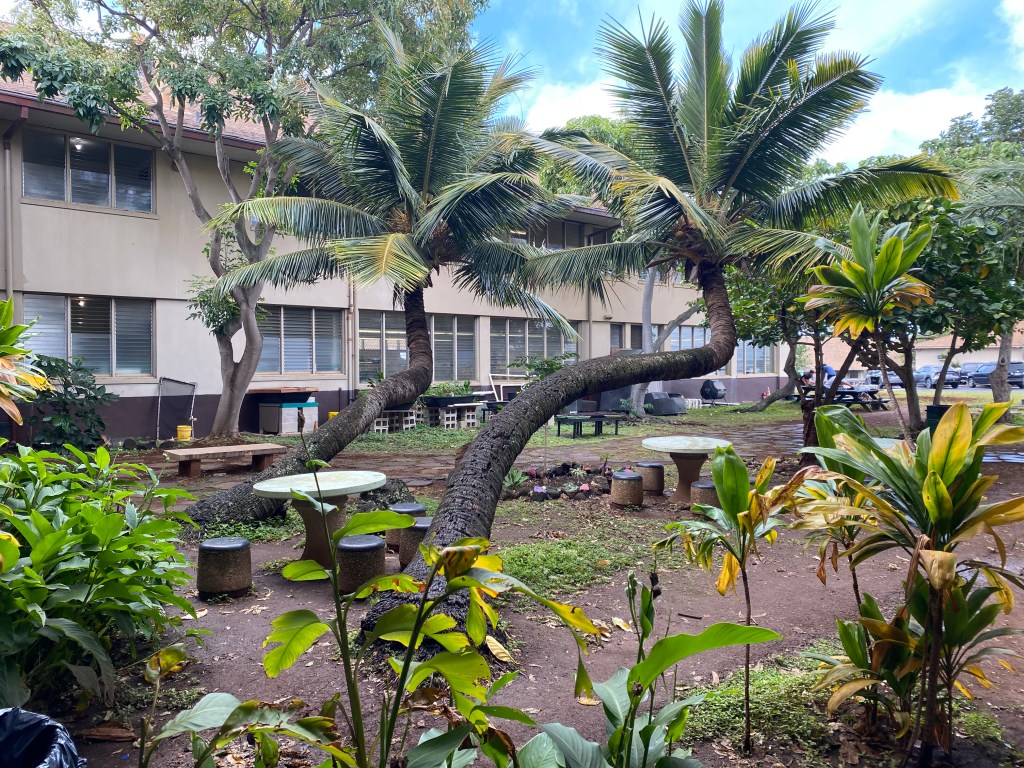
Our public education system has helped make the United States a leader. Nobel Prize-winner Jennifer Doudna, the late U.S. Sen. Daniel Inouye, and musician Jack Johnson graduated from Hawaiʻi public schools. We lead in opening secondary schools to all citizens and in special education. In Hawaiʻi, the Hawaiian Language Immersion schools are globally recognized as models for language revitalization.
Yet, the Trump administration is undoing a century of hard work. The Department of Education has been gutted, and attempts to force school vouchers, accompanied by the promotion of for-profit schools with limited accountability, have been made.
The minimization of public education is happening in Hawaiʻi too. Public school funding has been cut, which was already among the lowest in the country in terms of percentages of state and local expenditures.
The governor cut $90 million from the public school budget for school support operations. The new budget failed to fund essential projects to address overcrowding, decaying facilities, and rebuilding Lahaina Elementary School.
The diminished status of education is also evident at UH Mānoa. The College of Education serves 1,986 students and earned $80.5 million in extramural funds over the past three years. Enrollment and degrees awarded increased since 2019, yet the administration has forced the college to operate with 15% fewer faculty.
The college is on a growth trajectory, in line with calls from the state to graduate more licensed teachers. Yet, COE salaries are around $20,000 less than the same-rank Mānoa average, while workloads are among the highest.
By 2027, the College of Education must vacate its campus home since the 1930s for redevelopment into a “campus town.” The faculty, staff and students currently using three College of Education buildings and multiple portables will be moved into two and a half floors of an “interdisciplinary building.”
Unlike their peers, faculty will not have individual offices but access to lockers and shared spaces. Despite the tireless efforts of a College of Education committee to communicate the needs of the college, the designated floors of the new building are lacking in adequate classroom space and resources to meet the current and future needs of the college.
The uncertain future of the University Laboratory School reflects this same devaluing. The school pays UH Mānoa around $100,000 in rent. It partners with the College of Education to provide practicum experiences for students and for faculty to conduct research while providing an innovative K-12 public school, aligning with the university’s mission to care for the people of Hawaiʻi. Yet, UH Mānoa does not plan to keep the ULS and the partnership with the College of Education.
Federal directives may seem beyond our control, but we can act in Hawaiʻi to show we value public education:
- The Legislature and governor should sufficiently fund public schools in Hawaiʻi.
- As part of the “mixed-use” redevelopment plans, the university should allow some of the College of Education units to not move and continue preparing future teachers and partnering with the ULS, resolving space issues and enabling growth.
- Preserve the University Laboratory School as part of the mixed-use development.
- Compensate public school teachers so they can live and raise families in Hawaiʻi and not have to work multiple jobs through pay increases, housing support, loan forgiveness, and other innovative measures.
- Compensate College of Education faculty and staff consistent with the UH Mānoa averages for colleagues.
 Sign up for our FREE morning newsletter and face each day more informed.
Community Voices aims to encourage broad discussion on many topics of community interest. It’s kind of a cross between Letters to the Editor and op-eds. This is your space to talk about important issues or interesting people who are making a difference in our world. Column lengths should be no more than 800 words and we need a photo of the author and a bio. We welcome video commentary and other multimedia formats. Send to news@civilbeat.org. The opinions and information expressed in Community Voices are solely those of the authors and not Civil Beat.
Read this next:

Local reporting when you need it most
Support timely, accurate, independent journalism.
Honolulu Civil Beat is a nonprofit organization, and your donation helps us produce local reporting that serves all of Hawaii.
ContributeAbout the Author